Ghosts of the past
Grief haunts New Jersey teen in Perrotta’s coming-of-age novel

Advertisement
Read this article for free:
or
Already have an account? Log in here »
To continue reading, please subscribe:

Digital Subscription
One year of digital access for only $205*
- Enjoy unlimited reading on winnipegfreepress.com
- Read the E-Edition, our digital replica newspaper
- Access News Break, our award-winning app
- Play interactive puzzles
*First annual payment billed as $205.00 + GST for one year. This annual subscription will automatically renew at $233.00 + GST every 52 weeks (10% off the regular annual price of $259.35). Offer available to new and qualified returning subscribers only. Cancel any time.
To continue reading, please subscribe:
Add Free Press access to your Brandon Sun subscription for only an additional
$1 for the first 4 weeks*
- Enjoy unlimited reading on winnipegfreepress.com
- Read the E-Edition, our digital replica newspaper
- Access News Break, our award-winning app
- Play interactive puzzles
*Your next Brandon Sun subscription payment will increase by $1.00 and you will be charged $17.95 plus GST for four weeks. After four weeks, your payment will increase to $24.95 plus GST every four weeks.
Read unlimited articles for free today:
or
Already have an account? Log in here »
Light and lyrical but haunted by loss, this 11th book from New Jersey-born Tom Perrotta (Election, Little Children, The Leftovers) takes on the longstanding literary notion that you can’t go home again.
Perrotta’s narrator is Jay Perry (that’s his pen name). Once a self-described “serious” author — by way of the Iowa Writers’ Workshop, a promising debut novel and a Newsday review calling him “a writer to watch” — he switched over to penning a bestselling kids’ series (Ghost Teacher, Ghost Teacher Loves You and Ghost Teacher to the Rescue!) that became a hit TV show.
Now in his 60s, Jay has been strictly literal about not returning to Creamwood, N.J., the small, blue-collar, mostly Italian community where he grew up. When he receives an email from the town mayor inviting him to attend the opening of a new municipal building dedicated to his father, he starts to wonder whether the memories he’s denied all these years aren’t still there, right where he left them.

Beowulf Sheehan photo
Tom Perrotta chronicles suburban dysfunction, characteristically insightful in his small observations.
In his mind, Jay returns to the summer of 1974, when he was a 13-year-old kid still named Jimmy Perrini. As Jay relates Jimmy’s story, the past and the present move toward each other, slowly at first and then with sudden speed.
When asked about his childhood, Jay has always said, “For a while there… we were a normal family.” Ghost Town becomes a gradual unpacking of what this easy assumption of “normalcy” means, especially in that time and place.
For young Jimmy, it’s enough to look like all the supposedly normal people look, to do what they do. His father is a union welder, a volunteer firefighter, a softball player. His mother is a Sunday school teacher and a member of the PTA. His older sister Denise is a bubbly cheerleader. “At least that was how he remembered it,” Jay thinks to himself, “though he also knew how slippery and unreliable memory could be, how it was always partly a work of fiction.”
The first obvious rupture in Jimmy’s sense of normalcy is the death of his mother from cancer. His father dazed, his sister preoccupied, teenaged Jimmy is left to fend for himself. He starts roaming Creamwood’s streets, getting into trouble with Eddie, the town burnout, who drives around in his Chevy Vega, smoking a lot of weed and listening to Deep Purple on the car stereo.
Jimmy begins a confusing, start-and-stop relationship with Olivia, an older girl who’s also been touched by loss. Olivia tells Jimmy they can talk to the dead, bringing out the Ouija board she keeps hidden in a Candy Land box.

Jimmy is intrigued. Since his mother’s death, he has already had the experience of hearing her voice or seeing her in the distance. But Jimmy and Olivia’s Ouija adventures seem to accidentally release something else, a presence signalled by a dank smell, “a glitch in the air.”
Perrotta brings in this spooky possibility, but Ghost Town is not really a ghost story and the supernatural element remains minor. What really haunts Jimmy is grief and what really haunts Creamwood is racism, misogyny and the fear of change.
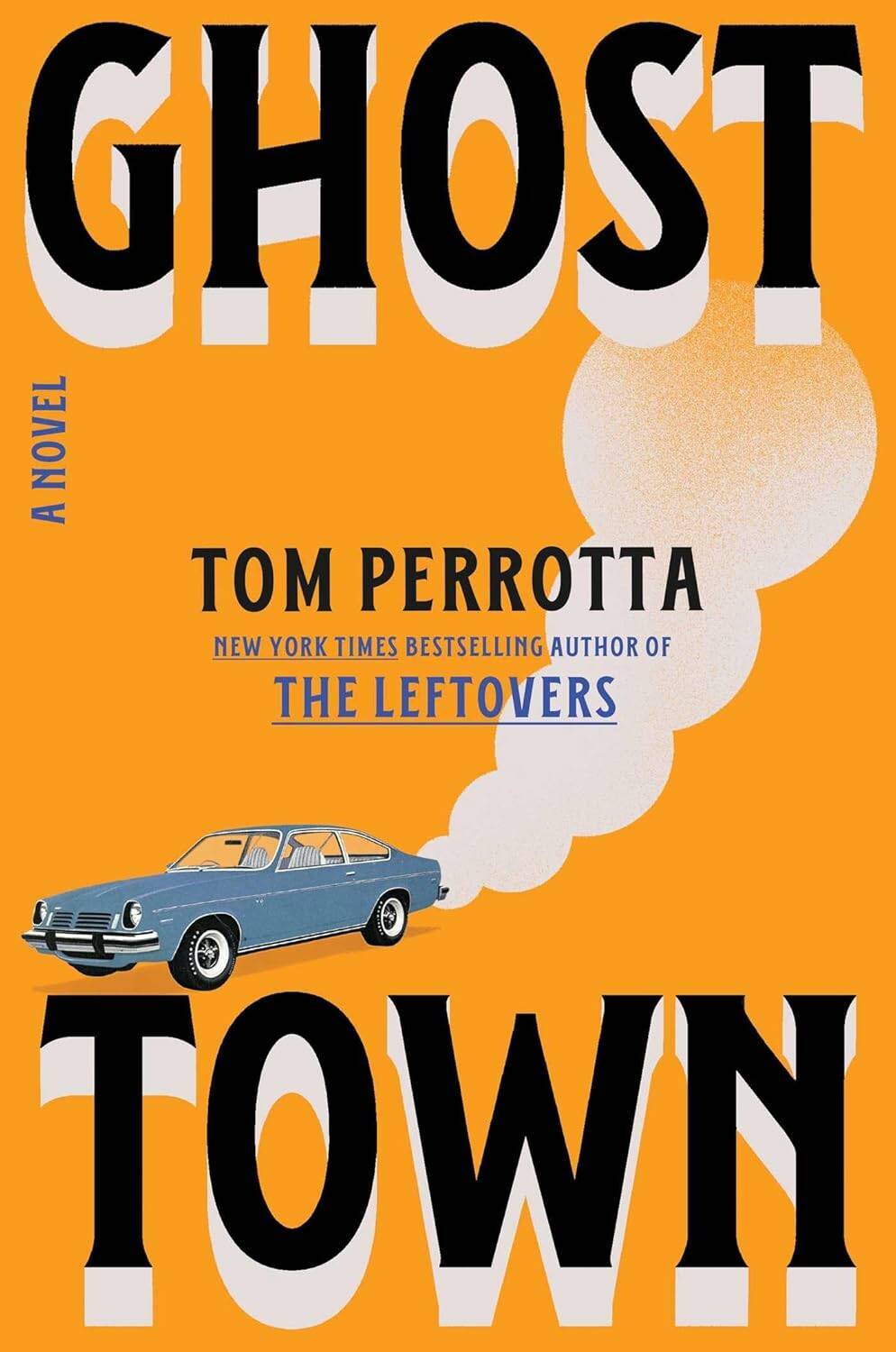
Ghost Town
Ghost Town’s short, sharp chapters breeze by, peppered with details of Jimmy’s ’70s adolescence — the Wrangler jeans and Hostess Fruit Pies and Blue Nun wine and top 40 radio songs. It’s not just nostalgia, though. Perrotta, who’s known as a chronicler of suburban dysfunction, is characteristically insightful in his small observations.
Unfortunately, he leaves some of his larger narratives underwritten. Jay does go home again, but some of Creamwood’s darker byways remain unexplored.
Alison Gillmor knows the verses to all the radio hits mentioned in this novel.
Studying at the University of Winnipeg and later Toronto’s York University, Alison Gillmor planned to become an art historian. She ended up catching the journalism bug when she started as visual arts reviewer at the Winnipeg Free Press in 1992.
Our newsroom depends on a growing audience of readers to power our journalism. If you are not a paid reader, please consider becoming a subscriber.
Our newsroom depends on its audience of readers to power our journalism. Thank you for your support.
Studying at the University of Winnipeg and later Toronto’s York University, Alison Gillmor planned to become an art historian. She ended up catching the journalism bug when she started as visual arts reviewer at the Winnipeg Free Press in 1992.
Our newsroom depends on a growing audience of readers to power our journalism. If you are not a paid reader, please consider becoming a subscriber.
Our newsroom depends on its audience of readers to power our journalism. Thank you for your support.
Advertisement Advertise With Us
Advertisement Advertise With Us