Author’s trilogy capper bids farewell to criminal character

Advertisement
Read this article for free:
or
Already have an account? Log in here »
To continue reading, please subscribe:

Digital Subscription
One year of digital access for only $205*
- Enjoy unlimited reading on winnipegfreepress.com
- Read the E-Edition, our digital replica newspaper
- Access News Break, our award-winning app
- Play interactive puzzles
*First annual payment billed as $205.00 + GST for one year. This annual subscription will automatically renew at $233.00 + GST every 52 weeks (10% off the regular annual price of $259.35). Offer available to new and qualified returning subscribers only. Cancel any time.
To continue reading, please subscribe:
Add Free Press access to your Brandon Sun subscription for only an additional
$1 for the first 4 weeks*
- Enjoy unlimited reading on winnipegfreepress.com
- Read the E-Edition, our digital replica newspaper
- Access News Break, our award-winning app
- Play interactive puzzles
*Your next Brandon Sun subscription payment will increase by $1.00 and you will be charged $17.95 plus GST for four weeks. After four weeks, your payment will increase to $24.95 plus GST every four weeks.
Read unlimited articles for free today:
or
Already have an account? Log in here »
For 10 years, Colson Whitehead has lived with a small-time crook-turned-Harlem furniture store owner who moonlights as a fence (laundering stolen goods). But with Cool Machine, the third book in his Harlem trilogy, the author is ready to say goodbye to Ray Carney.
Whitehead, 56, will be in Winnipeg on Tuesday to launch Cool Machine, his 11th novel, at WAG-Qaumajuq, where he’ll be joined in conversation by local author David A. Robertson.
The New York City author’s rise to literary prominence skyrocketed when two of his consecutive novels — 2016’s The Nickel Boys and 2019’s The Underground Railroad — each won the Pulitzer Prize for fiction. He’s also the recipient of both MacArthur and Guggenheim fellowships and the U.S. National Humanities Medal, among numerous other accolades.
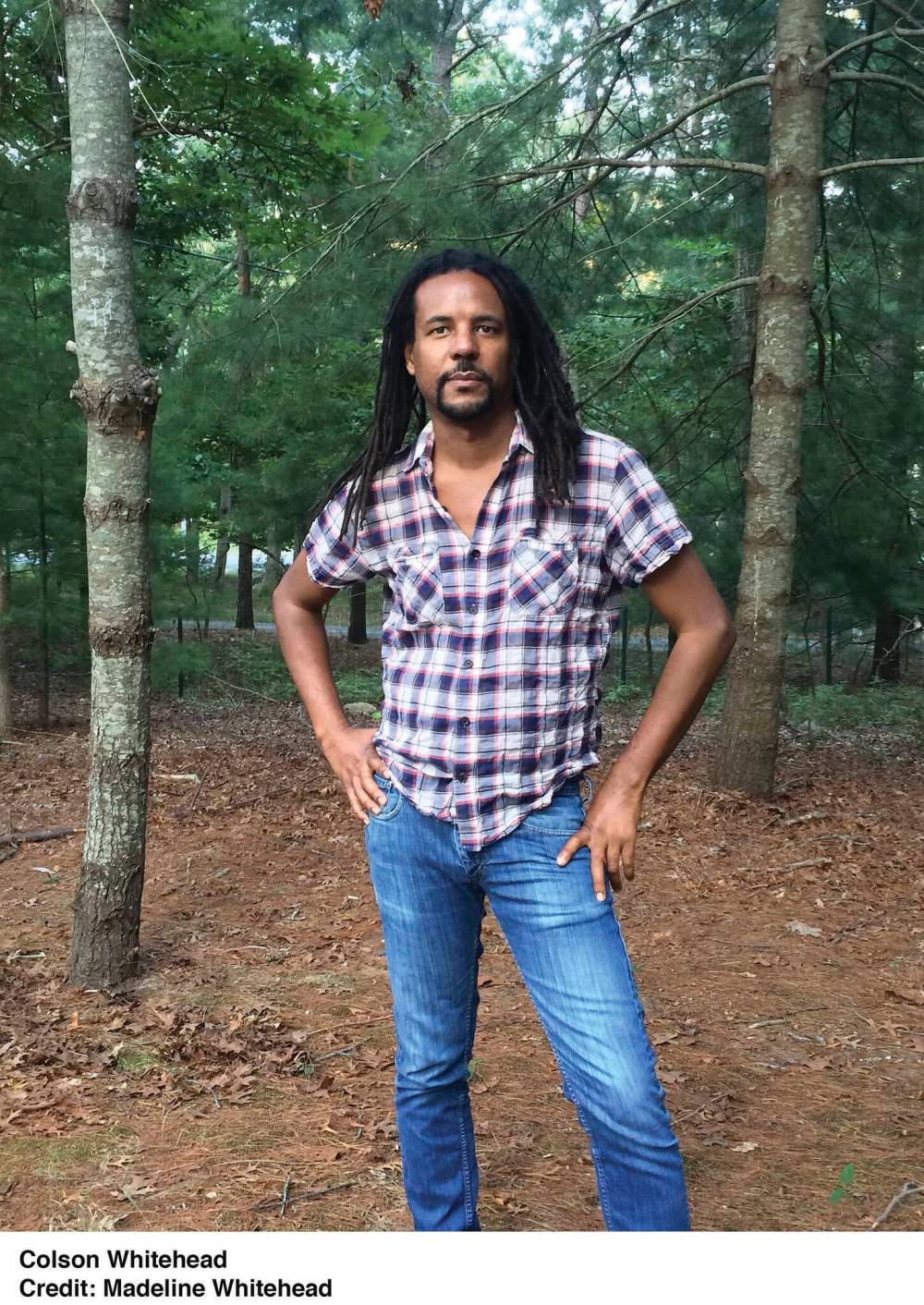
Madeleine Whitehead photo
Author Colson Whitehead
While Carney’s first appearance on the page was in Whitehead’s 2021 novel Harlem Shuffle, a story that takes place in 1960s New York, the character had been keeping the author company long before that. And in the process of writing Harlem Shuffle, Whitehead realized he wanted to explore Carney in more depth than what one novel would allow.
“I decided to make it a trilogy halfway through writing Harlem Shuffle — but I didn’t mention it in interviews at the time, because what if I got bored? I wanted to have an out if I didn’t want to pursue it. I had this image of my obituary saying, ‘… and that trilogy he started but never finished,’” Whitehead says, laughing.
The second book in the series, 2023’s Crook Manifesto, jumps ahead a decade and chronicles Carney and his cronies in 1970s New York, and with Cool Machine, readers rejoin the characters in 1980s Harlem. The trilogy is equal parts crime fiction, a historical document of New York City and the experience of being Black in America in the mid-20th century.
Each of the novels is told in three parts, covering different years and characters. In the first section of Cool Machine, set in 1981, Carney joins a heist at the Waldorf Astoria hotel to help his wife finance her budding travel company. The second section, set in 1983, sees Pepper, an aging thug, searching the East Village for a missing African mask he was supposed to help keep safe during transport. The third section jumps ahead to 1986 and back over to Carney, who has to help protect his nephew from the people who think he murdered his boss.
Cool Machine sees another character play a more prominent, vibrant role than perhaps in the previous books — the gritty but creatively vibrant city itself.
In the book’s second section, set in 1983, Pepper navigates New York’s creative scene, including some of the era’s seminal underground bands.
“My older sister was playing all those bands mentioned in the book, and hopefully there’s that feeling of discovery I felt a couple of years later, when I started going downtown by myself to buy a Bauhaus T-shirt or a Sonic Youth album,” he says.
It was a pivotal era for the aspiring writer to start honing his creative chops.
“As someone who I started writing in my 20s and developing my voice as a writer, the ‘80s were a good time culturally — I definitely have a lot of affection for New York in that time,” Whitehead says.
In the book’s first section, leading up to Carney’s “one last” criminal gig on the Waldorf Astoria heist, he spots a poster for the 1981 film Escape From New York, in which Snake Plissken (Kurt Russell) is dropped into a future New York, now a maximum security prison, in order to rescue the U.S. president.
It gets him thinking about his own fate.
“He’s perplexed. Why would you escape? How would you do that? And where would you go?,” Whitehead says.
“It’s not about the movie’s plot, but more the philosophical question: Can you escape? I think that’s at the heart of a heist narrative — you know, ‘I’m trying to escape my fate. Can I? How do I do that?’”
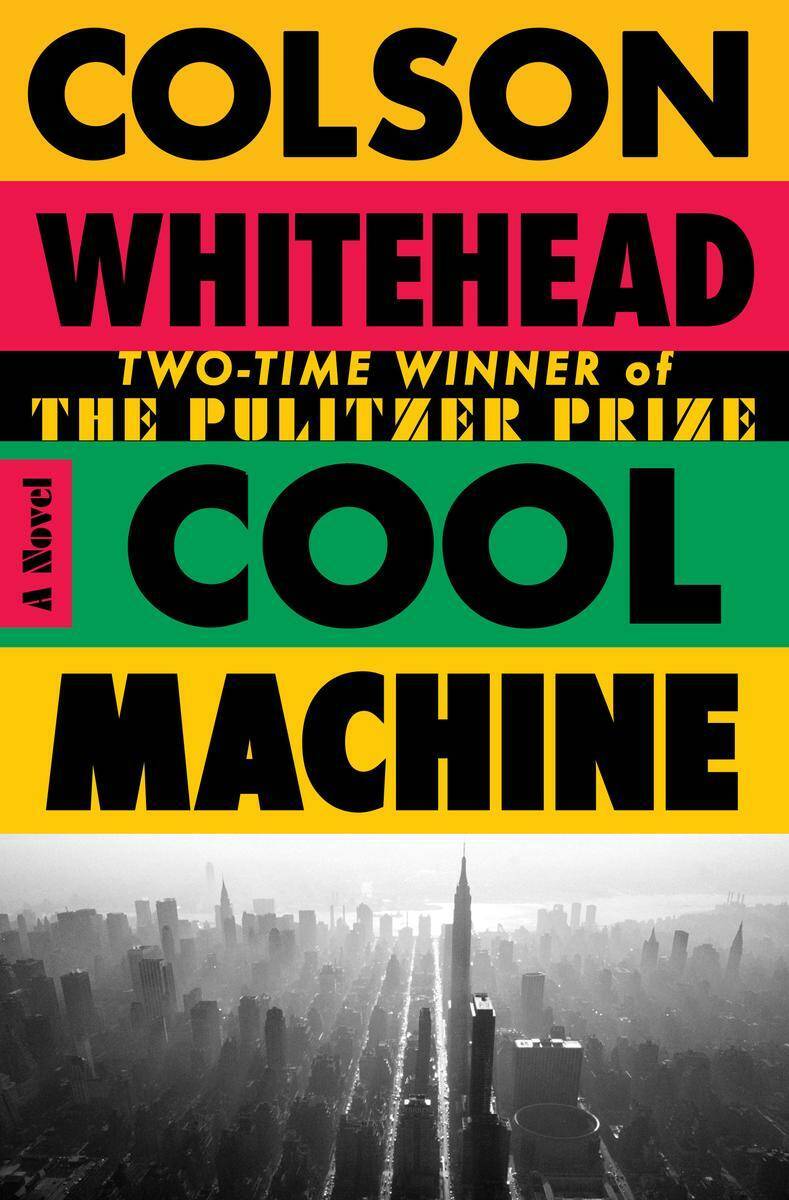
Cool Machine re-unites readers with Colson Whitehead’s cast in 1980s Harlem.
Whitehead enjoyed the challenge of figuring out how the characters would develop and age over the course of the books.
“I’m the same age as Carney; Pepper’s a bit older, and he doesn’t take a beating as well as he used to — he’s a little creaky.” he says, laughing. “I knew that I was going to have to narrate the aging process, which also raises other philosophical questions.
“There’s no retirement plans for these people, there’s no pension. When you hit 65 and you can no longer pursue the life of crime with the same vigour, what do you do?”
The Harlem trilogy seems ideal for a limited TV series or some such adaptation, and a pilot is currently in development for a potential show based on Harlem Shuffle, following the success of the 2024 film of The Nickel Boys and the 2021 limited TV series adaptation of The Underground Railroad.
“One of the best experiences of my life was to see how (Moonlight director) Barry Jenkins adapted it,” Whitehead says of the latter. “I don’t really see my characters’ faces when I write, and I felt like each time he brought someone into the screen, I was like, ‘Oh yes, that is Cora, that is Caesar.’ It was really enchanting.”

Whitehead knows his hometown’s fortunes have oscillated wildly over the years, from poverty and corruption to far better outlooks.
“I was talking to somebody, and they were like, ‘Oh, New York’s in an upswing, with the (NBA championship-winning) Knicks and (new Mayor Zohran) Mamdani.’ People are excited. As a lifelong New Yorker, I know whenever you go up, you come down. In the trilogy, you see New York going through different phases,” he says.
Penning the Harlem trilogy also reaffirmed Whitehead’s love for NYC.
“Writing the books has connected me more to my hometown; I feel a lot more affection for it, having thought about it so deeply,” he says. “There may be another setback, another recession or, God forbid, pandemic-type situation, and people will count the city out, but the city always comes back.”
ben.sigurdson@winnipegfreepress.com
Ben Sigurdson
Literary editor, drinks writer
Ben Sigurdson is the Free Press‘s literary editor and drinks writer. He graduated with a master of arts degree in English from the University of Manitoba in 2005, the same year he began writing Uncorked, the weekly Free Press drinks column. He joined the Free Press full time in 2013 as a copy editor before being appointed literary editor in 2014. Read more about Ben.
In addition to providing opinions and analysis on wine and drinks, Ben oversees a team of freelance book reviewers and produces content for the arts and life section, all of which is reviewed by the Free Press’s editing team before being posted online or published in print. It’s part of the Free Press‘s tradition, since 1872, of producing reliable independent journalism. Read more about Free Press’s history and mandate, and learn how our newsroom operates.
Our newsroom depends on a growing audience of readers to power our journalism. If you are not a paid reader, please consider becoming a subscriber.
Our newsroom depends on its audience of readers to power our journalism. Thank you for your support.
Event preview
An evening with Colson Whitehead
Reading from and discussing Cool Machine
Muriel Richardson Auditorium, WAG-Qaumajuq, 300 Memorial Blvd.
Tuesday, 7 p.m.
Tickets from $50.32 at wfp.to/iMW
Ben Sigurdson
Literary editor, drinks writer
Ben Sigurdson is the Free Press‘s literary editor and drinks writer. He graduated with a master of arts degree in English from the University of Manitoba in 2005, the same year he began writing Uncorked, the weekly Free Press drinks column. He joined the Free Press full time in 2013 as a copy editor before being appointed literary editor in 2014. Read more about Ben.
In addition to providing opinions and analysis on wine and drinks, Ben oversees a team of freelance book reviewers and produces content for the arts and life section, all of which is reviewed by the Free Press’s editing team before being posted online or published in print. It’s part of the Free Press‘s tradition, since 1872, of producing reliable independent journalism. Read more about Free Press’s history and mandate, and learn how our newsroom operates.
Our newsroom depends on a growing audience of readers to power our journalism. If you are not a paid reader, please consider becoming a subscriber.
Our newsroom depends on its audience of readers to power our journalism. Thank you for your support.
Advertisement Advertise With Us
Advertisement Advertise With Us