Grace under pressure
Nemat’s novel chronicles grandmother’s harrowing life in Russia and Iran
Advertisement
Read this article for free:
or
Already have an account? Log in here »
To continue reading, please subscribe:

Digital Subscription
One year of digital access for only $205*
- Enjoy unlimited reading on winnipegfreepress.com
- Read the E-Edition, our digital replica newspaper
- Access News Break, our award-winning app
- Play interactive puzzles
*First annual payment billed as $205.00 + GST for one year. This annual subscription will automatically renew at $233.00 + GST every 52 weeks (10% off the regular annual price of $259.35). Offer available to new and qualified returning subscribers only. Cancel any time.
To continue reading, please subscribe:
Add Free Press access to your Brandon Sun subscription for only an additional
$1 for the first 4 weeks*
- Enjoy unlimited reading on winnipegfreepress.com
- Read the E-Edition, our digital replica newspaper
- Access News Break, our award-winning app
- Play interactive puzzles
*Your next Brandon Sun subscription payment will increase by $1.00 and you will be charged $17.95 plus GST for four weeks. After four weeks, your payment will increase to $24.95 plus GST every four weeks.
Read unlimited articles for free today:
or
Already have an account? Log in here »
Mistress of the Persian Boarding House is the most enjoyable book I have read in the more than 15 years since I began reviewing books for the Free Press.
Author Marina Nemat’s prose, inspired by her paternal grandmother’s life, flows smoothly, like a babbling brook down a mountain.
Nemat is an Iranian-born Canadian writer and human rights activist known for her bestselling memoirs Prisoner of Tehran and After Tehran: A Life Reclaimed. Arrested at 16 for opposing Iran’s post-revolution regime, she endured torture and forced marriage in Evin Prison before emigrating to Canada in 1991.

SUPPLIED
Marina Nemat was arrested at 16 for opposing Iran’s post-revolution regime, arriving in Canada in 1991.
Nemat’s grandmothers were both Russian, and she was brought up in a Russian Orthodox Christian family in Tehran. With their Iranian husbands, whom they had married before the Russian Revolution of 1917, both grandmothers fled from Russia to Iran as part of a massive wave of migration.
Among Mistress of the Persian Boarding House’s blurbs is that of Vladimir Kara-Murza, Russian opposition leader, who sees the book as “an uplifting and heartwarming story about refusing to give up hope and drown in despair, about maintaining humanity and kindness against the backdrop of unimaginable horrors.”
Nemat fully inhabits the heart mind and soul of Zina, her grandmother, in order to re-imagine her flight from revolutionary 1917 St. Petersburg to exile in Tehran. From the childhood delight of catching snowflakes with her tongue to the terror of negotiating for her life with a rapist at gunpoint, here is a master storyteller moving seamlessly from memoir to historical fiction in an epic tale of family upheaval.
Zina was born into a family of unimaginable wealth that sheltered her and her friends from the struggles of ordinary Russians. When Russia begins to look too dangerous, Zina and her husband flee to Tehran.
Shortly after their arrival, Zina’s husband Esa is robbed and killed while searching for a house to buy.
Through her writing, Nemat seems to be reaching out to her grandmother to understand her strength and resilience — and to learn from it. “Time and again, her grandmother’s life journey seems to supply answers to eternal questions,” says Kara-Murza in his words about the book.
In one powerful scene, Zina goes into labour; the baby becomes stuck, and one of the other women performs an emergency c-section to save both mother and child. The only anesthetic in the house is a bottle of vodka; the women help hold Zina to the table while the operation takes place.
Around the time the Spanish flu hits Iran, Zina meets Reza Khan, who had brought a sick friend to the boarding house. Masks were the order of the day as the women tried to halt the spread of the virus.
Khan will soon become the shah of Iran, and he has ambitious, progressive plans for the country. He invites Zina to join him for a holiday at his cottage, and she accepts.
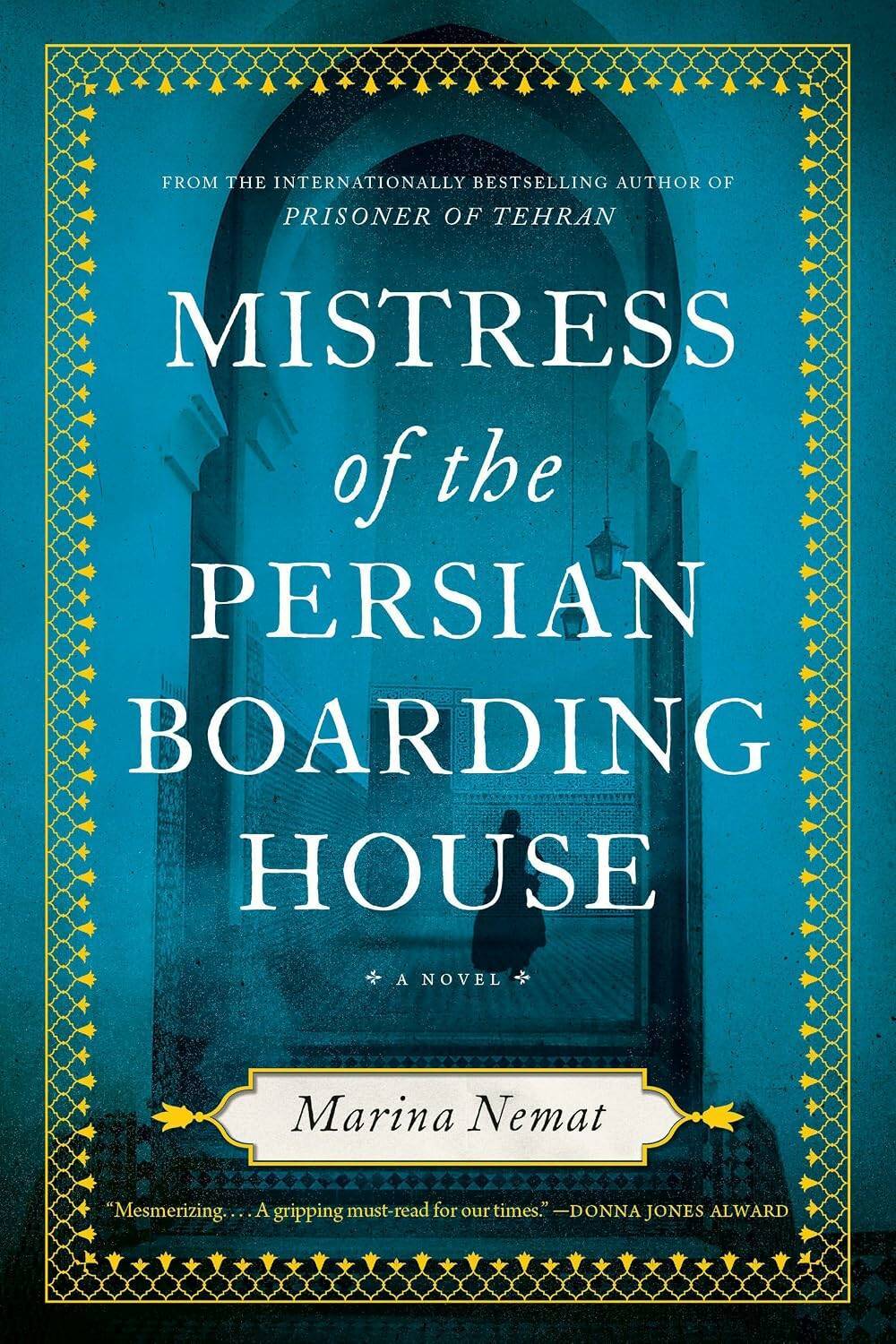
Mistress of the Persian Boarding House
She is cautious, though; while Khan has been good to her, Zina realizes a man does not rise to his level of power by being Mr. Nice Guy.
Nemat was a high school student when the secularizing monarchy of Mohammad Reza Pahlavi was overthrown by Ayatollah Khomeini’s Islamic Revolution. A recipient of the Human Dignity Prize and Morris Abram Human Rights Award, she speaks globally on freedom, teaches memoir writing, and serves on multiple human rights boards.
“Despite all the unknowns, I have a feeling that (Zina) guided my fingers over the keyboard as I wrote this book,” she says. “I have no doubt that she made her way into my thoughts and allowed me to capture the spirit of her suffering and her triumphs.”
Gordon Arnold is a Winnipeg author and retired news editor of the Winnipeg Free Press.