Up in flames
As wildfire season rages, new book explores the frontlines of battling Canadian blazes
Advertisement
Read this article for free:
or
Already have an account? Log in here »
To continue reading, please subscribe:

Digital Subscription
One year of digital access for only $205*
- Enjoy unlimited reading on winnipegfreepress.com
- Read the E-Edition, our digital replica newspaper
- Access News Break, our award-winning app
- Play interactive puzzles
*First annual payment billed as $205.00 + GST for one year. This annual subscription will automatically renew at $233.00 + GST every 52 weeks (10% off the regular annual price of $259.35). Offer available to new and qualified returning subscribers only. Cancel any time.
To continue reading, please subscribe:
Add Free Press access to your Brandon Sun subscription for only an additional
$1 for the first 4 weeks*
- Enjoy unlimited reading on winnipegfreepress.com
- Read the E-Edition, our digital replica newspaper
- Access News Break, our award-winning app
- Play interactive puzzles
*Your next Brandon Sun subscription payment will increase by $1.00 and you will be charged $17.95 plus GST for four weeks. After four weeks, your payment will increase to $24.95 plus GST every four weeks.
Read unlimited articles for free today:
or
Already have an account? Log in here »
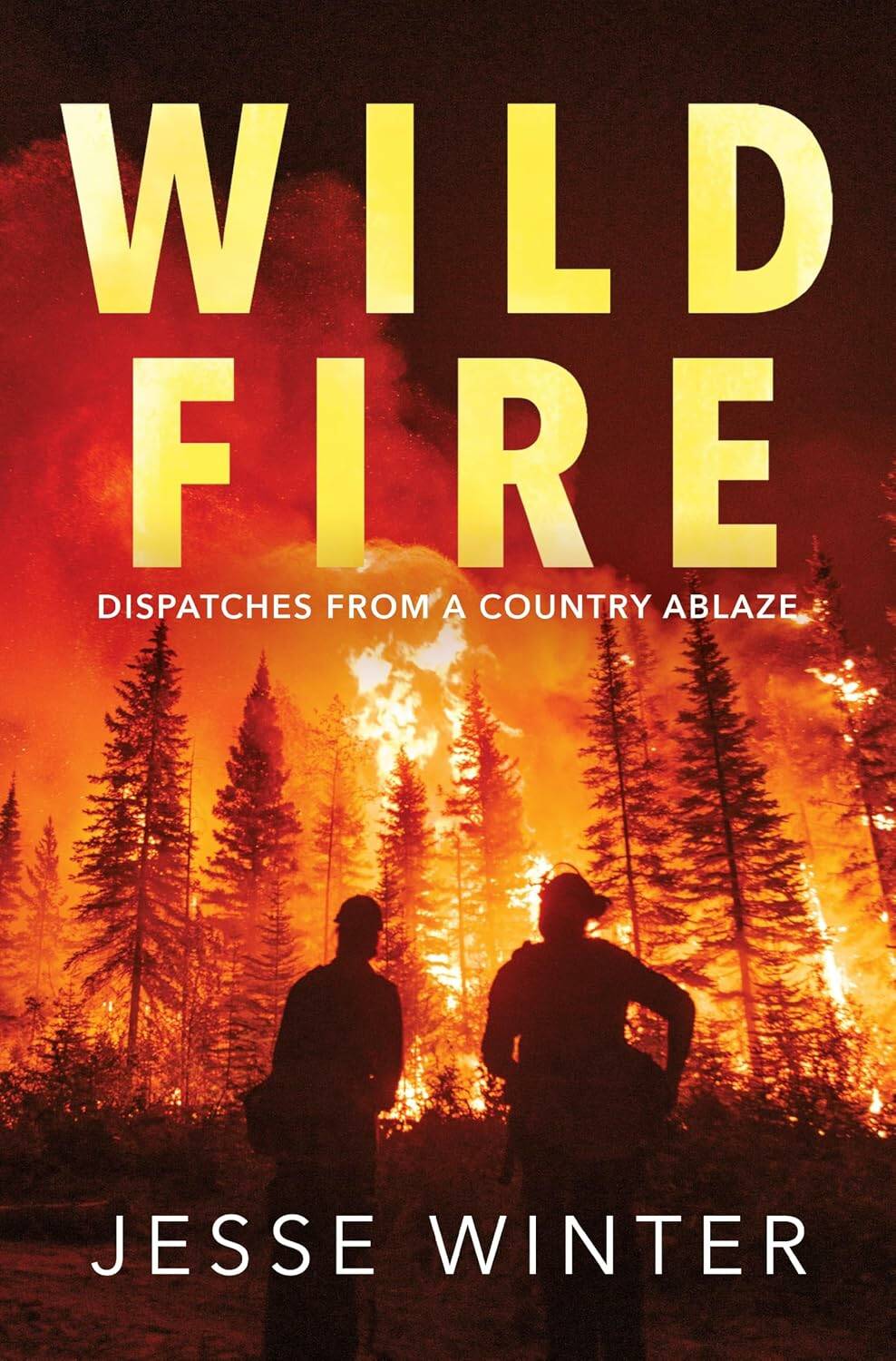
Mother Nature’s talking but we haven’t been listening, according to Jesse Winter, author of Wild Fire: Dispatches from a Country Ablaze, a book, released earlier this summer detailing Canada’s wildfire woes.
Currently, almost 1,000 wildfires across Northwestern Ontario, British Columbia, the Prairies, Northwest Territories and eastern provinces are burning in Canada. Forest fires also continue to wreak havoc in France, Spain and other European countries, and in the U.S. states of Oregon, California, Florida and Texas. While 2023 still rates as the world’s worst wildfire season, 2026 is hot on its heels.
Winter, a Vancouver-based, award-winning climate disaster photojournalist, spent more than two years on Wild Fire, his first book. In-depth research included working with firefighting crews and environmentalists as well as talking to researchers, politicians and evacuees. He says we need to rethink our views on wildfires or be prepared to watch more land go up in flames.
Wild Fire
Canada, Winter writes, is “a country almost perfectly designed to burn.” At least 70 per cent of boreal forests, which cover one-third of the country, are stuffed with highly flammable spruce, fir, pine and tamarack trees as well as aspen, poplar and birch. With a wealth of available fuel, it’s no surprise, he writes, that an area twice the size of Vancouver Island burns every summer in Canada.
Additionally, nearly five million Canadians live in areas bordering on forests — think, North Vancouver, Thunder Bay, the Muskokas and Halifax, to name a few. That’s more than 324,000 square kilometres of urban structures and areas all potentially at risk of wildfire destruction.
Fires need three things: fuel, oxygen and an ignition source. Add climate change extremes of hot air temperatures and low humidity, plus super-infestations of tree-killing insects, and you’ve got a perfect storm for extreme wildfires or megafires (Winter’s depictions of the 2024 fire walls and fire tornadoes in Jasper, Alta. make for intense reading).
Canada’s seven worst wildfire seasons have all occurred in the past 10 years. Although Wild Fire recounts the author’s journey to understand the science of wildfires, Winter does a masterful job of attaching human faces to two of Canada’s worst recent fire tragedies — Jasper National Park in 2024 and Yellowknife, N.W.T. in 2023. Amidst the stories of courage, grit and close calls from veteran wildland firefighters and small-town fire chiefs are tales of community workers’ efforts to help residents safely navigate and evacuate burning neighbourhoods.
Winter’s first wildfire photo assignment was in Peachland, B.C. in 2018; he willingly admits that what he didn’t know about wildfires and climate change then informed this book, and what he still doesn’t know may fill a sequel. That we should be so lucky.

AINSLEY CRUICKSHANK PHOTO
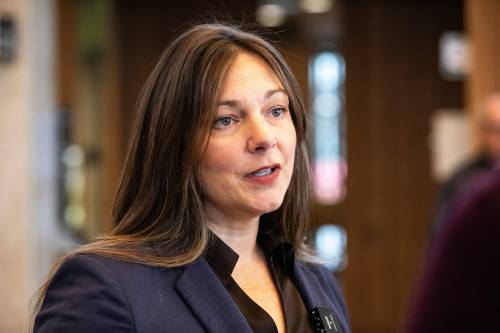
Jesse Winter
Having forgone sensationalism and preachiness for a clear, compelling and informative narrative, Winter has delivered a powerful book that’s an excellent companion to John Vaillant’s 2024 book Fire Weather: The Making of a Beast. Not only does Winter present a range of perspectives on forest management and wildland firefighting challenges, he also shares hopeful solutions for future action.

Currently, Canada spends more than $1 billion annually to fight wildfires, with less than 10 per cent of that going to prevention strategies and tactics. We have a problem that requires more than cash, studies-in-triplicate and aging evacuation plans, Winter says. Experts say we’re still taking flyswatters to a gunfight; Winter prefers his “spitting on a campfire” analogy.
Regardless, we’re just not “ready for what is coming and, in many cases, is already here,” he writes.
“We keep failing again and again to learn the lessons Mother Nature is trying to teach us in increasingly emphatic tones,” Winter says. “Nobody knows for sure where the next major wildfire will strike but one thing is certain: These fires are not aberrations. They are no longer ‘infrequent.’ They are our new reality and will continue to be so for decades to come.”
We’ve been warned.
OWEN ROSE / CANADIAN PRESS FILES
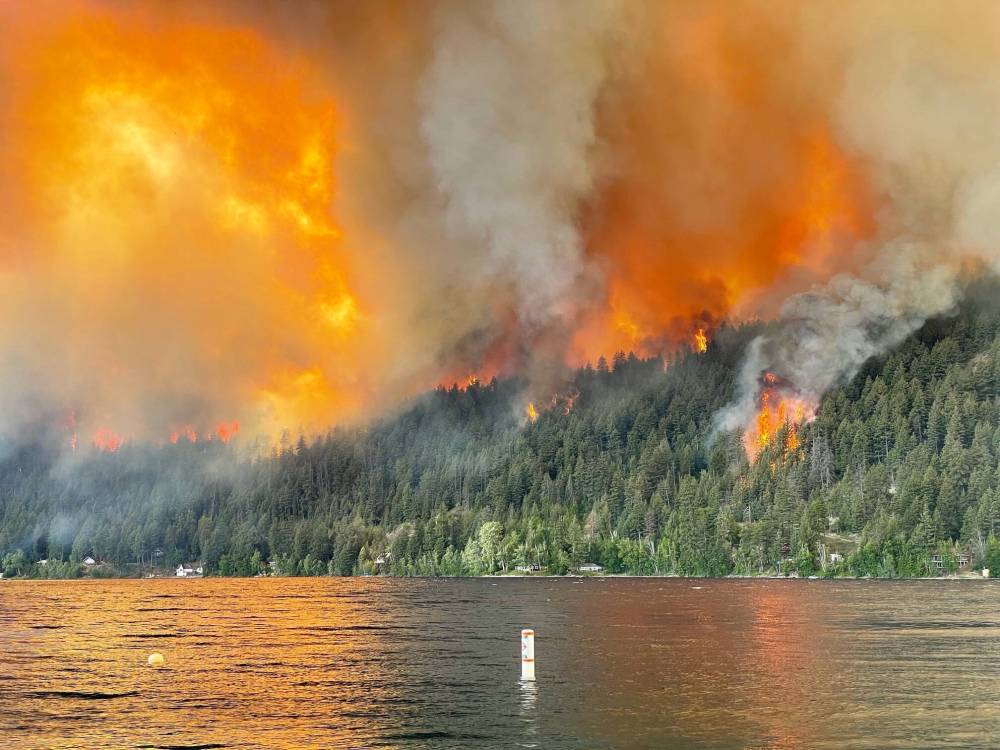
In this August 2023 photo, the Downton Lake wildfire burns near Gold Bridge, B.C., and the north shore of Gun Lake. The 2023 wildfire season rates as the world’s worst — although 2026 is hot on its heels.
GC Cabana-Coldwell is a Winnipeg-based freelance writer.