Born to be wild
Synanthropes’ story shows ways they have adapted — and the risks they pose
Advertisement
Read this article for free:
or
Already have an account? Log in here »
To continue reading, please subscribe:

Digital Subscription
One year of digital access for only $205*
- Enjoy unlimited reading on winnipegfreepress.com
- Read the E-Edition, our digital replica newspaper
- Access News Break, our award-winning app
- Play interactive puzzles
*First annual payment billed as $205.00 + GST for one year. This annual subscription will automatically renew at $233.00 + GST every 52 weeks (10% off the regular annual price of $259.35). Offer available to new and qualified returning subscribers only. Cancel any time.
To continue reading, please subscribe:
Add Free Press access to your Brandon Sun subscription for only an additional
$1 for the first 4 weeks*
- Enjoy unlimited reading on winnipegfreepress.com
- Read the E-Edition, our digital replica newspaper
- Access News Break, our award-winning app
- Play interactive puzzles
*Your next Brandon Sun subscription payment will increase by $1.00 and you will be charged $17.95 plus GST for four weeks. After four weeks, your payment will increase to $24.95 plus GST every four weeks.
Read unlimited articles for free today:
or
Already have an account? Log in here »
Dan Werb’s latest book is a combo of wonderfully deep yet readily accessible scientific writing about how humans share the planet with other species.
It’s also very scary.
Werb is a Toronto writer and epidemiologist, and the author of two previous books, City of Omens and The Invisible Siege.

JOE FUDA PHOTO
Dan Werb
The “wild familiars” of title are, technically, what’s known as synanthropes — wild animals that live alongside humans. The most common are those that share our urban landscape — the raccoons, coyotes, foxes, crows, bats and rats that perennially show up in parks, dumps, garages, gardens or garbage bins.
What’s particularly fascinating in Werb’s survey is how synanthropes, as part of their migration from the wild to urban locales, have found new ways to think, live and prosper. By way of example, he cites research that holds that an urban raccoon isn’t the same creature as its wilderness cousin. They’ve evolved, according to “a flood of new studies,” to have different skill sets and aptitudes.
Werb doesn’t confine himself to the titular wild familiars that routinely intersect with man and man’s encroachments on their habitat. He ventures far and wide, plumbing the existence of the weird and marine (the giant pacific octopus) and the dangerous and endangered (the bengal tiger). Any animal that materially or dramatically bumps up against us where we live merits consideration.
In newspaper parlance there’s an old bugbear called “burying the lede” — failing to begin a piece of reporting with the most important facts. This otherwise excellent take on the animals that live cheek by jowl with us is guilty of a gaffe akin to that failure.
Quite late — in fact, over two-thirds into the book — Werb underlines that Sars-CoV-2, the virus that caused the COVID-19 pandemic and a two per cent mortality rate “wasn’t the first or even the second coronavirus to emerge and sicken us in the twenty-first century. It was the third, following quickly after SARS (severe acute respiratory syndrome, 10 per cent mortality rate) in 2002 and MERS (Middle East respiratory syndrome, 33 per cent mortality rate) in 2012.”
And then he drops a bombshell.
He maintains the risk of animal-to-human viral transmission “has been so ratcheted up that many virologists now believe we have entered a new pandemic age, when these massive global calamities will inevitably arise with ever greater frequency. And synanthropes are playing a leading role in this grand drama.”
Three coronaviruses in two decades, he adds, “is a series of blaring alarms warning us that smoke isn’t just rising in the distance, the building we are living in is engulfed in flames.”
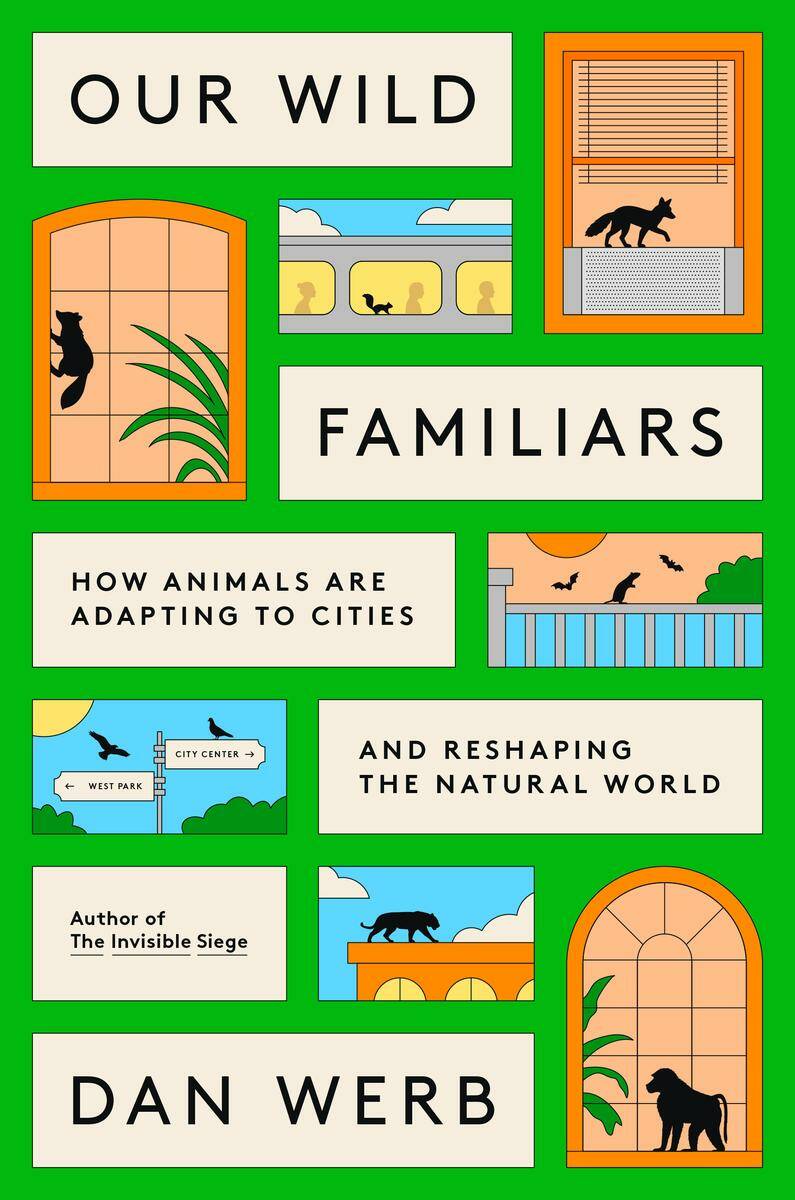
Our Wild Familiars
Clearly Werb has a gift for alarming metaphor.
Both the prodigious research he’s digested and presented, and the narratives of the field excursions he took (to India, Saudi Arabia and the Pacific waters off Washington state), are lucid and enlightening. And surprisingly, for all the gravity of his subject matter, he displays a whimsical, even puckish, sense of humour that most often surfaces in parenthetical asides.
Read this book and you’ll never regard the critters that turn up in your backyard in quite the same light.
Douglas J. Johnston is a Winnipeg lawyer and writer.