Unlocking his potential

Facing life in prison for drug trafficking, former inmate found purpose in books

Advertisement

Advertise with us

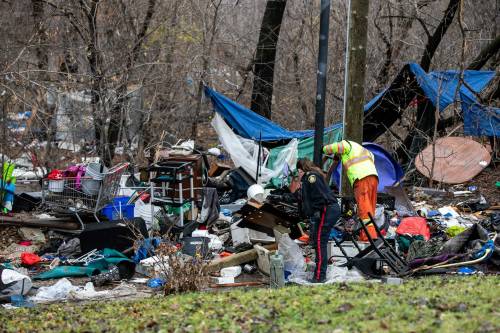
The kid lived in a decaying and dangerous neighbourhood that should have been wrapped in police tape.

Read this article for free:


or

Already have an account? Log in here »

To continue reading, please subscribe:

Subscribe and receive a limited-edition Free Press branded hat or tote.

Digital Subscription

One year of digital access for only $205*

  • Enjoy unlimited reading on winnipegfreepress.com
  • Read the E-Edition, our digital replica newspaper
  • Access News Break, our award-winning app
  • Play interactive puzzles

*First annual payment billed as $205.00 + GST for one year. This annual subscription will automatically renew at $233.00 + GST every 52 weeks (10% off the regular annual price of $259.35). Offer available to new and qualified returning subscribers only. Cancel any time.

To continue reading, please subscribe:

Add Free Press access to your Brandon Sun subscription for only an additional

$1 for the first 4 weeks*

  • Enjoy unlimited reading on winnipegfreepress.com
  • Read the E-Edition, our digital replica newspaper
  • Access News Break, our award-winning app
  • Play interactive puzzles
Start now

*Your next Brandon Sun subscription payment will increase by $1.00 and you will be charged $17.95 plus GST for four weeks. After four weeks, your payment will increase to $24.95 plus GST every four weeks.

The kid lived in a decaying and dangerous neighbourhood that should have been wrapped in police tape.

Chris Young grew up in a sordid backwater in Clarksville, Tenn., never knew his father, had a drug addict for a mother and, to stay alive, had to make money the only way he could in his world: dealing drugs in his neighbourhood.

By age 22, with three convictions for selling paltry amounts, Young was locked up in a maximum-security federal prison for life without parole under harsh mandatory drug sentencing laws. He had all the future of a cat in a dog kennel.

Supplied photo
                                Chris Young was pardoned in 2021 after 10 years in prison; he went on to graduate from Southern Methodist University and is now a motivational speaker and adviser.

Supplied photo

Chris Young was pardoned in 2021 after 10 years in prison; he went on to graduate from Southern Methodist University and is now a motivational speaker and adviser.

The Wound Is Where the Light Enters is an extraordinary book about a brilliant young man who has gone to hell and back, and knows how to put it into words without conceit or servility. It is about his resolute explanation of why it is better to take command of your future rather than accept it. It is powerful medicine likely to help the rudderless, people who find life bewildering or aimless. It is a zig-zag saga of growing up, much of it written behind bars.

The title of Young’s book is taken from a quotation by 13th-century Persian poet Rumi — that pain can be the harbinger of healing and growth, if you let it.

The Wound is the last place on earth you’d expect to find mindful elation, but Young leaves the darkness and embraces the joy of living. When he describes that change, the words speak both of status and authority. He is very believable.

Behind what Young writes is the compass of forethought. His story is incredible, even more so because it was kick-started in one of the world’s most depressive places: a tomb of nothingness called solitary confinement.

Young was in pre-trial custody for four years before his case came up, largely because he refused to plead guilty even when, several times, the court was willing to charge him with a lesser offence. He wanted his day in court.

Prison walls say the same aching thing to those inside them, that you’re forbidden the luxury of choice: turning a lightbulb on or off, showering alone, deciding what and when to eat, missing somebody’s body heat, being unable to say no without weighing the consequences, sleeping in.

But on one very ordinary day, Young was locked in the freezing, neglected and vermin-occupied library while guards were tossing his cell when a red book caught his eye. He went over and tipped it from the shelf; it was an encyclopedia. Young began reading it. It became very clear: his mind was like an engine in idle until something put it in drive, and books were the fuel.

Young marinated in all the books he could find. For the first time in his life, his mind was engaged. He absorbed everything on politics, anthropology, history, philosophy, art and physics. In the ugly hopelessness of that cage, Young taught his mind to fly. It flew to wherever it wanted to be.

“I kept my eye on those red-leather covers. It was like they were calling to me, and I listened,” he writes. Young’s resolve demonstrates the power of reading at a time when an increasing number of people aren’t. His metamorphasis from inmate to beautiful mind was as potent an exchange as a matchbook for a flamethrower. From books, he figured out how to code without a computer and how to make sense of the stock market.

Young’s drug case finally came to court. Asked if he had anything to say, he spoke for an hour. The presiding judge, Kevin Sharp, who called the mandatory sentence unjust, had no choice but to impose it.

Sharp was so impressed by what Young said that when he later resigned from the bench and was in private practice, he pledged to help him, as did attorney Brittany Barnett and businesswoman/media personality Kim Kardashian. “Chris’s presence in my courtroom transformed my life,” said Sharp.
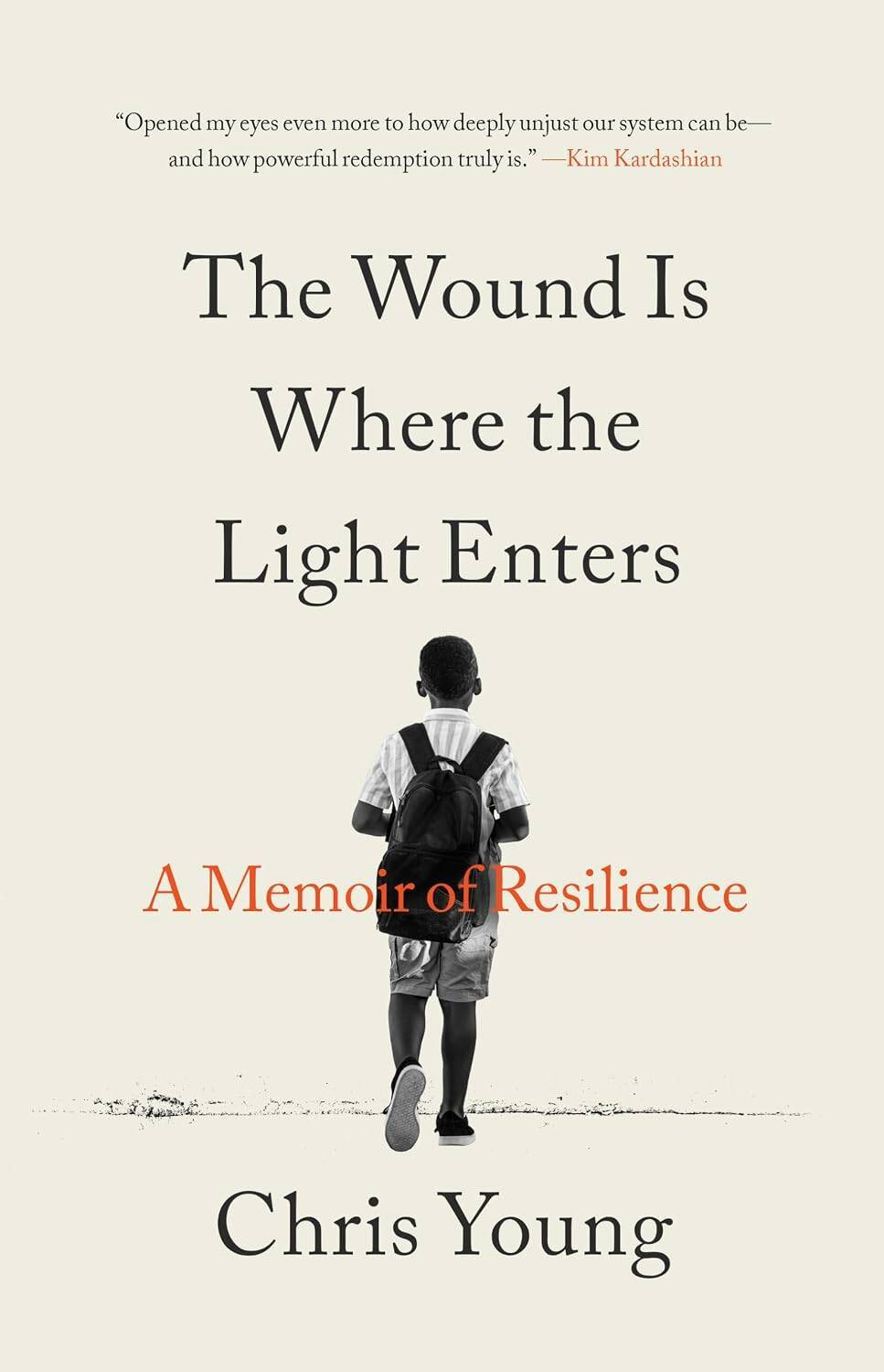
The Wound is Where the Light Enters

The Wound is Where the Light Enters

Young was pardoned by President Donald Trump in 2021 after 10 years in penitentiary. Said Sharp, who sentenced Young: “Seeing him free was one of the greatest joys of my life.” He went on to graduate from Southern Methodist University with a degree in economics and public policy.

Today Young is a motivational speaker and founder of Coherence Consulting, which advises organizations on technology, policy and their social impact. As a speaker, Young helps audiences unlock their potential.

Says Young: “I started writing this book in solitary. That’s where the Federal Bureau of Prisons tossed me to keep me safe from COVID-19.”

Jail was hell, no question. “We were chattels to our keepers, no better than animals. They treated animals better. But those hours I spent reading, studying, thinking? That was different. In my mind, I felt freer than I’d ever felt in my entire life,” he writes.

Young concluded upon his release: “The wound is where the light enters — but it’s also where light expands. Where survival becomes vision, and pain becomes purpose. I used to think freedom was a destination. Now I know it’s a state of mind. And I’m still letting the light in. ”

Chris Young: page by page, from solitary to sunlight.

Barry Craig is a retired journalist.
Report Error Submit a Tip

More Stories

NDP minister needs lesson in political civility

Dan Lett 5 minute read Preview

NDP minister needs lesson in political civility

Dan Lett 5 minute read Friday, Sep. 4, 2026

Families Minister Nahanni Fontaine’s decision to intercede in Winnipeg’s mayoral election may be surprising to some political observers. To others, however, it is entirely on brand.

On Tuesday, Fontaine posted a video on social media in which she expressed concern that former city councillor and Progressive Conservative cabinet minister Kevin Klein was entering the race to challenge incumbent Mayor Scott Gillingham.

The caption on the video was blunt: “I mean, really, who chooses to work for Count Dracula?”

“Kevin Klein once worked for Peter Nygard. Peter Nygard is Canada’s equivalent to (American sex offender) Jeffrey Epstein — had his own little island, did unspeakable, disgusting things to women and girls … anyways, I just thought that Winnipeggers would want to know that Kevin Klein, at one point, worked for Peter Nygard,” she says in the video.

Read
Friday, Sep. 4, 2026

‘Soapy disco’ for your ride

Aaron Epp 5 minute read Preview

‘Soapy disco’ for your ride

Aaron Epp 5 minute read Friday, Sep. 4, 2026

For Kyle Thompson, foam is where the heart is.

As a high school student at Winnipeg’s Transcona Collegiate, one of his classes required him to create a business plan. He was cleaning vehicles part-time at the Chamois Car Wash and Detail Centre, so he used the assignment to envision a car wash of his own — one with a Regent Avenue address.

Fast forward some 25 years later and that dream is a reality. Thompson is the co-owner and general manager at Flamingo Express Car Wash.

Located at 868 Regent Ave. West — east of the row of car dealerships that call the thoroughfare home and across the street from an Amazon distribution hub — Flamingo opened last month.

Read
Friday, Sep. 4, 2026

US tourism groups want to win Canadian visitors back. A testy trade war isn’t helping

Rio Yamat, The Associated Press 7 minute read Preview

US tourism groups want to win Canadian visitors back. A testy trade war isn’t helping

Rio Yamat, The Associated Press 7 minute read Sunday, Sep. 6, 2026

LAS VEGAS (AP) — Appeals from American tourism organizations seemed to be everywhere Josh Loewen looked over the last year. Billboards and banners proclaimed a state or city's love for Canada. Online and social media ads offered special deals for travelers from north of the border.

As a Vancouver resident and marketing executive himself, Loewen said he understands the conciliatory overtures. The number of Canadians traveling to the United States plunged after President Donald Trump returned to office with remarks about making Canada the 51st state. An acrimonious trade war between the two countries now is threatening to reinforce the informal boycott just as it appeared to be easing slightly.

"It’s such a big ask right now,” Loewen, 45, said of the U.S. tourism industry's attempts to woo Canadians like him back before a new president occupies the White House. “It’s just a wasted effort.”

Relations between the U.S. and Canadian governments have deteriorated sharply since their trade negotiations collapsed last month. Trump imposed import taxes of up to 50% on a range of Canadian products. Canada’s government responded in kind. Trump ordered the U.S. government to change the name of border-spanning Lake Ontario to “Lake America.” Canadian Prime Minister Mark Carney dismissed insults from members of Trump's Cabinet as childish and undignified.

Read
Sunday, Sep. 6, 2026

Fund full-day kindergarten for all

Catherine-Laura Dunnington and Molly McCracken 4 minute read 2:00 AM CDT

Children entering kindergarten are starting school this fall. While the 2.5-hour kindergarten day commonly found in Manitoba schools sounds like a pleasant transition to the school system, in truth it remains one of the biggest missing pieces of the child-care puzzle.

Province-wide, families face a stressful dilemma — if they are lucky enough to have child care, they have to leave work at lunch and shuttle a child from school to child care; if they don’t, they must reduce hours, or forgo working or education, because they don’t have child care for their kindergartener.

The Government of Manitoba has made progress on making child care more affordable and accessible. But we have largely left one enormous piece untouched — part-day kindergarten. Why is publicly funded education for kindergarten still only 2.5 hours a day? To date, British Columbia, Ontario, Quebec, New Brunswick, Newfoundland and Labrador, Nova Scotia, and Prince Edward Island have all implemented full-day, publicly funded kindergarten. The Manitoba School Boards Association passed a resolution in 2025 to implement full-day kindergarten programming, but the province has not provided sufficient funding to implement it province-wide.

There are currently 13,600 children in kindergarten in Manitoba. With a coverage rate for licensed child care of 32.3 per cent, roughly 5,000 families with kindergarteners lack access to licensed child care during the part of the day when their child is not in school. That is a precarious position to put any family in.

Education student designs lesson plans to take a bite out of food marketing

Maggie Macintosh 4 minute read Preview

Education student designs lesson plans to take a bite out of food marketing

Maggie Macintosh 4 minute read Yesterday at 5:22 PM CDT

Instead of apples, Emma Caronte is handing out lesson plans on local food history to Manitoba teachers this back-to-school season.

The undergraduate researcher spent her summer break creating a social studies unit that investigates food guide evolution, marketing tactics and how honey dill sauce became a pantry staple on the Prairies.

“I want students to develop a greater interest in food and what outside influences affect their choices and what we consider ‘healthy,’” said Caronte, a final-year education student at the University of Manitoba.

She is advertising her 112-page project as a user-friendly resource for classroom teachers and “a fun sub plan” targeted at Grade 6, 7, 8 and 9.

Read
Yesterday at 5:22 PM CDT

All that glitters … could work here

Editorial 4 minute read Preview

All that glitters … could work here

Editorial 4 minute read 2:00 AM CDT

Sometimes, it’s hard to even suggest a change, because it seems there is always a plethora of people ready to tell you that your idea just won’t work.

But a unique program is working in Portland, Ore. and some version of that program could work in Winnipeg as well. Something that glitters may just be a small nugget of gold.

G.L.I.T.T.E.R. stands for Ground Score Leading Inclusivity Together Through Environmental Recovery.

It’s a long handle for a simple concept. Launched in 2021, the program hires people who are either unhoused or have recently been unhoused to do litter collection and tentside garbage collection for homeless encampments in the Portland region.

Read
2:00 AM CDT