Game over
Links between video games, violence pale in comparison to their miseducative nature
Advertisement
Read this article for free:
or
Already have an account? Log in here »
To continue reading, please subscribe:

Digital Subscription
One year of digital access for only $205*
- Enjoy unlimited reading on winnipegfreepress.com
- Read the E-Edition, our digital replica newspaper
- Access News Break, our award-winning app
- Play interactive puzzles
*First annual payment billed as $205.00 + GST for one year. This annual subscription will automatically renew at $233.00 + GST every 52 weeks (10% off the regular annual price of $259.35). Offer available to new and qualified returning subscribers only. Cancel any time.
To continue reading, please subscribe:
Add Free Press access to your Brandon Sun subscription for only an additional
$1 for the first 4 weeks*
- Enjoy unlimited reading on winnipegfreepress.com
- Read the E-Edition, our digital replica newspaper
- Access News Break, our award-winning app
- Play interactive puzzles
*Your next Brandon Sun subscription payment will increase by $1.00 and you will be charged $17.95 plus GST for four weeks. After four weeks, your payment will increase to $24.95 plus GST every four weeks.
Read unlimited articles for free today:
or
Already have an account? Log in here »
For every generation there is a technological leap that seemingly adds fuel to the age-old lament of “the kids these days.”
Socrates thought writing things down would be the end of us. The ubiquity of books thanks to the printing press was perceived as a great evil — mostly because it terrified the rich to see poor people educated. Radio was surely going to rot our brains, and for this reviewer, the black-and-white TV was kept in the closet to avoid the terror of Looney Tunes, Three’s Company, and The Love Boat.
And then came video games. From Frogger, Pac Man and Donkey Kong to today’s Call of Duty and Grand Theft Auto, there has been an association with video games and violence — the assumption that these platforms will create a generation of aggressive degenerates.
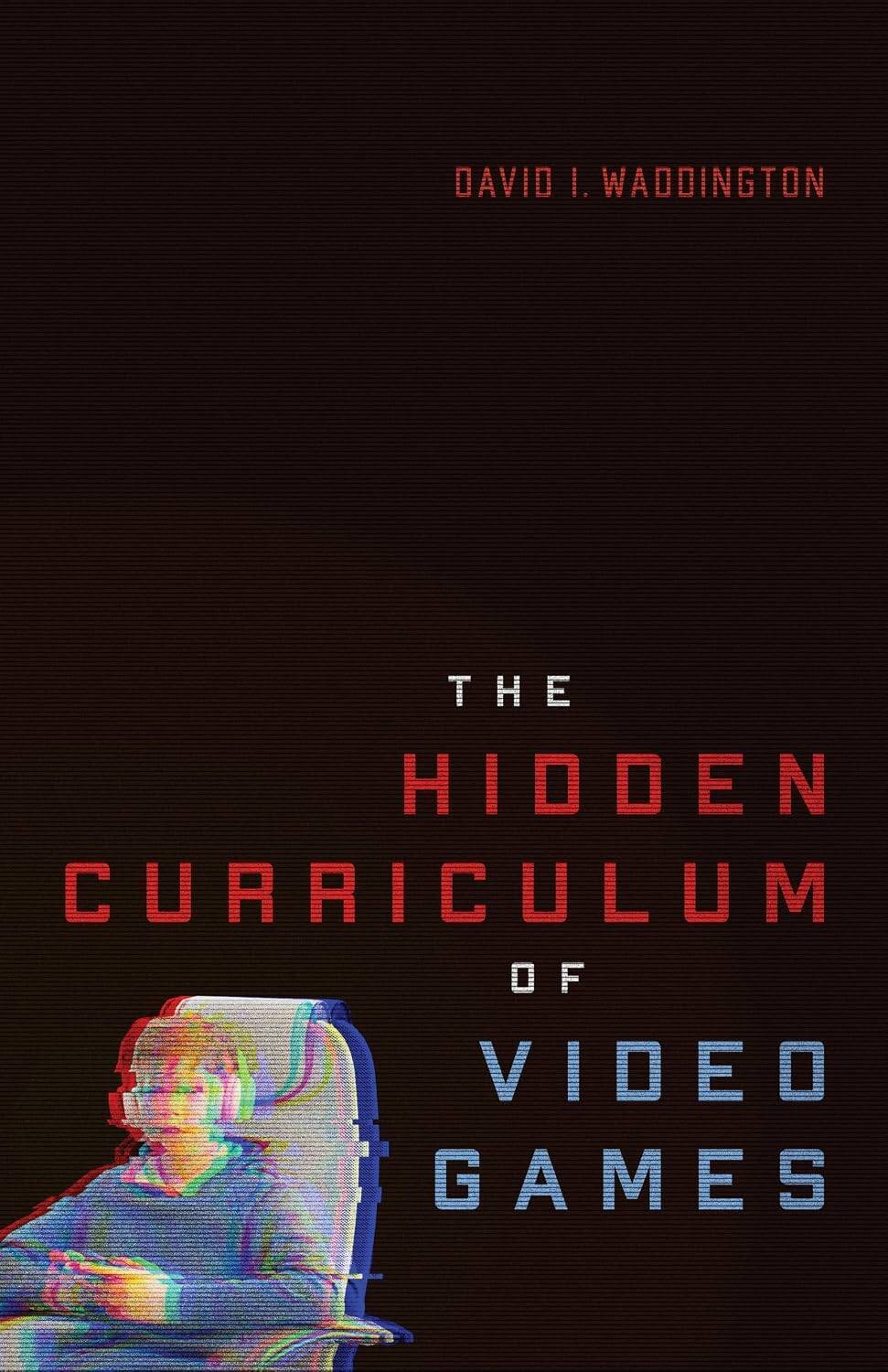
The Hidden Curriculum of Video Games
But is this really the case?
Such is the deep inquiry of Concordia University Education professor and philosopher David I. Waddington. In The Hidden Curriculum of Video Games, the gamer, thinker and former Nova Scotian has wrestled with the correlation between video games and violence and… wait for it… there isn’t much to go on.
Rather, through his doctoral research and unique course design, Waddington has discovered that video games possess less of a threat for creating an army of violent psychopaths, and more of a society of neo- and technoliberal zombies intent on exploiting the Earth.
Video games, according to Waddington, create hyper-capitalists. And we should take heed. As he argues, “I feel video games affect people’s thinking, including my own, for the worse.”
Framing his perspective in the thinking of Aristotle, Martin Heidegger and John Dewey, to name just a few, Waddington explores both the notions of modernity and experience through the lens of video games — albeit less popular ones for the likes of this reviewer (Super Mario Bros. was not on his list) — and makes the case that the jury is out on games cultivating violence. Through an emphasis on speed, colonialism and extraction, video games are shifting how we engage with games themselves — the experience — and the world.
As Waddington posits, “My central concern about video games is the kind of experiences we have when we play them, as well as the kinds of habits of action and thinking that we develop as a result of play.”
Leaning heavily on Dewey’s notions of experience, habits and aesthetics, Waddington takes the reader on a journey that first rebukes the hysteria and concern over violence, and then highlights how many games can fundamentally be miseducative. As Dewey brought forth in his concise but seminal text Experience and Education, not all experiences are educative. For the person who becomes a burglar, learning to steal was miseducative. We know an experience has been educative when there has been growth.
Video games, and a certain genre of video games for Waddington, are miseducative in this sense. “Many gamers inhabit a Randian, technolibertarian space, and I am confident we will see further outgrowths of this toxic environment in the years to come,” he writes. For him, video games are creating miseducative experiences — and, as Dewey suggests, every experience counts.
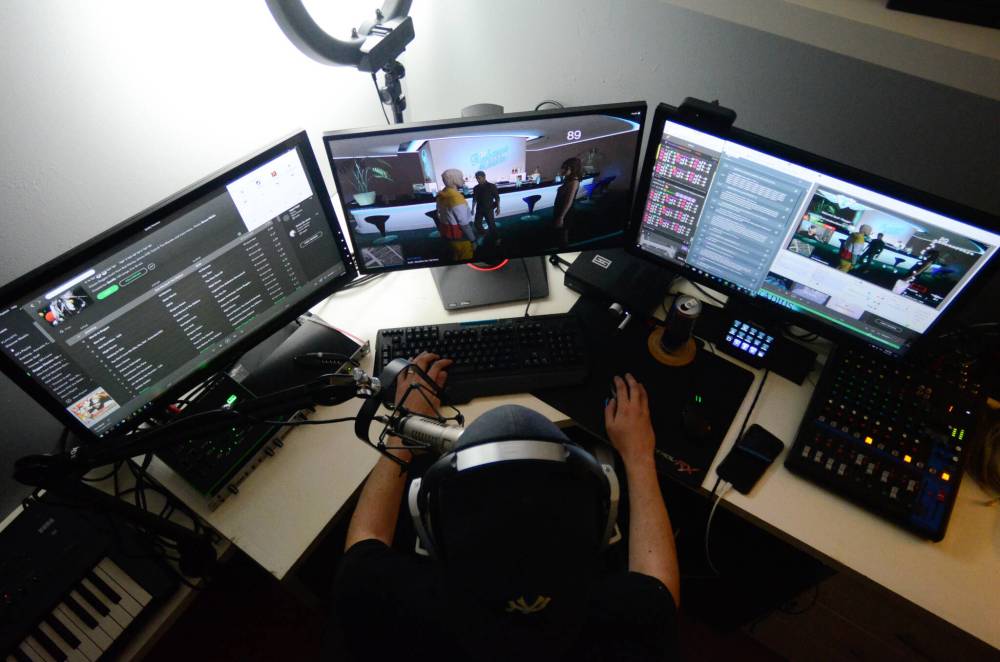
Alex Kormann / Charlotte Observer / TNS
Author David I. Waddington explores both the notions of modernity and experience through the lens of video games, and makes the case that the jury is out on whether games cultivating violence.

But not all is lost for Waddington. Dewey does indeed come to the rescue in the form of video games. Many games offer an artistic and aesthetic appeal. They allow the gamer to experience a rich aesthetic while creating opportunities to think deeply. This is best witnessed in the gorgeous and slow environments that are now on the rise, and created in 3D incubators — many artists are creating games and 3D environments to share their stories, their souls and themselves.
Waddington’s argument is sound, but does raise some questions. If games are so bad, why does he continue to play them and teach with them? But more so, there is a dearth of inquiry into what happens when we take a whole generation and throw their books away and replace them with screens.
Sure, obscure video games might help send us over the edge of 1.5 C — which we’ve just done — but it strikes many educators and parents that screens have fully created a self-absorbed society that is struggling collectively and individually with its mental health.
As we are lured further and further into the abyss by techno-oligarchs and algorithms, perhaps it is time for a universal resistance and a collective signing off. Especially for the kids these days.
Matt Henderson is superintendent of the Winnipeg School Division.