The painful truth
Residental school denialism tackled head on in valuable new collection of essays
Advertisement
Read this article for free:
or
Already have an account? Log in here »
To continue reading, please subscribe:

Digital Subscription
One year of digital access for only $205*
- Enjoy unlimited reading on winnipegfreepress.com
- Read the E-Edition, our digital replica newspaper
- Access News Break, our award-winning app
- Play interactive puzzles
*First annual payment billed as $205.00 + GST for one year. This annual subscription will automatically renew at $233.00 + GST every 52 weeks (10% off the regular annual price of $259.35). Offer available to new and qualified returning subscribers only. Cancel any time.
To continue reading, please subscribe:
Add Free Press access to your Brandon Sun subscription for only an additional
$1 for the first 4 weeks*
- Enjoy unlimited reading on winnipegfreepress.com
- Read the E-Edition, our digital replica newspaper
- Access News Break, our award-winning app
- Play interactive puzzles
*Your next Brandon Sun subscription payment will increase by $1.00 and you will be charged $17.95 plus GST for four weeks. After four weeks, your payment will increase to $24.95 plus GST every four weeks.
Read unlimited articles for free today:
or
Already have an account? Log in here »
It’s been 11 years since Canada’s Truth and Reconciliation Commission (TRC) issued its landmark Final Report on Indian residential schools following four years of hearing testimony and statements from nearly 7,000 survivors and other witnesses. It also issued 94 calls to action, one of which was creating a body to measure the state’s progress on reconciliation.
It was only a year ago that the National Council for Reconciliation (NCR) was finally created, and only in late August that the NCR issued its first report card on the federal government’s reconciliation efforts.
The council acknowledges significant progress in some areas, but noted that most are largely symbolic or “soft” measures. However, topping the report’s list of risks to sustaining what gains on reconciliation have been made so far, and stalling further action, is the rise of residential school denialism.
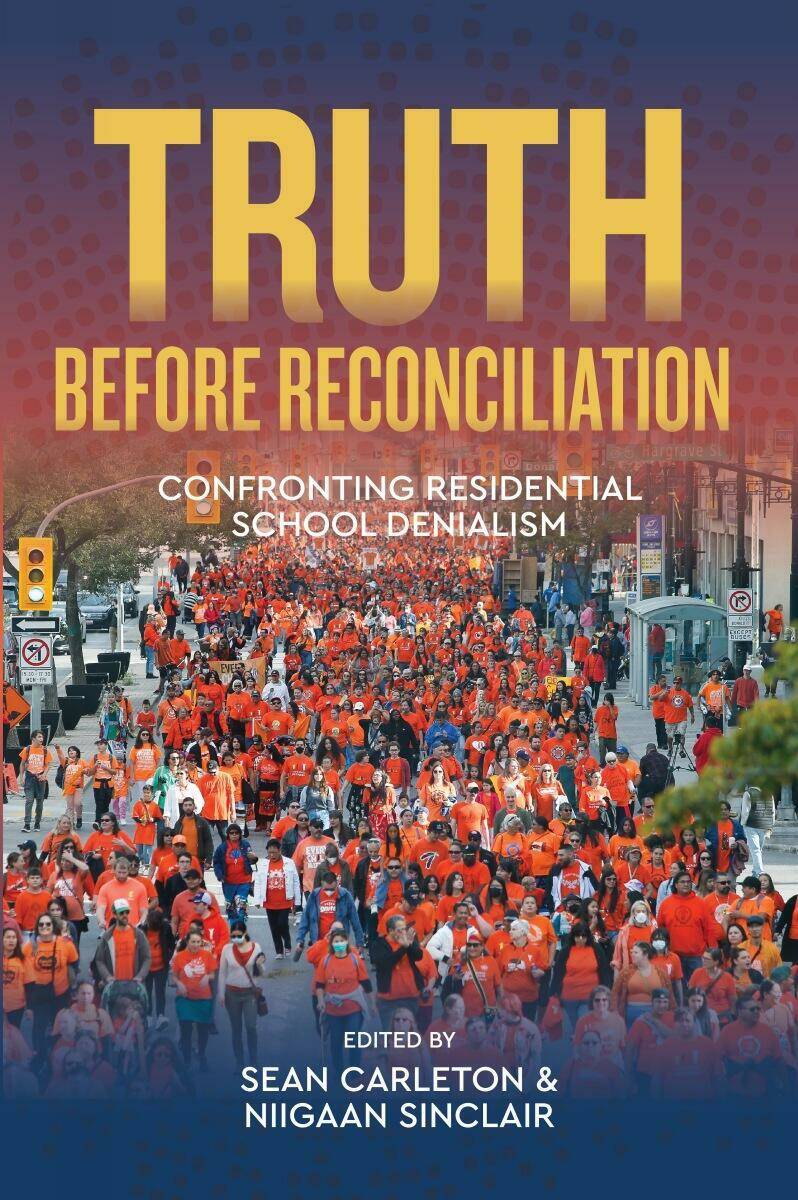
Truth Before Reconciliation
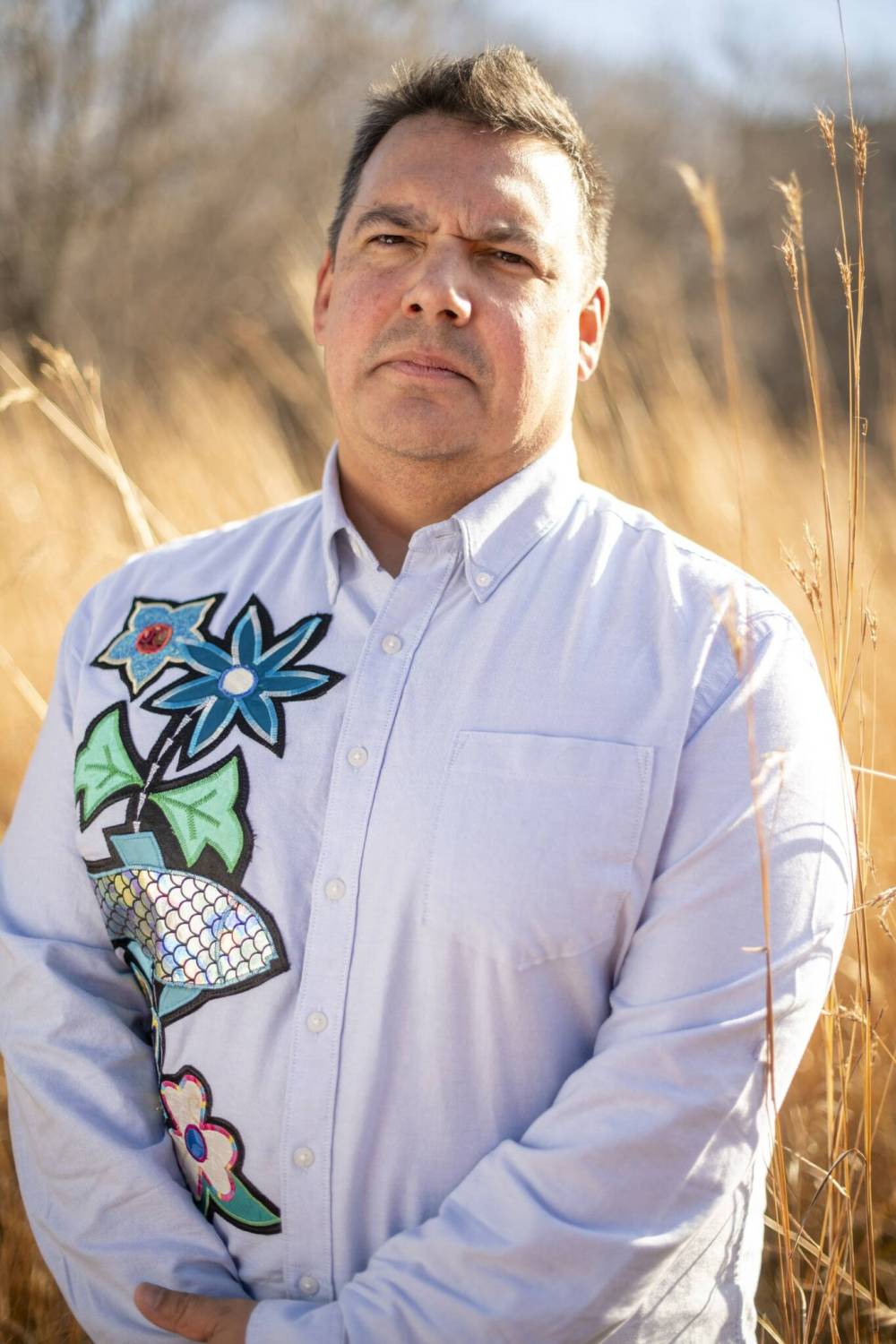
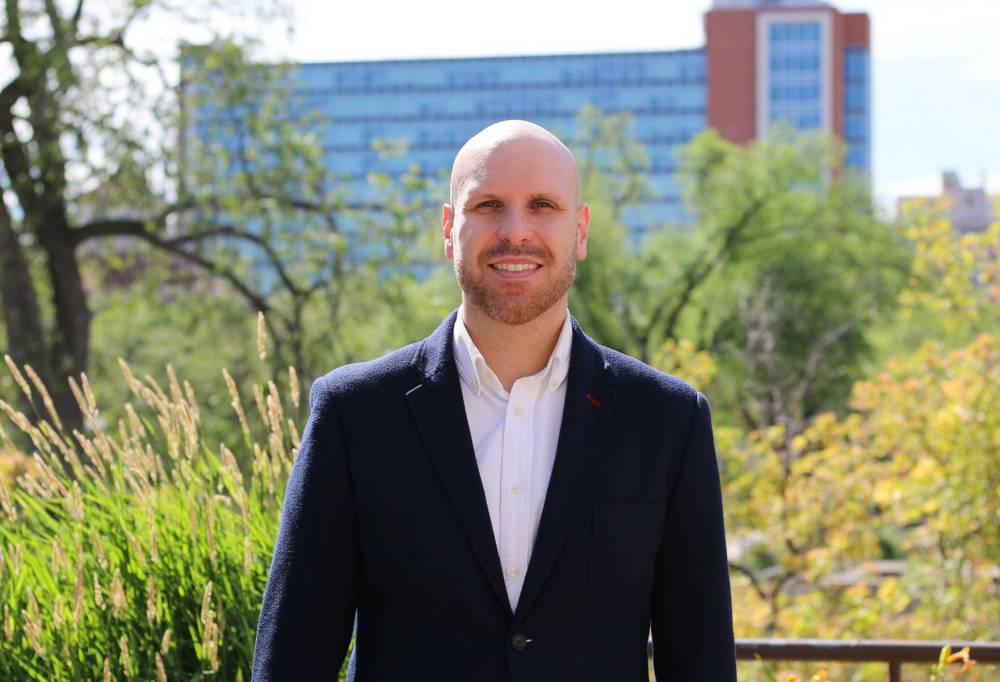
According to the report, the organized efforts to cast doubt on Indian residential school historical records and the numbers of children who died there have had a corrosive effect on support for reconciliation, while giving the federal government political cover for inaction on the “hard” calls to action. It is therefore timely that Truth Before Reconciliation: Confronting Residential School Denialism, edited by University of Manitoba Indigenous Studies professors Sean Carleton and Niigaan Sinclair (who is also a Free Press columnist), has just hit bookstores.
Carleton, who has published extensively in academia on the issue of residential school denialism, and Sinclair, author of the award-winning bestseller Wînipêk: Visions of Canada from an Indigenous Centre, have assembled an eclectic array of authors contributing their voices in Truth Before Reconciliation on specific aspects of denialism.
Carleton and Sinclair describe denialists, despite their noisiness, as only “a small handful of people — mostly connected to conservative, Christian nationalist movements and right-wing media” who are actively creating and profiting from content on residential school denialism.
The objective of denialism is to trivialize or minimize what happened at residential schools under the rubric of “just asking questions” and cherry-picking incidents or data to raise doubts in the public about the truth. Is “cultural genocide” really genocide at all? Is the “mass graves hoax” a fraud perpetrated by a billion-dollar grievance industry? Weren’t Indian residential schools just boarding schools where, yes, sometimes some bad things happened, but most children got a good education?
Such questions fall on fertile ground because, as Indigenous historian Mary Jane Logan McCallum writes, “most Canadians have little or no knowledge of Indigenous history,” leaving them uncertain and confused about differentiating between truth and propaganda.
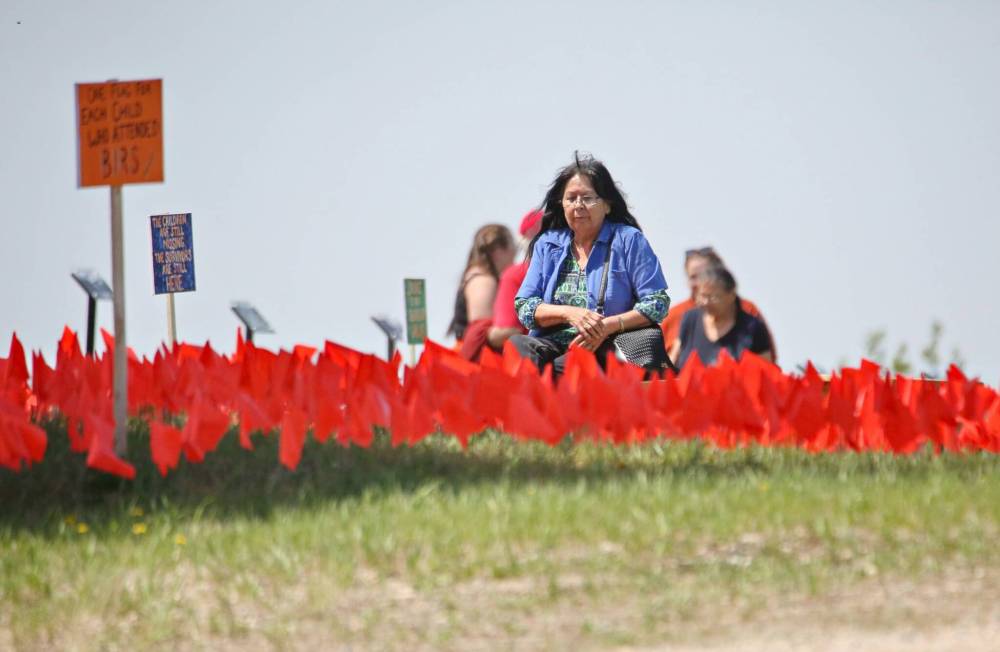
Matt Goerzen / The Brandon Sun
In this May 2026 photo, Brandon Residential School survivor Marge Prince looks for her own name among the orange flags that hold the names of 3,000 of known children who attended the school over the years.
Genocide specialist Andrew Woolford notes that the payoff for denialists in distancing themselves from genocide, violence and other historical wrongs against Indigenous Peoples is to “neutralize bad feeling and re-establish a sense of innocence” that protects the colonial status quo.
McCallum and Woolford are among 23 contributors providing chapters dealing with specific aspects of residential school denialism, allowing for a deeper dive into, for instance, how ground-penetrating radar works in an interview of archeologist Andrew Martindale by the editors. Similarly, the editors’ interview of Winnipeg MP Leah Gazan provides a personalized story of why she has been seeking to declare residential school denialism as a hate crime.

Some chapters are more academic. Carleton and co-author Reid Gerbrandt undertake an analysis of media coverage following the location of potential unmarked graves at a former residential school in Kamloops. They were directly addressing the denialists’ claim that the discovery of “mass graves” was a hoax perpetuated by the mainstream media to create public hysteria and justify an attack on Christianity. Except the term “mass graves” was an initial media error in reporting “unmarked graves.” The researchers determined that, of the 386 articles on the unmarked graves in the mainstream media in the five months following the Kamloops announcement, only 25 referred to “mass graves,” a reportage error of that was quickly corrected.
With this many contributing authors, it’s not surprising there’s some repetition, such as TRC commissioner Murray Sinclair’s quotation about the need to reach the majority of Canadians who are uncertain about reconciliation, and the role of Dr. Peter Bryce in 1907 when he called the Indian residential school system “a national crime” and alerted the public to the horrific conditions at some of those schools. The five criteria defining genocide are also repeated several times; it serves to emphasize how the Indian residential school system fits the definition of genocide and the tactics used by denialists to minimize it.
I undertook reviewing this book with some trepidation, given that it is dealing with some challenging material. It is, however, a surprisingly readable book and well-suited for Canadians who have heard bits and pieces about some of the issues around residential school denialism but don’t know where to go for reliable information. Truth Before Reconciliation is an excellent resource for addressing so many of their questions.

John Woods / Free Press files
In this 2021 photo, handprints in red paint cover pedestals of toppled statues at the Manitoba legislature. The prints act as a symbol of the abuses and deaths at Indian residential schools.
Sheilla Jones is a 12th-generation settler whose doctoral research at the University of Manitoba digs into the politics of settler-Indigenous relations in Canada.
Sean Carleton and Niigaan Sinclair launch Truth Before Reconciliation on Thursday at 7 p.m. at McNally Robinson Booksellers’ Grant Park location, where they will be joined by author Michelle Good and contributors in an event hosted by Shelagh Rogers.
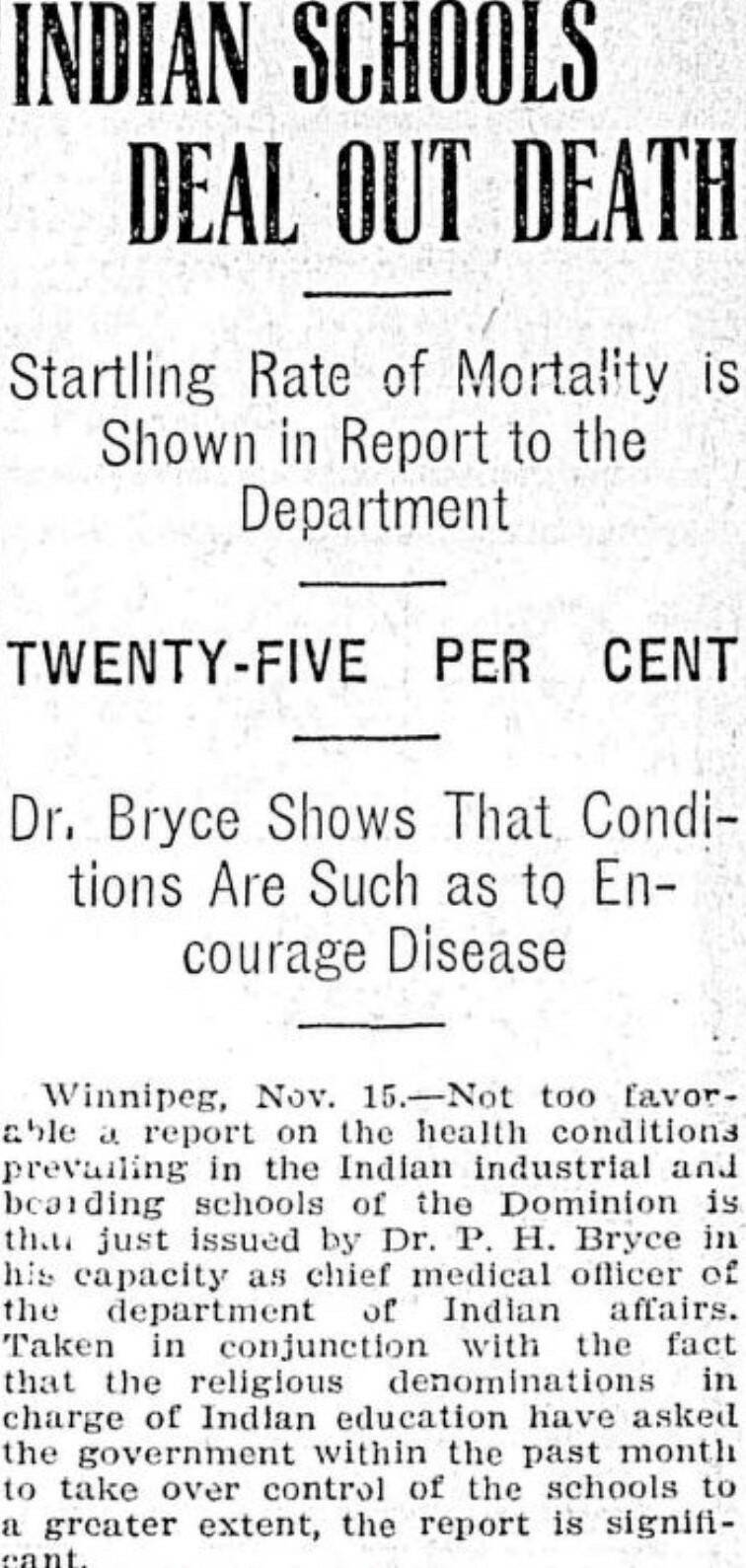
Supplied photo
As early as 1907, Dr. Peter Bryce was calling attention to the horrific conditions at some Indian residential schools.
Supplied photo
Niigaan Sinclair
Supplied photo
Sean Carleton
Truth Before Reconciliation: Confronting Residential School Denialism
Edited by Sean Carleton and Niigaan Sinclair
University of Manitoba Press, 297 pages, $28
Related Articles
Book awards back Sept. 19 with six prizes ‘We’ll stand for the children’: crowds gather for Orange Shirt Day in Winnipeg
Advertisement Advertise With Us
Advertisement Advertise With Us