Modern retelling of ancient Greek story is a moving meditation on love and choices
Colin McAdam's Daphnis and Chloe is longlisted for the 2026 Giller Prize
Advertisement
Read this article for free:
or
Already have an account? Log in here »
To continue reading, please subscribe:

Digital Subscription
One year of digital access for only $205*
- Enjoy unlimited reading on winnipegfreepress.com
- Read the E-Edition, our digital replica newspaper
- Access News Break, our award-winning app
- Play interactive puzzles
*First annual payment billed as $205.00 + GST for one year. This annual subscription will automatically renew at $233.00 + GST every 52 weeks (10% off the regular annual price of $259.35). Offer available to new and qualified returning subscribers only. Cancel any time.
To continue reading, please subscribe:
Add Free Press access to your Brandon Sun subscription for only an additional
$1 for the first 4 weeks*
- Enjoy unlimited reading on winnipegfreepress.com
- Read the E-Edition, our digital replica newspaper
- Access News Break, our award-winning app
- Play interactive puzzles
*Your next Brandon Sun subscription payment will increase by $1.00 and you will be charged $17.95 plus GST for four weeks. After four weeks, your payment will increase to $24.95 plus GST every four weeks.
Read unlimited articles for free today:
or
Already have an account? Log in here »
Colin McAdam wrote a PhD thesis on Ancient Greek literature, but wrote four novels on other topics before dusting off his school notes for Daphnis and Chloe.
The Toronto-based writer of A Beautiful Truth won major literary prizes for three of his first four novels, including his 2004 debut Some Great Thing. Daphnis and Chloe, McAdam’s fifth and latest novel, is a modern retelling of the Greek tale of the same name from almost 2,000 years ago, and was longlisted for the 2026 Giller Prize.
Brief and quite readable despite its heavy themes and classical pedigree, McAdam’s latest has much to recommend. It’s not immediately obvious which direction the story will take, and the prose has a certain lyricism that makes it easy to keep reading. It does contain some violent scenes, which will not be every reader’s cup of tea, but the beauty of the writing does go some way to softening that.
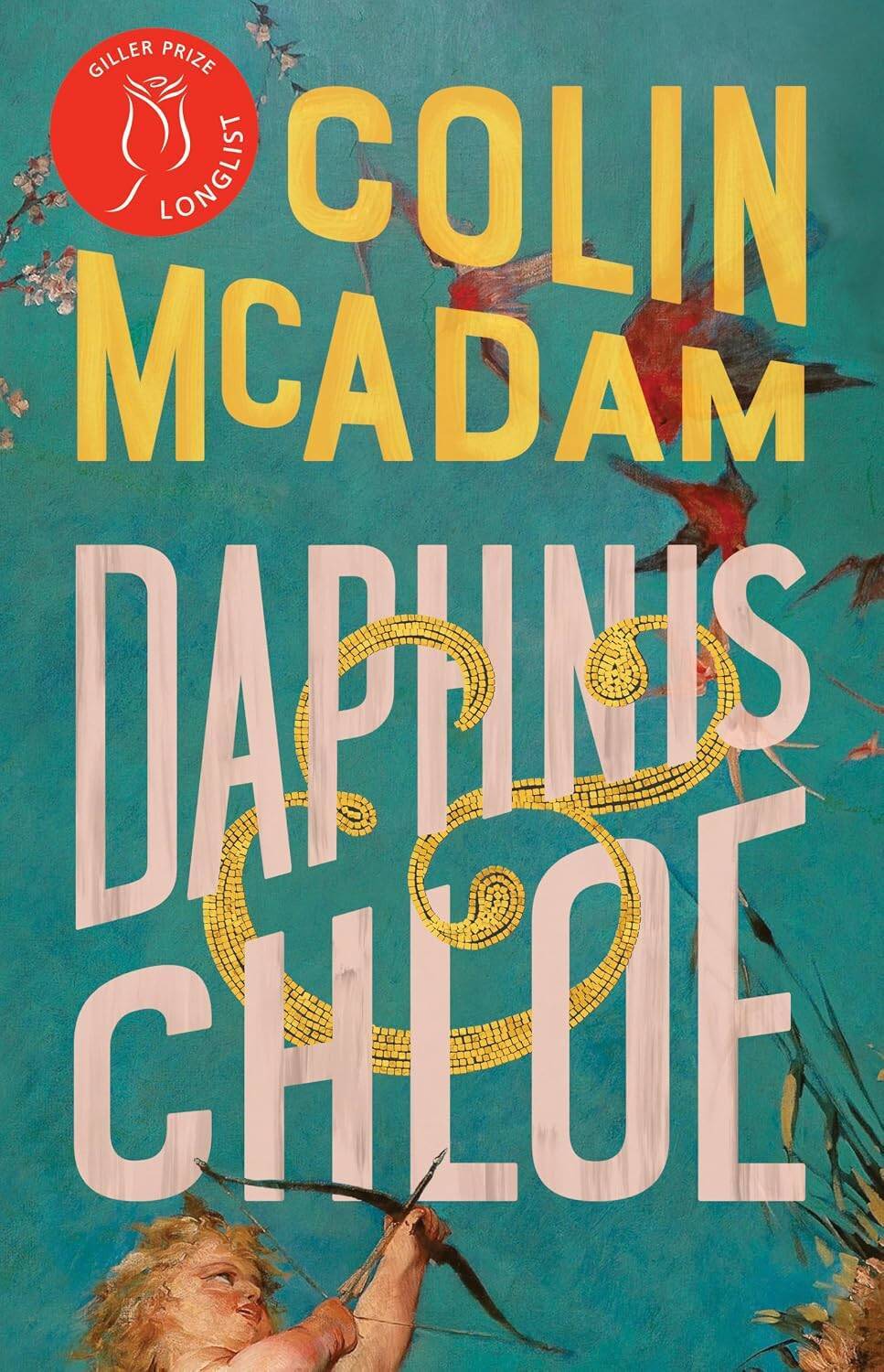
The basic setup of Daphnis and Chloe is that two abandoned children are found and raised by a pair of poor but loving families. These foundlings grow up together and eventually fall in love, but the world can be a dark and dangerous place, and foreshadowing suggests there will be many obstacles to any kind of happy ending.
In the ancient version of the story, the adoptive families are shepherds and goatherds on the island of Lesbos. McAdam’s retelling makes the two adoptive fathers mechanics and business partners who run a garage together. The unnamed city where it all takes place, somewhere along the West Coast of either Canada or the U.S., is just as isolated as first-century Lesbos; “The City” is accessible from the mainland only by ferry.
The whole tale is narrated by Eros, more popularly known by his Roman name, Cupid. The Greek god of love also makes occasional cameos in the story, though mainly as an observer and rarely recognized for who or what he is.
Taken at a surface level, the opening chapters suggest the novel’s themes may focus on whether love can prevail over difficult odds, or whether innocence can withstand corrupting surroundings, the only question being whether the story will end in tragedy or triumph.
In reality, the story is subtler than that. From the beginning, Eros waxes philosophical about how love is everywhere, and so is pain.
Hope and despair often co-mingle. Love may survive hard times, but not without being altered by them. Even a person who metes out violence and pain may hold some love deep in their heart. You may associate him with cherubs and light-heartedness but, as Eros tells it, nearly the whole of human existence is his domain, including our darkest corners.
The novel walks a balance between realism and allegory. Its relatively grounded characters contrast with more mythological touches: “The City” seems more like an archetype than a real place; Eros himself is treated as a symbol or personification of an abstract concept or natural force, though still an individual in his own right.
Speaking of, whenever one might be starting to forget about him, Eros re-inserts himself, and the reader is reminded that this is a first-person narrative, and its narrator has opinions. Eros’s interjections are often a highlight. His analyses of plot developments, themes and characters really do read as those of a concerned observer with real feelings, not an authorial mouthpiece or a cute meta-narrative device.
In terms of the details of its plot and setting, this story could theoretically take place any time in the last few decades. The characters and their lives seem untethered from social media, and even mobile phones barely appear.
Yet Daphnis and Chloe does feel very much like a 2026 novel. Of-the-moment social themes such as generational despair and wealth inequity are prime movers of the larger plot, and increasingly bubble up in the lives of McAdam’s characters.
The result is a thoughtful meditation on the things we choose as well as those that are chosen for us.
Joel Boyce is a Winnipeg writer and educator.