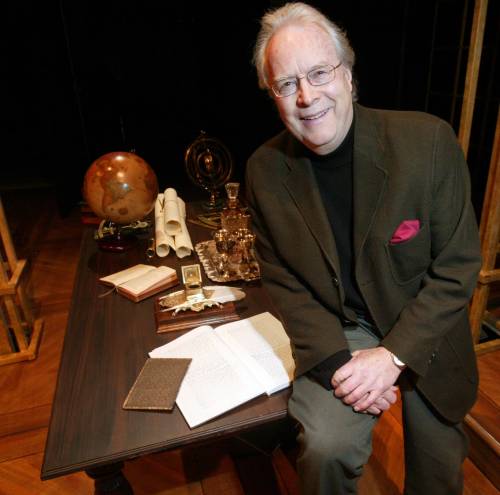
Obituary writing no dying discipline
Advertisement
Read this article for free:
or
Already have an account? Log in here »
To continue reading, please subscribe:
Digital Subscription
One year of digital access for only $1.44 a week*
- Enjoy unlimited reading on winnipegfreepress.com
- Read the E-Edition, our digital replica newspaper
- Access News Break, our award-winning app
- Play interactive puzzles
*Billed as $5.77 plus GST every four weeks. After 52 weeks, price increases to the regular rate of $19.95 plus GST every four weeks. Offer available to new and qualified returning subscribers only. Cancel any time.
To continue reading, please subscribe:
Add Free Press access to your Brandon Sun subscription for only an additional
$1 for the first 4 weeks*
- Enjoy unlimited reading on winnipegfreepress.com
- Read the E-Edition, our digital replica newspaper
- Access News Break, our award-winning app
- Play interactive puzzles
*Your next Brandon Sun subscription payment will increase by $1.00 and you will be charged $17.95 plus GST for four weeks. After four weeks, your payment will increase to $24.95 plus GST every four weeks.
Read unlimited articles for free today:
or
Already have an account? Log in here »
For a certain generation, the Saturday-morning cartoons of childhood have been replaced by weekend obituaries. If you read them to check up on the ex, former colleagues or friends you lost touch with, you’re not alone.
New York Times obituarist Sam Roberts documented over 1,600 dearly departed. A Times journalist for 57 years, in his book he has compiled a compendium of uplifting and fascinating miniature biographies in a book of the dead that has garnered him a massive following of curious folks. He proves needn’t have known the deceased to appreciate their life lessons.
At age seven, Roberts witnessed the hearse of an executed couple, the Rosenbergs, which “fuelled my career and future reporting,” he says. “When I started writing obituaries for a living, the word died was rarely used. Instead, we see ‘met their demise’ or ‘gone home’ or ‘joined the ancestors.’” He credits obit writing to “learning more about accuracy, context, and skepticism than I would have in any journalism school.”
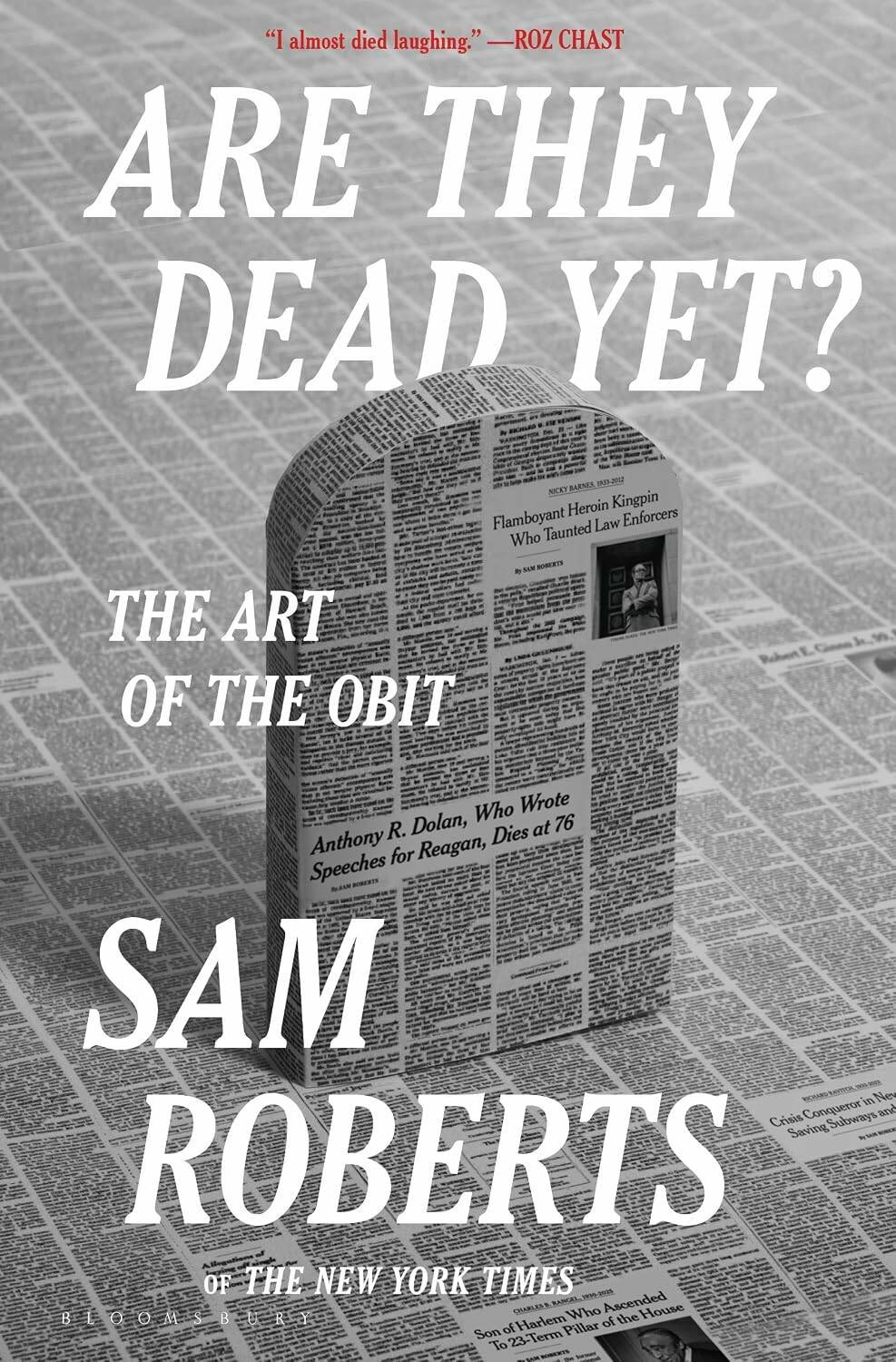
Are They Dead Yet?
Are They Dead Yet? Gives new meaning to the word “deadline.” Roberts goaded his staff to research whether those in pre-death obits were, in fact, truly dead. He spotlights actor Abe Vigoda, who lived to age 97 — all of 37 years after he was declared gone.
No one gets out of here alive, but obits can preserve lives lived as a public record as well as to “bond one generation to the next,” as Roberts writes. He notes many Indigenous Peoples prefer oral tradition and ceremony over written words, and that women did not appear in obits until the 1800s, as recognition until then was the preserve for men only.
Newspapers also tended to print obits of well-known personalities written by staff, while the rest of humanity had to pay to eulogize loved ones.
Roberts sees news obits as postmortems to history. “Where else could you read about the person responsible for Chernobyl or the inventor of the wet suit?” he asks. He pays lip service to pet obituaries, and does an admirable job of social commentary.
He also cites the Washington Post as an example of a newspaper that, as recently as the 1970s, would not name gay people in their death columns. That was remedied somewhat by editors who used euphemisms as a secret code, Roberts says.

He admits obit writing demands a degree of empathy, and found humour also helped. Roberts’ personal anecdotes are comedy at its best.
Everybody loves you when you’re dead — and in Are They Dead Yet? a Winnipegger makes the cut, as the author pays tribute to the “Gelato King,” Little Italy’s late Gino Nucci (who died in 2011), a proprietor who could really dish it out.
While outing Prince Philip and Henry Kissinger for racist remarks, the one person Roberts takes aim at in speaking ill of the dead is Charlie Kirk. He quotes the Times obituary referring to Kirk as “vocal in his willingness to spread unsupported claims and outright lies. Kirk claimed climate change is ‘gibberish’ and that Jews are ‘trying to replace Americans with non-white immigrants.’”
It’s not too late to heed Roberts’ advice to make sure you get the last word by writing your own obit before your best before date. Like the many he helped immortalize, this too can be your legacy.
Heather Emberley still has a pulse and is a volunteer coach with Optimistic Obits.