Personality crisis
Inherited dementia forces fraught Pennsylvania family to remake itself
Advertisement
Read this article for free:
or
Already have an account? Log in here »
To continue reading, please subscribe:
Digital Subscription
One year of digital access for only $1.44 a week*
- Enjoy unlimited reading on winnipegfreepress.com
- Read the E-Edition, our digital replica newspaper
- Access News Break, our award-winning app
- Play interactive puzzles
*Billed as $5.77 plus GST every four weeks. After 52 weeks, price increases to the regular rate of $19.95 plus GST every four weeks. Offer available to new and qualified returning subscribers only. Cancel any time.
To continue reading, please subscribe:
Add Free Press access to your Brandon Sun subscription for only an additional
$1 for the first 4 weeks*
- Enjoy unlimited reading on winnipegfreepress.com
- Read the E-Edition, our digital replica newspaper
- Access News Break, our award-winning app
- Play interactive puzzles
*Your next Brandon Sun subscription payment will increase by $1.00 and you will be charged $17.95 plus GST for four weeks. After four weeks, your payment will increase to $24.95 plus GST every four weeks.
Read unlimited articles for free today:
or
Already have an account? Log in here »
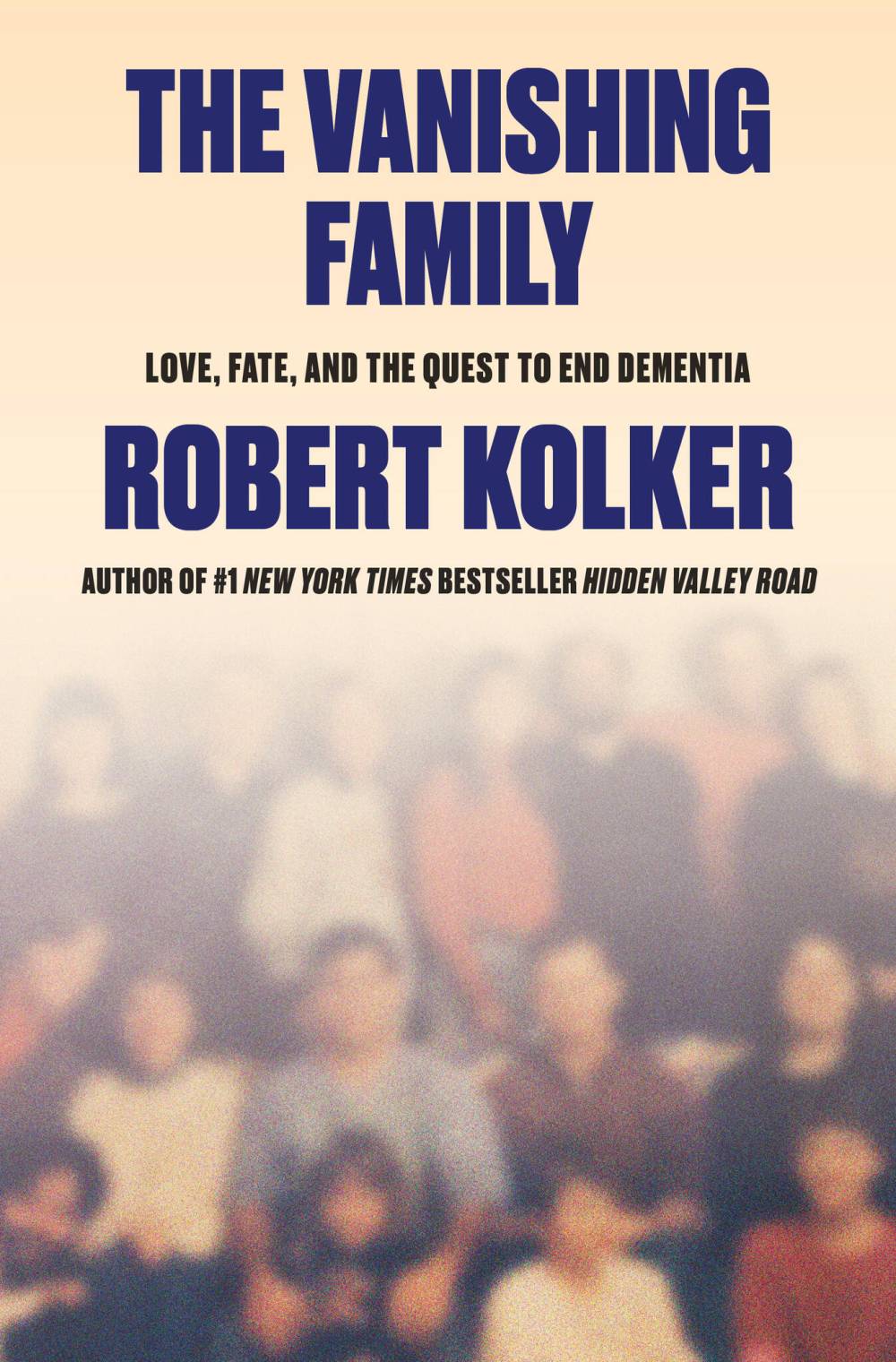
The Vanishing Family is a real-life account of nine siblings in a middle-class American family who each face the possibility of having an inherited ticking time bomb – frontotemporal dementia (FTD).
Robert Kolker thoroughly examines how this relatively rare condition impacts the lives of seven sisters and two brothers (whose last names are withheld), all of whom have a 50-50 chance of inheriting the illness that strikes people in their prime — between the ages of 40 and 65.
The Vanishing Family is Kolker’s third investigative book. His first, Lost Girls, was adapted for Netflix in 2020. The New York Times Book Review selected his bestselling sophomore book, Hidden Valley Road — about a Colorado family of 10 who sees six members diagnosed with schizophrenia — for its top 10 book list of 2020.

Jeff Zorabedian photo
Robert Kolker’s second book, Hidden Valley Road, followed a Colorado family of 10 who saw six members diagnosed with schizophrenia.
The clan’s story in The Vanishing Family begins with Ollie and Jean, who came from Irish-Catholic families, met at college and married in 1950, settling in western Pennsylvania. The couple had nine children — Kathy, Christy, Sue, Dutch and Mary between 1951 and 1959, Peggy, Scott and Jenny followed between 1963 and 1966, then Barb arrived in 1976. By the time Barb was born, her parent’s marriage was on shaky ground — Ollie was unfaithful.
Barb’s older siblings moved out, leaving she, Jenny and Scott with a mother who seemed increasingly distant and emotionless. By the time Ollie left the family home, Jean’s previous social interactions with friends and family celebrations were over. She spent her time drinking, smoking, playing solitaire and watching TV games shows. Barb had to make her own meals and live in a house infested with termites for about four years.
Sue and Kathy eventually stepped in to help Barb, but they all thought Jean’s behavioural changes were due to depression caused by her marriage ending. Jean was diagnosed with late-stage metastatic breast cancer after keeping her symptoms a secret until it was too late for treatment. She died at age 62.
The first of the five children to experience what were later recognized as FTD symptoms was Christy. Married with a daughter and son, Christy had a blow-up with her boss and her management job was eliminated. At age 36, she announced she didn’t want to look for another job, and would instead concentrate on her family.
Her friends and siblings began noticing her unusual behaviour, such as dressing her 11-year-old daughter in a large-sized woman’s sweater. Her husband Don felt they were leading separate lives and filed for divorce.
Like her mother, Christy began spending most of her time watching TV while neglecting her children and house. Jenny took Christy for neurological tests which showed no physical abnormalities, but some impaired cognitive functioning. Still single, Sue volunteered to move in with Christy and look after her.
Leaving her husband and young son behind, Mary suddenly showed up at Barb’s home. Then 47, Mary was showing signs of the same illness that struck her mother and sister Christy. Barb realized there must be a genetic cause, and the entire family could be at risk. She began researching dementia and FTD caused by mutations that transform proteins in the brain, some of which are hereditary.
The Vanishing Family
She urged her siblings to get tested at the Mayo Clinic in Minnesota, but most weren’t in favour of finding out if they carried the mutation. Barb realized they were scared — and she was too.
As well as sharing the family’s compelling personal stories, Kolker traces scientific and medical research into dementia. For years, dementia was usually labelled as Alzheimer’s disease, and thought to only impact the elderly. People with FTD exhibit different behaviour than those with Alzheimer’s. For many, there is a breakdown of social cognition which erases embarrassment, shame and guilt. Mary began flirting with strangers, for example, Christy stole cash from Sue, and Peggy locked her young son out of the house.
Kolker ends The Vanishing Family with the hope that continuing research will find a way to end this type of genetic illness.
Andrea Geary is a freelance writer in Selkirk.