Executive orders
Scores of interviews offer behind-the-scenes look at Trump’s second term in office
Advertisement
Read this article for free:
or
Already have an account? Log in here »
To continue reading, please subscribe:
Digital Subscription
One year of digital access for only $1.44 a week*
- Enjoy unlimited reading on winnipegfreepress.com
- Read the E-Edition, our digital replica newspaper
- Access News Break, our award-winning app
- Play interactive puzzles
*Billed as $5.77 plus GST every four weeks. After 52 weeks, price increases to the regular rate of $19.95 plus GST every four weeks. Offer available to new and qualified returning subscribers only. Cancel any time.
To continue reading, please subscribe:
Add Free Press access to your Brandon Sun subscription for only an additional
$1 for the first 4 weeks*
- Enjoy unlimited reading on winnipegfreepress.com
- Read the E-Edition, our digital replica newspaper
- Access News Break, our award-winning app
- Play interactive puzzles
*Your next Brandon Sun subscription payment will increase by $1.00 and you will be charged $17.95 plus GST for four weeks. After four weeks, your payment will increase to $24.95 plus GST every four weeks.
Read unlimited articles for free today:
or
Already have an account? Log in here »
U.S. President Donald Trump launched a war against Iran earlier this year because he had “a good feeling” about his chances of winning.
At the final meeting in the Situation Room to decide whether the war would proceed or not, Trump went around the room and asked his closest advisors what he should do.
Some of them warned him that Iran could close the Strait of Hormuz or launch missile attacks on U.S. targets in the region. But they all told him they would support whatever he decided to do.
Tierney L. Cross / The New York Times
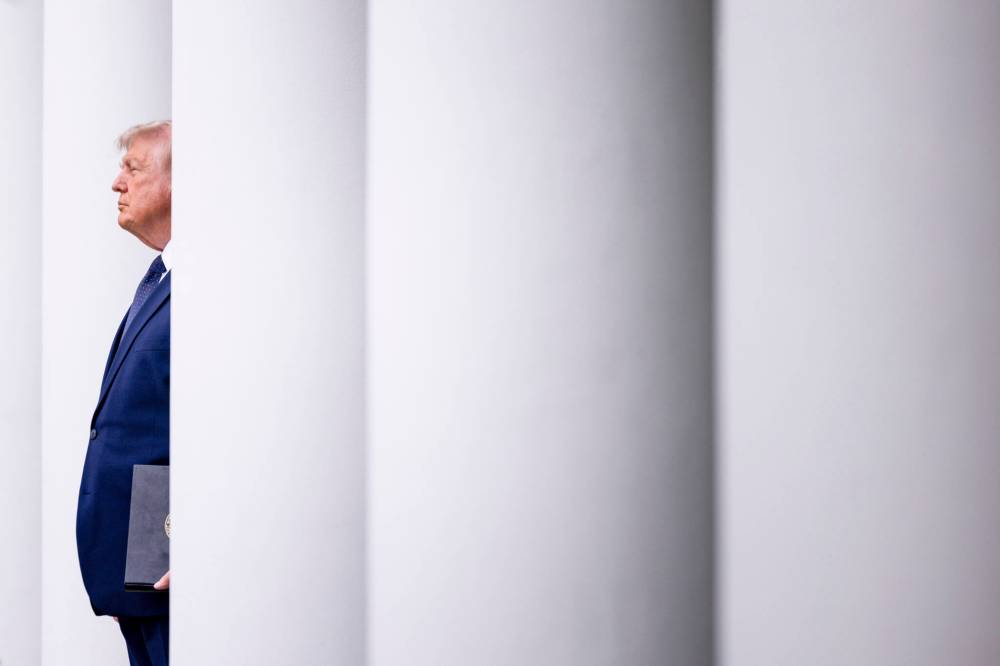
The most chilling passages of Maggie Haberman and Jonathan Swan’s book are the accounts of Donald Trump and advisors considering invoking the Insurrection Act.
“I think we need to do it,” he said, and gave the order to strike.
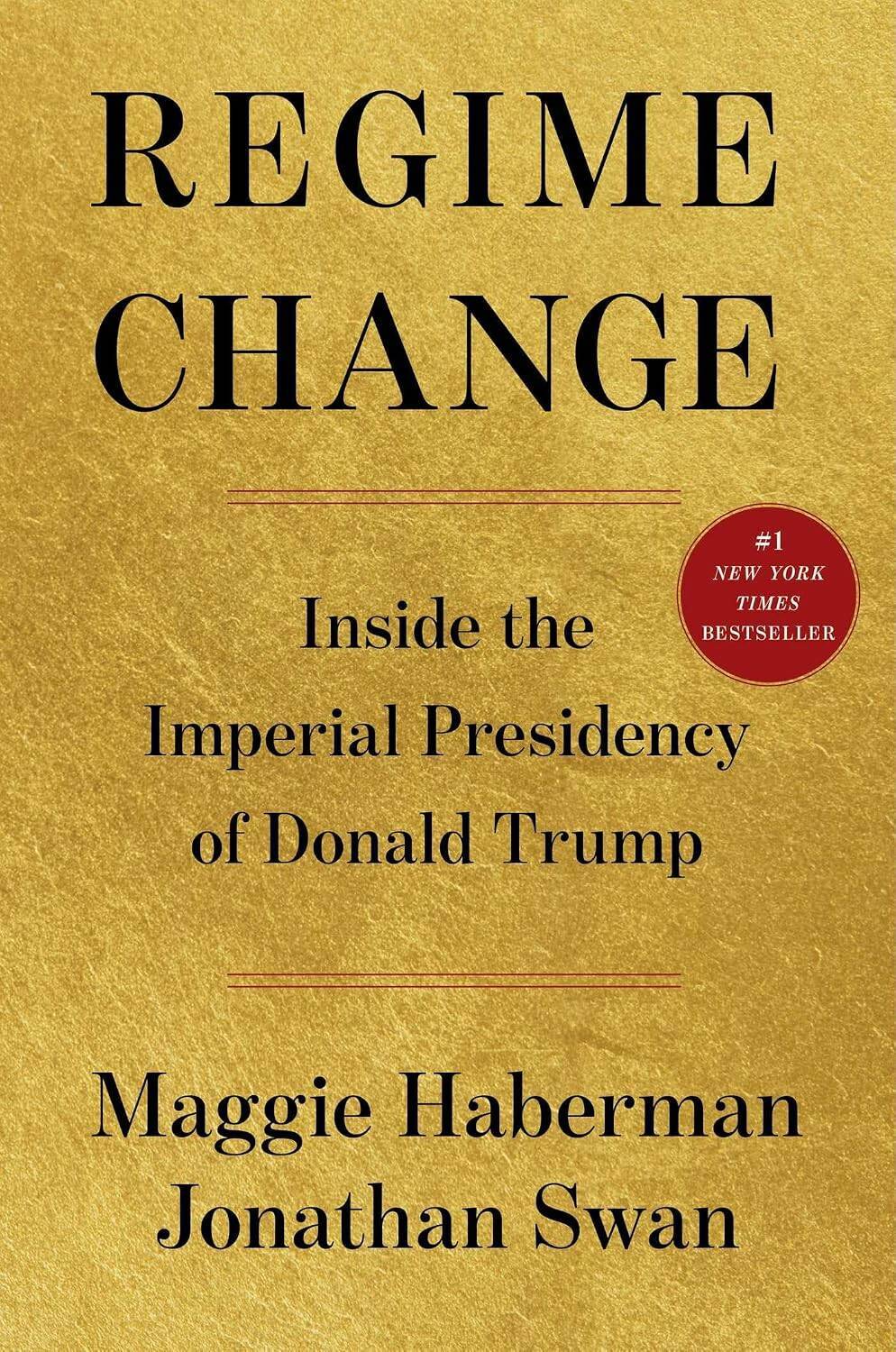
Thus “the most significant American military operation since the 2003 invasion of Iraq… (was) launched without a vote in Congress, without the support of NATO,” with no “address to the nation or a briefing to congressional leadership,” Maggie Haberman and Jonathan Swan write in Regime Change: Inside the Imperial Presidency of Donald Trump.
Trump’s “take on the eventual outcome ran along the lines of wanting to wipe out the regime and figure out the details later,” they write.
In anecdote after anecdote, the New York Times journalists take readers behind the scenes of the Trump White House during the tumultuous first year of his second term.
The veteran White House reporters conducted hundreds of interviews on condition of anonymity, providing details that range from amusing to truly frightening.
They have painstakingly reconstructed dozens of top secret meetings, their narratives brimming with direct quotations, many of them laced with profanities.
We hear Trump and his top officials yelling at each other for everything from Elon Musk taking a chainsaw to life-saving U.S. international aid programs to the dumpster fire that was the release/non-release of the Epstein files.
While Trump and his staff brand the book as “fake news,” readers can decide for themselves whom to believe.
Between Trump’s first and second terms, the Heritage Foundation, a powerful right-wing think tank, published Project 2025, a blueprint for an extreme right-wing government that Trump denounced during the 2024 election campaign, but embraced and began to implement as soon as he regained power.
Where most people see nothing but chaos, the authors reveal the people and agendas who are truly driving the machine and their motives: using the power of the state against Trump’s perceived enemies and lining Trump’s pockets with hundreds of millions of dollars in return for government favours.
While Regime Change was published before the latest rounds in Trump’s trade war against Canada, his threats of annexation had been going on since before he was sworn in. Yet the book’s index barely mentions Canada, and the index skips from “Carlson, Tucker” to “Carpenter, Sabrina,” with not a single reference in the whole book to “Carney, Mark.”
The most chilling passages of the book are the inside accounts of Trump and his advisors considering — more than once — invoking the Insurrection Act.
Regime Change
While that is not quite the same as declaring martial law, it would allow armed troops to replace police in enforcing domestic law on American streets and remove the few remaining guardrails on Trump’s executive powers.
Trump and his inner circle considered invoking the act to quell the protests that grew larger after ICE agents shot protesters Renée Good and Alex Pretti in Minneapolis. They decided the act wasn’t a good fit for that situation but are still “itching” to use it, Haberman and Swan say.
The authors keep a remarkably even-handed tone throughout most of the book as they let the facts speak for themselves, quoting comments made by others.

But in the final chapter, they tell us some of what they really think about Trump.
“In his second term, unlike his first, he was willing to take breathtaking risks, risks that could throw not only his presidency but the Republican Party and the entire world into chaos and carnage. More than ever before as President, he was operating on pure gut instinct,” Haberman and Swan write.
“Now was his moment to try things, like military adventures and overthrowing the global trade system. He had imposed tariffs as instruments of personal leverage. He had discarded international law with a single sentence: ‘I don’t need international law.’ And the system, it turned out, had no answer. The system was only real if the world’s great superpower bought into it,” they write.
Trump is “one of the philosopher Hegel’s ‘world-historical individuals’ — figures who, without fully understanding what they were doing, demolished one era and ushered in another,” they conclude.
Donald Benham is a writer who lives near Beausejour.