Taking a strand
Witty and well-researched, Anxious and Hairy combs through the significance of hair
Advertisement
Read this article for free:
or
Already have an account? Log in here »
To continue reading, please subscribe:
Digital Subscription
One year of digital access for only $1.44 a week*
- Enjoy unlimited reading on winnipegfreepress.com
- Read the E-Edition, our digital replica newspaper
- Access News Break, our award-winning app
- Play interactive puzzles
*Billed as $5.77 plus GST every four weeks. After 52 weeks, price increases to the regular rate of $19.95 plus GST every four weeks. Offer available to new and qualified returning subscribers only. Cancel any time.
To continue reading, please subscribe:
Add Free Press access to your Brandon Sun subscription for only an additional
$1 for the first 4 weeks*
- Enjoy unlimited reading on winnipegfreepress.com
- Read the E-Edition, our digital replica newspaper
- Access News Break, our award-winning app
- Play interactive puzzles
*Your next Brandon Sun subscription payment will increase by $1.00 and you will be charged $17.95 plus GST for four weeks. After four weeks, your payment will increase to $24.95 plus GST every four weeks.
Read unlimited articles for free today:
or
Already have an account? Log in here »
When early critics of evolutionary science tried to discredit Charles Darwin, they found Darwin’s hair helpful.
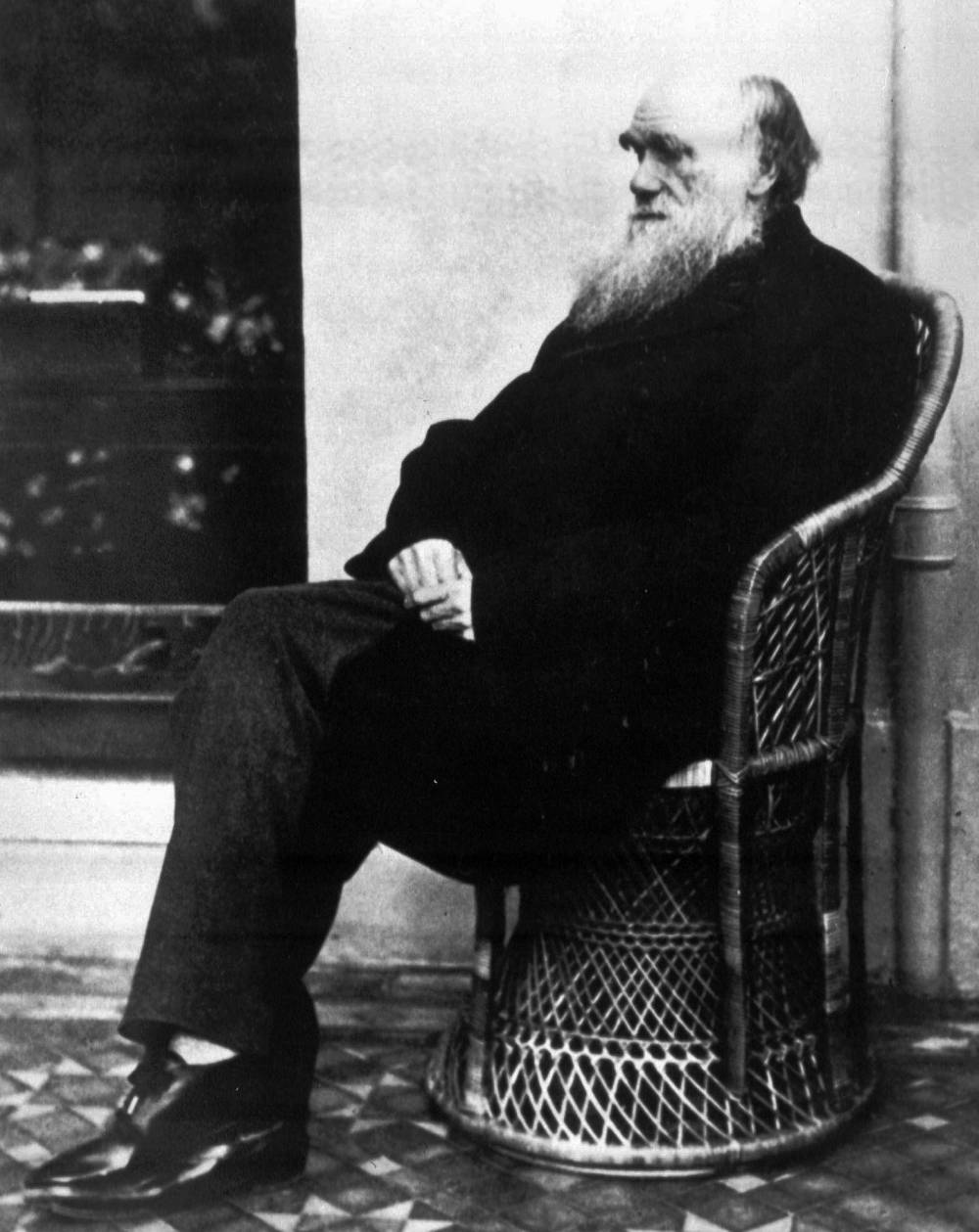
Darwin was a bald man with bushy eyebrows and a big beard. Troubled by the notion that humans and animals share ancestry, anti-evolutionists created cartoons of Darwin as a man-monkey: the controversial scientist’s hairless scalp and hirsute chin perched atop a body covered with thick fur.
Darwin would, one suspects, like Judy Wearing’s new book, Anxious and Hairy: The Evolution and Culture of Human Hair. In it, Wearing draws on the science of evolutionary biology to teach us about baldness, beards and the many ways in which hair connects humans and animals. Of central importance to her project are the feelings people have about hair and where it grows, or fails to grow, on our bodies.
Wearing’s approach to her topic is both witty and well-researched. And there’s a great deal of ground for her to cover. Take a moment to think of all the places on your body where hair grows. Wearing celebrates every patch and its unique benefits, both biological and social.
These benefits include the communicative power of eyebrows, the health information stored in unshaved armpits and the critical role played by head hair in preventing skin cancer. Among the more memorable adaptive functions of hair that Wearing explores is the possibility that humans have pubic hair because of its capacity to store evidence of a partner’s sexual infidelity.
While scientific research is the source of much of what Wearing shares, this book is by no means uncritical of the scientific process. Indeed, Anxious and Hairy could be read as a study of the history of the design of scientific experiments which, Wearing reminds us, can be impressively creative but also shockingly unethical.
As Wearing signals with her subtitle, her approach pairs scientific education on topics such as the anatomy of hair follicles with some thoroughgoing cultural analysis. References to human hair in poetry and visual art have a central role to play here. Wearing’s descriptions of depictions of human hairiness in paintings and drawings are so intriguing one wishes Wearing’s publisher had shelled out for some illustrations.

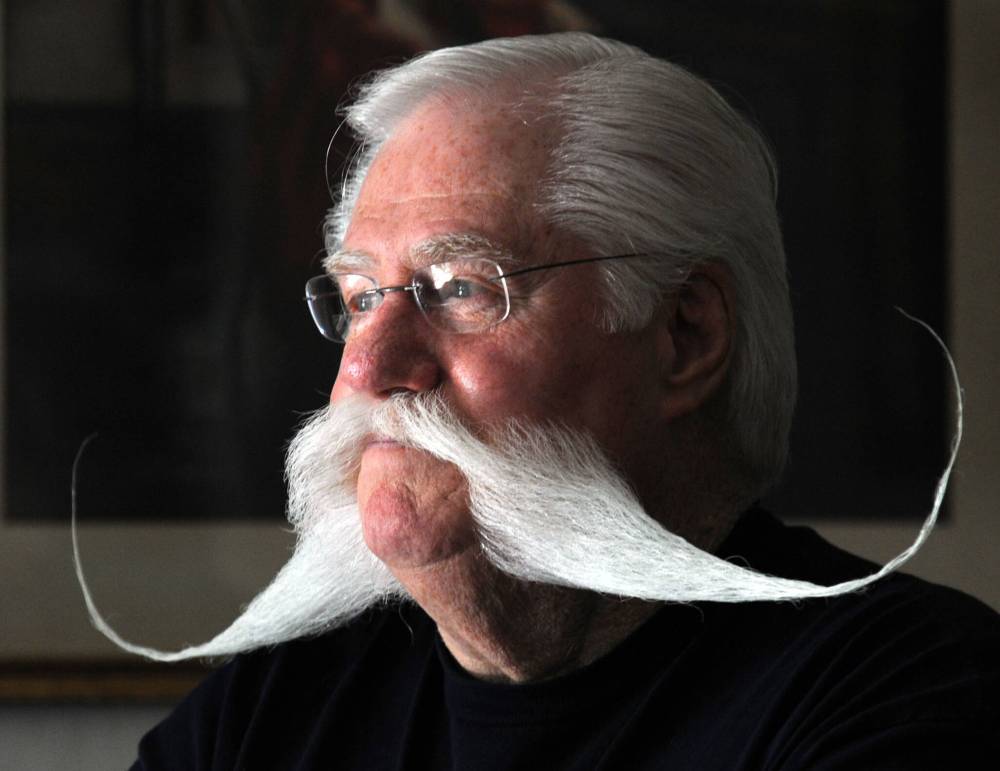
It’s worth noting that this book is also personal. An account of time spent in a bar full of unusually hairy men who happen to be competitors in a “Beard and Mustache Championship” exemplifies Wearing’s unapologetic and entertaining pairing of evolutionary science with memoir. We follow her as she gets a pricy hair cut in Paris, endures an extremely thorough waxing session in New York and goes sightseeing in New Orleans with her newly hairy and undeniably smelly teenage son.

Theories about why humans have pubic hair aside, the most surprising thing about this book might well be its therapeutic quality. People who, like this reviewer, struggle to accept the greying of their hair might find comfort in learning about the biology of that change. Those who spend more money on hair removal than they’re prepared to calculate might be relieved to know that plucking, shaving and waxing have millennia-long histories. Wearing’s discussion of unwanted hair loss, including hair loss caused by medical treatment or alopecia, is especially noteworthy for its pairing of scientific fact with empathy. She understands that people have strong feelings about hair, and that many of those feelings are painful ones.
Did Charles Darwin find comfort in the warmth and texture of his unruly beard when he opened a magazine and saw cartoons of his body covered in fur? Was he amused by the fact that critics, fearful of his science, did justice to his facial hair?
Most humans have a relationship with hair that extends far beyond biology. Wearing’s decades-long deep dive into the science and culture of hair helps us better understand why we have hair — and why we care so deeply about it.
Vanessa Warne is a professor in the faculty of arts at the University of Manitoba.
Canadian Press files
Charles Darwin sported an impressive beard and bushy eyebrows.

Anxious and Hairy