The marvellous, mysterious Ross Macdonald

Advertisement
Read this article for free:
or
Already have an account? Log in here »
To continue reading, please subscribe:
Digital Subscription
One year of digital access for only $1.44 a week*
- Enjoy unlimited reading on winnipegfreepress.com
- Read the E-Edition, our digital replica newspaper
- Access News Break, our award-winning app
- Play interactive puzzles
*Billed as $5.77 plus GST every four weeks. After 52 weeks, price increases to the regular rate of $19.95 plus GST every four weeks. Offer available to new and qualified returning subscribers only. Cancel any time.
To continue reading, please subscribe:
Add Free Press access to your Brandon Sun subscription for only an additional
$1 for the first 4 weeks*
- Enjoy unlimited reading on winnipegfreepress.com
- Read the E-Edition, our digital replica newspaper
- Access News Break, our award-winning app
- Play interactive puzzles
*Your next Brandon Sun subscription payment will increase by $1.00 and you will be charged $17.95 plus GST for four weeks. After four weeks, your payment will increase to $24.95 plus GST every four weeks.
Read unlimited articles for free today:
or
Already have an account? Log in here »
Hey there, time traveller!
This article was published 16/05/2015 (4173 days ago), so information in it may no longer be current.
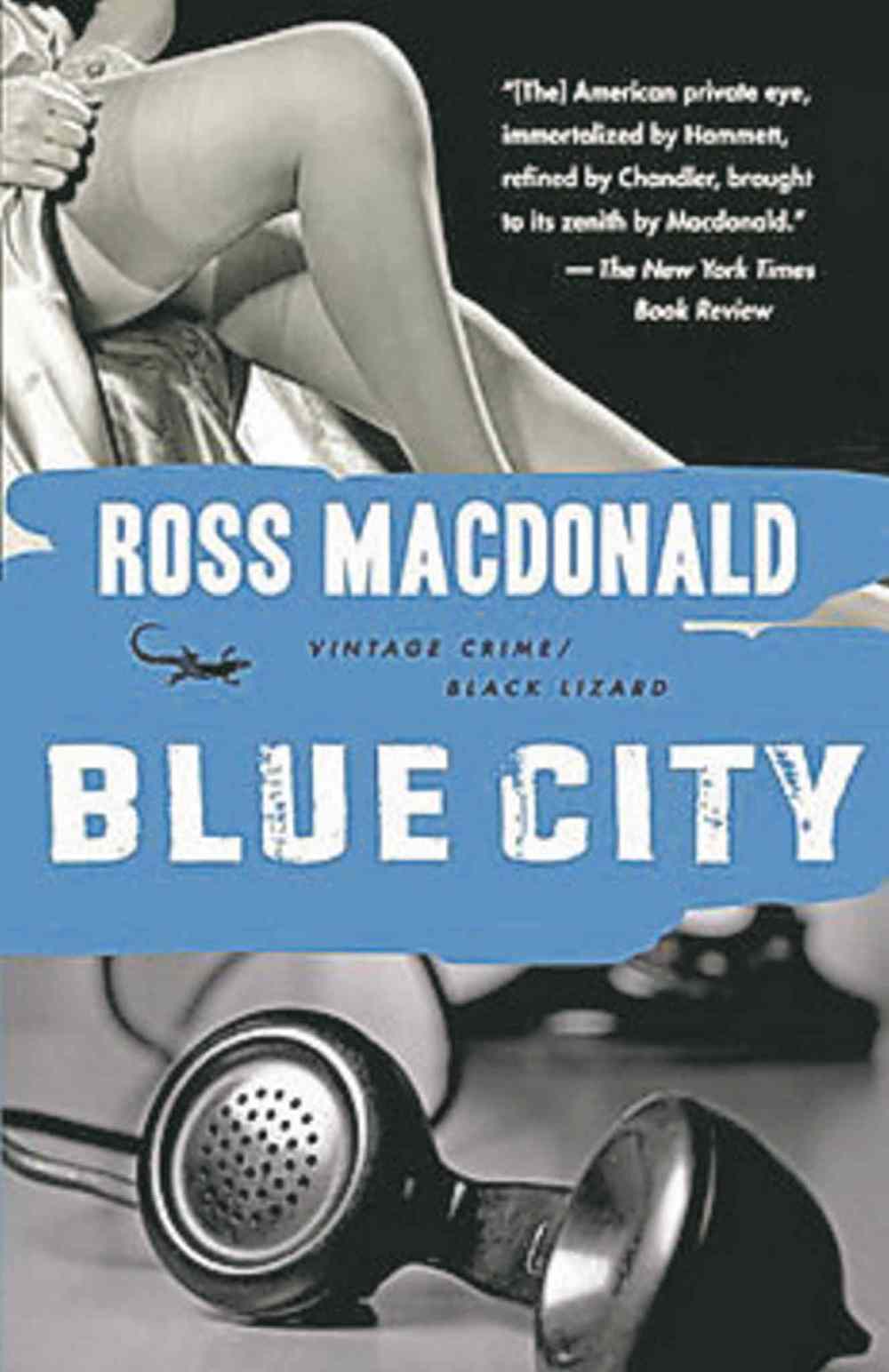
I’VE always wanted an excuse to write about Ross Macdonald, a man who crossed the modern crime story with the sorrow and pity of classical tragedy and the dark, deadpan humour of noir fiction. He’s one of my favourite novelists.
This year marks his 100th birthday, but really, the whole birthday thing is kind of arbitrary. More compelling is the Winnipeg hook.
Both Macdonald (born Kenneth Millar) and his work, which the New York Times called “the finest series of detective novels ever written by an American,” are completely bound up with sunny southern California. Lew Archer, his gumshoe protagonist, has an office in West Hollywood.

But a part of Macdonald was quietly, irrevocably Canadian. Macdonald was born in Los Gatos, Calif., but when he was small, his Scottish-Canadian parents returned to Canada, where he was raised and educated. In 1928 and 1929, he attended St. John’s College School in Winnipeg’s North End. (The school was later amalgamated into St. John’s-Ravenscourt.) On weekends, he lived with a glamourous aunt in an apartment on Broadway.
This Winnipeg connection is rarely mentioned. You need to dig deep into Tom Nolan’s 1999 bio to find it. But in fact, Macdonald’s final, unfinished novel was to be a chronicle of Winnipeg in the 1920s. Its central metaphor “will be frigidity,” Macdonald wrote. “Deep, concealing snow.” I find that very moving, that amid SoCal’s palms and beaches and ocean drives, the aging writer was somehow drawn back to memories of Winnipeg winters.
Macdonald has always attracted obsessive fans, including fellow mystery writers such as James Ellroy, Sue Grafton and Gillian Flynn (it’s no coincidence that an early Macdonald story is titled Gone Girl), as well as highbrows such as Donald Barthelme, Iris Murdoch, Marshall McLuhan and Margaret Laurence (two more former Manitobans!). But during his lifetime and after his death in 1983, his wider reputation has fluctuated.
Up here in his one-time homeland, Macdonald’s centenary seems to be renewing the push to claim him not just as a great writer but as a great Canadian writer. That identification goes beyond a few chronological details; it gets right to the core of his life and work. Even in the 1970s, when he was famous — as far as any author is ever famous — Macdonald was known for being diffident, modest, soft-spoken, private and polite. In a word, Canadian. He once said that “Canadians become Canadians by going elsewhere.”

One of Macdonald’s obsessive themes is how the past seeps into the present. Macdonald and his wife Margaret Millar, also Canadian and also a fine crime writer, lived for decades in serene Santa Barbara. But because his Canadian past was traumatic — marked by poverty, abandonment and instability — those early years never left him. Absent fathers, troubled children and broken families haunt his novels, as formative Canadian experiences are transposed to the coastal sprawl and tough inland towns of California.

Macdonald, who wrote from the late 1940s to the 1970s, began in the hardboiled American tradition of Raymond Chandler and Dashiell Hammett. But his weary, wisecracking private eye, Lew Archer, increasingly took on covert Canadian characteristics.
“I think his psychological and ethical makeup is predominantly Canadian, rather than American,” Macdonald revealed in a 1975 interview. “What he sees with his Canadian eyes is American life.” A self-deprecating everyman, Archer is more likely to take a punch than throw one. There is something Canadian in his bruised decency, in his stubborn belief that his job is to bear witness to suffering. Archer sees crime not in terms of polarized good and evil but as a complicated web of pain and human weakness. “I have a secret passion for mercy,” he says in the 1969 novel The Goodbye Look. “But justice is what keeps happening to people.”
Some critics laud Macdonald for transcending his genre, a condescending compliment that suggests that the genre needs transcending. It might be more accurate to say that he worked inside its outlines with tremendous grace, reaching new levels of psychological nuance, social critique and emotional power. Macdonald never wrote an “issue novel” in his life, but the Archer series offers a subtle and gradual history of the author’s adopted home. Macdonald chronicles runaway real estate development, environmental devastation, and the restless, rootless dislocation of resource economies. He covers social disparities, from the tired, hardscrabble desperation of the poor to the affluent anxieties of stranded uppermiddle- class kids and their overwhelmed parents.
As with many Canadian-Americans, Macdonald’s dual identity gave him a unique viewpoint, and he observed California’s sad sun-belt dreams with close, clear-eyed empathy. Somehow, the troubled Winnipeg schoolboy was still there in the eminent Santa Barbara novelist, and that outsider status served him — and his many readers — very well.
Studying at the University of Winnipeg and later Toronto’s York University, Alison Gillmor planned to become an art historian. She ended up catching the journalism bug when she started as visual arts reviewer at the Winnipeg Free Press in 1992.
Our newsroom depends on a growing audience of readers to power our journalism. If you are not a paid reader, please consider becoming a subscriber.
Our newsroom depends on its audience of readers to power our journalism. Thank you for your support.
Studying at the University of Winnipeg and later Toronto’s York University, Alison Gillmor planned to become an art historian. She ended up catching the journalism bug when she started as visual arts reviewer at the Winnipeg Free Press in 1992.
Our newsroom depends on a growing audience of readers to power our journalism. If you are not a paid reader, please consider becoming a subscriber.
Our newsroom depends on its audience of readers to power our journalism. Thank you for your support.
Advertisement Advertise With Us
Advertisement Advertise With Us