A matter of time
Past and future collide in Wilson's 19th-century sci-fi
Advertisement
Read this article for free:
or
Already have an account? Log in here »
To continue reading, please subscribe:
Digital Subscription
One year of digital access for only $1.44 a week*
- Enjoy unlimited reading on winnipegfreepress.com
- Read the E-Edition, our digital replica newspaper
- Access News Break, our award-winning app
- Play interactive puzzles
*Billed as $5.77 plus GST every four weeks. After 52 weeks, price increases to the regular rate of $19.95 plus GST every four weeks. Offer available to new and qualified returning subscribers only. Cancel any time.
To continue reading, please subscribe:
Add Free Press access to your Brandon Sun subscription for only an additional
$1 for the first 4 weeks*
- Enjoy unlimited reading on winnipegfreepress.com
- Read the E-Edition, our digital replica newspaper
- Access News Break, our award-winning app
- Play interactive puzzles
*Your next Brandon Sun subscription payment will increase by $1.00 and you will be charged $17.95 plus GST for four weeks. After four weeks, your payment will increase to $24.95 plus GST every four weeks.
Read unlimited articles for free today:
or
Already have an account? Log in here »
Hey there, time traveller!
This article was published 07/01/2017 (3575 days ago), so information in it may no longer be current.
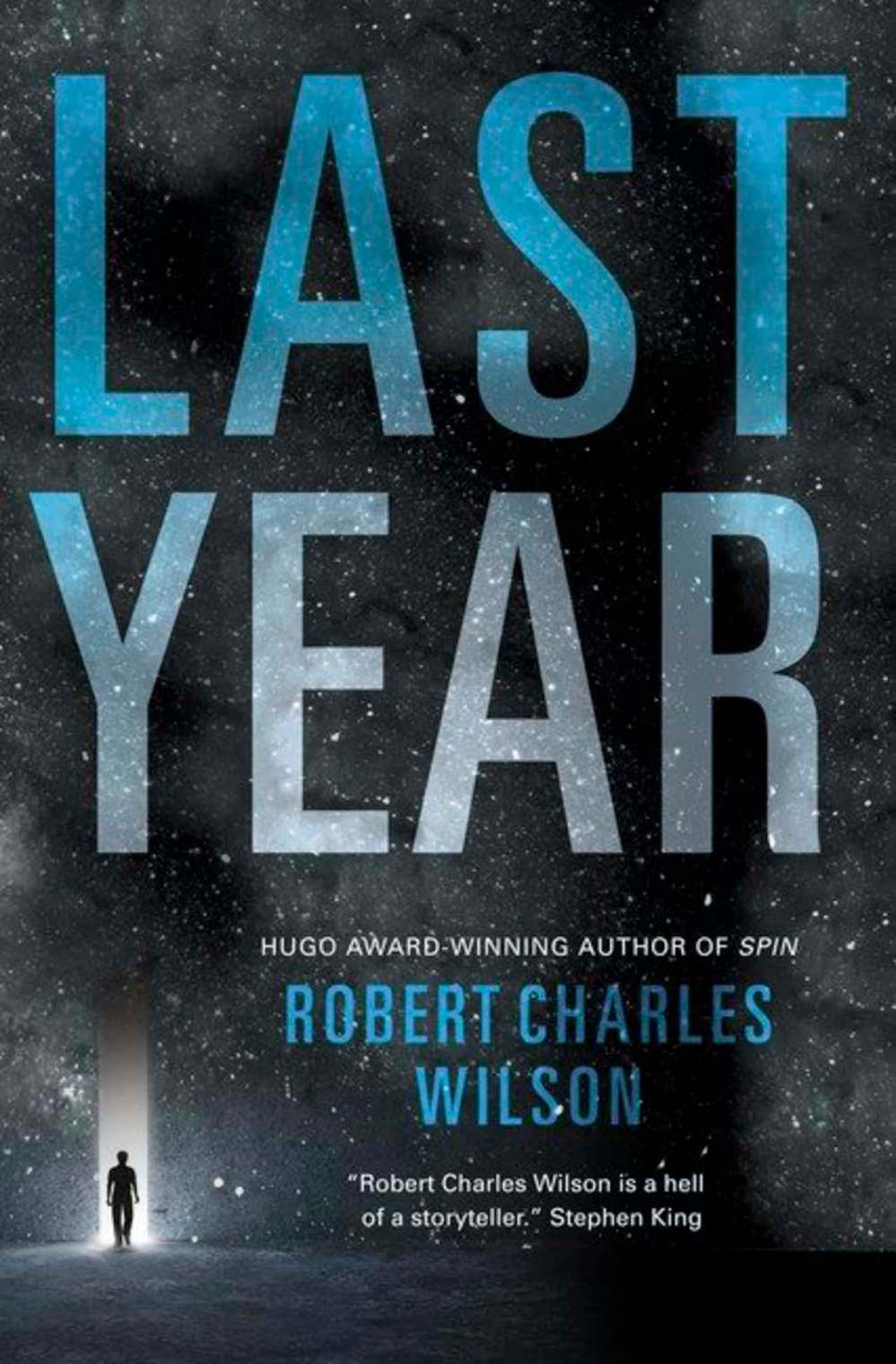
Robert Charles Wilson, Canada’s leading light for literary science fiction (see 2006’s Spin and 2013’s Burning Paradise), doesn’t like to repeat himself, but with a couple of dozen novels under his belt, some loose themes have emerged. Time travel has been central to the plot of a half-dozen of his novels, though never the same way twice. Alternate history has featured occasionally, often in a period setting.
Last Year, set in a theme-park city built in 1877 Illinois by 21st-century time travellers, checks all of these boxes.
Futurity is the launching pad to a tourist package for the future jet set, a place where the blasé one per cent can experience the idyll of a simpler time. It’s also a theme park for the denizens of 1877, a place where they can marvel at select examples of future technology, like helicopters and smartphones, in a carefully controlled environment. The future tourists pay by electronic transfer at the time of booking, and the fee is not shy on zeroes; the “locals,” contemporaries of the time, pay in gold bullion.

This is not a vacation trip for the Groupon crowd, nor their 19th-century equivalent (teeming masses?). After all billionaire August Kemp, owner of the city, only has five years to make his money and get out. After that, he calculates, the influence of the time-travellers will have become too polluting for the experience to be genuine. So the less affluent from this time period have to settle for a glimpse from binocular distance.
Last Year is historical fiction, science fiction and alternate history. Wilson has to plausibly draw characters contemporary to a future world that is never shown in the book alongside others contemporary to Reconstruction. In the latter case, he has to plausibly imagine them not only in their historical environment, but predict their reactions to wireless communications, video photography, and automatic weapons — and not just individually, but at a societal level. A licensed Starbucks whose barista is a Civil War widow? That’s just the beginning.
Take Wilson’s protagonist, Jesse. Before being hired to work security in the city, before his bouncer father died, he was raised in a whorehouse in San Francisco, a lawless frontier town where wicked men thrive and where he learned a few things along the way. Factor in a mysterious past trauma and three years working security for a time-travelling billionaire at the nexus of past and present, and you get a main character with a pretty unique perspective on the world.
Jesse has come to accept that future women can perform the same roles as men, and does not complain when he has to report to one, a veteran from some future war, no less. And it turns out he has more in common with Elizabeth than the local girls. They each have to contend with the fact that the idyllic past and wondrous future are not even half-truths.

Both know something of the aftermath of war, both have had to make hard sacrifices to protect the people they care about, and both understand the rules are different for the powerfully wealthy than they are for the desperate poor. Their boss in Futurity may be selling each time period one to the other — making money both ways — but the past is not an Eden and the future is not utopian.
This relationship is the emotional core of the story, and a happy ending is by no means a foregone conclusion.
But hope springs eternal; it’s just possible that these two hard-scrabblers, living in a place and time that is somehow both of theirs and neither, will find their ever after.
Or perhaps not. The future is, as ever, a mystery.
Joel Boyce is a Winnipeg writer and educator.