African postwar stories stellar

Advertisement

Advertise with us

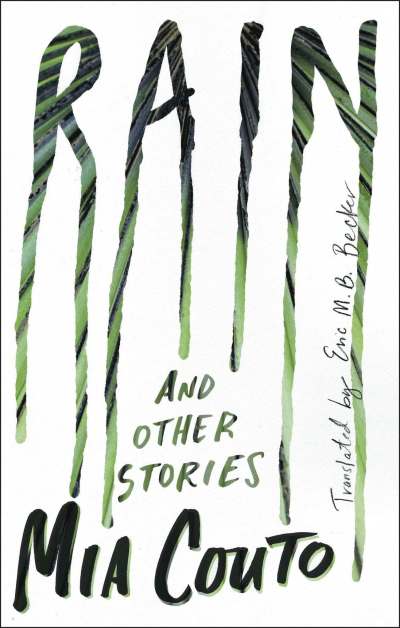
Written in the aftermath of the civil war in Mozambique, Rain and Other Stories is author Mia Couto’s magnificent response to how the barbarity of war is overcome by, as he puts it, “the rain of hope,” tenuous as that may be, and the dream of renewal.

Read this article for free:


or

Already have an account? Log in here »

To continue reading, please subscribe:

Subscribe and receive a limited-edition Free Press branded hat or tote.

Digital Subscription

One year of digital access for only $205*

  • Enjoy unlimited reading on winnipegfreepress.com
  • Read the E-Edition, our digital replica newspaper
  • Access News Break, our award-winning app
  • Play interactive puzzles

*First annual payment billed as $205.00 + GST for one year. This annual subscription will automatically renew at $233.00 + GST every 52 weeks (10% off the regular annual price of $259.35). Offer available to new and qualified returning subscribers only. Cancel any time.

To continue reading, please subscribe:

Add Free Press access to your Brandon Sun subscription for only an additional

$1 for the first 4 weeks*

  • Enjoy unlimited reading on winnipegfreepress.com
  • Read the E-Edition, our digital replica newspaper
  • Access News Break, our award-winning app
  • Play interactive puzzles
Start now

*Your next Brandon Sun subscription payment will increase by $1.00 and you will be charged $17.95 plus GST for four weeks. After four weeks, your payment will increase to $24.95 plus GST every four weeks.

Hey there, time traveller!
This article was published 02/03/2019 (2739 days ago), so information in it may no longer be current.

Written in the aftermath of the civil war in Mozambique, Rain and Other Stories is author Mia Couto’s magnificent response to how the barbarity of war is overcome by, as he puts it, “the rain of hope,” tenuous as that may be, and the dream of renewal.

A Booker Prize-shortlisted author of Portuguese-Mozambiquean descent, Couto has fashioned 26 very short stories in the form of prose poems encompassing fable, allegory, legend and a cross between magic realism and Kafkaesque mystery.

The wonder of the collection, indeed its grip on the reader, is that such seemingly disparate tales come together to ultimately present how the land is remade with the “water of ‘benedreamtion,’” a lovely word and indicative of the way Couto renews language as well throughout the stories.

Many are tales of transformation. In Beyond the River Bend, a hippopotamus crashes through a town and is eventually shot. It is revealed that, in fact, the creature was an old man who had died in the neighbourhood, and had returned to proclaim key prophesies concerning drought and plague. The creature is so large it really should be called “a hyper-potamus.” No matter.

The official sent to kill it comes to realize he has killed a man, not a beast; retribution awaits. But a baby hippo offers a kind of salvation. The aching beauty of the story, entwined with its dark humour, gives the reader the same kind of peace that the tormented official finds.

In Serpent’s Embrace, another transformation has a snake killing a jealous husband from the inside for his suspicion over his wife’s affair with a UN peacekeeper (an outsider much resented by the local population). In lesser hands, the snake would be near cliché in its symbolism. Couto, a true master, makes the symbol universal: the biting snake is within us, and the answer is the realization that our life can only be cured with death.

The best of the transformation tales, Lamentations of a Coconut Tree, has a coconut producing not sweet water but blood; the fruit also cries out in a human voice. Skepticism greets the story when it is widely told, until the narrator understands that green coconut was sacred and left until ripe until the war and the outsiders who invaded the area had their way.

The further topsy-turvyness of this world leads the reader to believe that chicks given the coconut to eat were transformed into plants. Yet, from the fruit a voice is still heard, a cry needing to be acknowledged. Couto’s prose in this fable is measured throughout as if his realization — the sacred must be observed, the human need to communicate must be answered — requires a slow reckoning from the reader.

Many of the stories offer a link, nearly broken, making it clear that the country’s history from colonial past to recovering modern present is a saga of a people creating a myth to live by — as all people must.

Couto spares no one, nor is anyone condemned — with the exception, in the Kafkaesque story Two Clowns, of the menace of unyielding hate itself. While this hate seems to present a battle of two wills, it leads not to the destruction of the clowns who jocularly fight, but rather of the towns they visit.

Nearly each sentence is astonishing in this riveting, challenging collection.

Rory Runnells is a Winnipeg writer.


By buying through links provided on this page, you are supporting local writers, reviewers and book sellers.

History

Updated on Saturday, March 2, 2019 9:12 AM CST: Format fixed.
Report Error Submit a Tip

More Stories

Knowing history — and not repeating it

Peter McKenna 5 minute read Preview

Knowing history — and not repeating it

Peter McKenna 5 minute read 2:01 AM CDT

Prime Minister Mark Carney summed up the current bilateral trade predicament nicely: “We cannot accept what they’ve offered and we will not give what they’ve asked.”

Interestingly, there are many similarities between what happened in the fall of 1987 and the trade war happening today between Canada and the United States. It has the same feel to it. And some of the same concerns, for me.

Of course, it’s a very different era and environment today. The circumstances are also not the same. And then there’s Trump.

But I can’t help but wonder if the recent turn of events in Canada-U.S. trade relations will resemble those of October 1987. That’s when Canada chose to return to the free trade negotiations and eventually cobble together a deal with the Ronald Reagan administration.

Read
2:01 AM CDT

Puzzles Palace

1 minute read Monday, Jul. 27, 2026

To solve our puzzles, please subscribe with this special offer: |

Owner credits entire team for Quarry victory in Canadian Derby

George Williams 5 minute read Preview

Owner credits entire team for Quarry victory in Canadian Derby

George Williams 5 minute read Yesterday at 9:18 PM CDT

Eight-time leading Assiniboia Downs owner Henry S. Witt Jr. flew into Century Mile in Edmonton and won the biggest horse race of his life, the $200,000 Canadian Derby (G3), on Aug. 22. His winning steed was named Quarry, a horse he claimed at Churchill Downs for $80,000 on June 20. Quarry is basically a free horse now.

Witt bet $100 win-place-show on his horse and got back over $1,800, some of which went back to the grooms in trainer Jerry Gourneau’s barn, and that’s what he wanted to talk about. He’d already said his trainer was the best in the business, now he wanted to talk about the grooms.

“I was videoing the shed row, you know, just to show some of my buddies how professional everything looked,” said Witt, What he shot mostly showed young grooms doing unglamorous work well. The thing that stopped him was a groom named Juliana LeRoux, who also happens to be Quarry’s groom, standing in a stall with Bergheim, a horse with a reputation for leaning on people.

“Bergheim kind of wallows on you, leans on you a little bit,” Witt said. “And people were saying, ‘You better watch him,’ Anyway, I walk down the shedrow and I look back and she’s over there petting him, kissing him on the forehead, talking to him. And I said, ‘What the heck?’”

Read
Yesterday at 9:18 PM CDT

‘Fine wine’: Vintage Collaros shows up in big win over Als after 38th birthday

Ken Wiebe 6 minute read Preview

‘Fine wine’: Vintage Collaros shows up in big win over Als after 38th birthday

Ken Wiebe 6 minute read Yesterday at 10:29 AM CDT

Zach Collaros was in no mood for I-told-you-so’s.

There were no references – either thinly veiled or direct – to the naysayers, many of whom thought the Blue Bombers were in deep trouble as the league-leading Montreal Alouettes rolled into town on a roll for a matchup on Friday that could have left Winnipeg with a sub-.500 record heading into the Labour Day Classic.

No, that’s not Collaros’ style or part of how he operates.

After outduelling Alouettes quarterback Davis Alexander in a convincing 44-28 victory, Collaros stood in front of a group of reporters and displayed almost no emotion, despite delivering what can easily be described as his best showing of the season.

Read
Yesterday at 10:29 AM CDT

Additional candidates register for Winnipeg’s fall election

Free Press staff 2 minute read Preview

Additional candidates register for Winnipeg’s fall election

Free Press staff 2 minute read Yesterday at 3:18 PM CDT

Every city council ward is set to have a contested race in the Oct. 28 municipal election, barring any withdrawals, after additional candidates registered for two contests.

Dennis Bayomi is running in Charleswood-Tuxedo-Westwood, where Evan Duncan is the incumbent candidate.

Bayomi is president and co-deputy leader of the Green Party of Manitoba. He’s run for the Greens in provincial and federal elections.

Fred Morris registered to run against incumbent Cindy Gilroy in Daniel McIntyre.

Read
Yesterday at 3:18 PM CDT

Carney’s defence of Lake Ontario carries enormous weight

Niigaan Sinclair 5 minute read Preview

Carney’s defence of Lake Ontario carries enormous weight

Niigaan Sinclair 5 minute read Friday, Aug. 28, 2026

For centuries on Turtle Island (North America), explorers, map makers, and political leaders have erased Indigenous place names and substituted them — more often than not — with political, ethnocentric, and self-aggrandizing names.

In recent years, a few places on the continent have had Indigenous names re-established, but as of today, few of the original names are “official.”

So, it was no surprise when U.S. President Donald Trump on Thursday signed an executive order directing the U.S. Department of the Interior and Board on Geographic Names to take steps within 30 days to officially rename Lake Ontario as “Lake America.”

The move may have been a result of the Canada-U.S. trade war and Trump’s pettiness and ego, but it also fits in perfectly with his career.

Read
Friday, Aug. 28, 2026