American TV helped hone Trump’s antihero status
Advertisement
Read this article for free:
or
Already have an account? Log in here »
To continue reading, please subscribe:

Digital Subscription
One year of digital access for only $205*
- Enjoy unlimited reading on winnipegfreepress.com
- Read the E-Edition, our digital replica newspaper
- Access News Break, our award-winning app
- Play interactive puzzles
*First annual payment billed as $205.00 + GST for one year. This annual subscription will automatically renew at $233.00 + GST every 52 weeks (10% off the regular annual price of $259.35). Offer available to new and qualified returning subscribers only. Cancel any time.
To continue reading, please subscribe:
Add Free Press access to your Brandon Sun subscription for only an additional
$1 for the first 4 weeks*
- Enjoy unlimited reading on winnipegfreepress.com
- Read the E-Edition, our digital replica newspaper
- Access News Break, our award-winning app
- Play interactive puzzles
*Your next Brandon Sun subscription payment will increase by $1.00 and you will be charged $17.95 plus GST for four weeks. After four weeks, your payment will increase to $24.95 plus GST every four weeks.
Read unlimited articles for free today:
or
Already have an account? Log in here »
Hey there, time traveller!
This article was published 25/01/2020 (2427 days ago), so information in it may no longer be current.
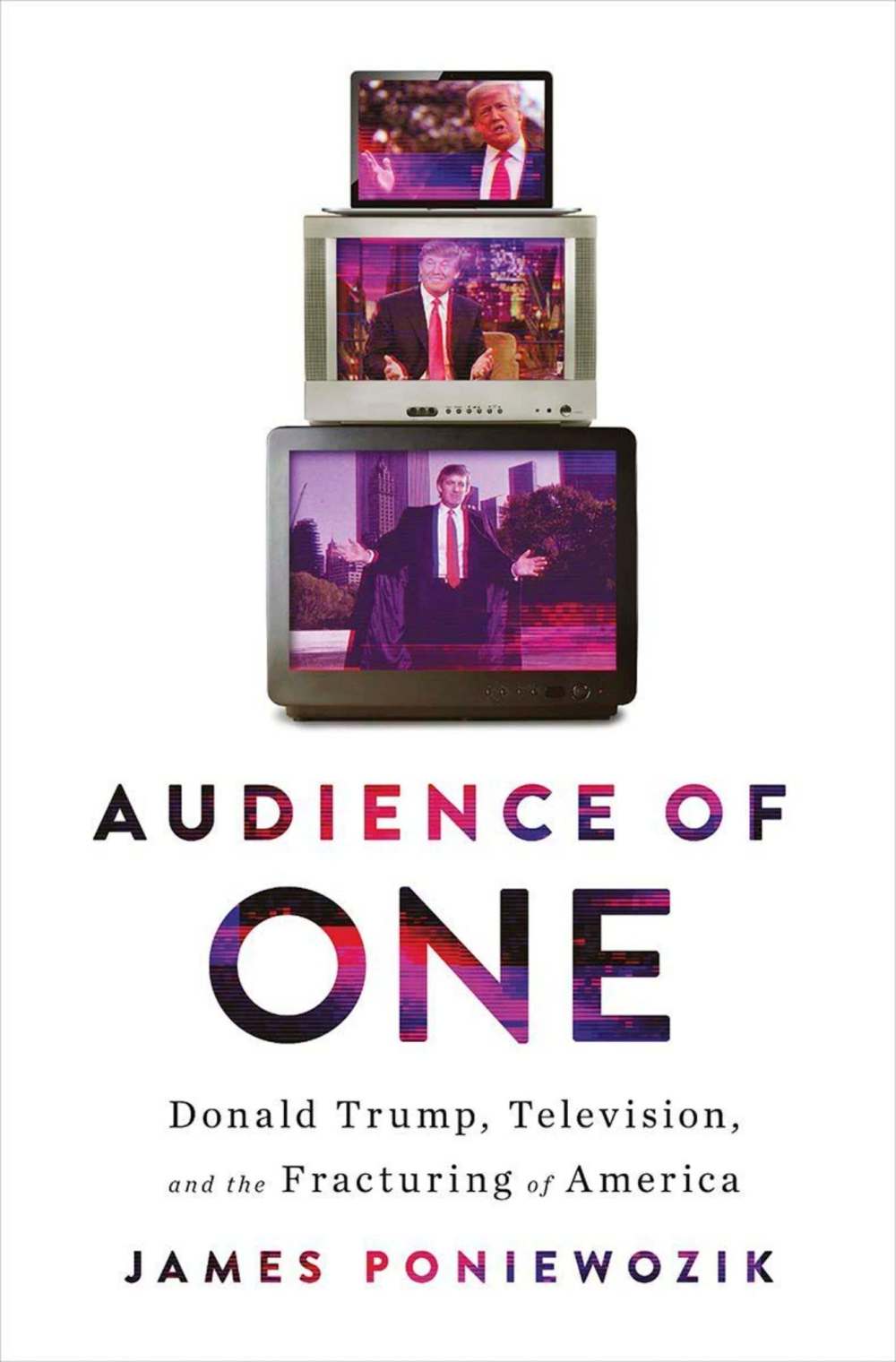
James Poniewozik, author of Audience of One: Donald Trump, Television and the Fracturing of America, sets out his view of the problem succinctly: “Without TV, there’s no Trump.”
The New York Times chief television critic traces the history of TV and mass media from the Reagan era to today, showing how as the media evolved Donald Trump, a New York real estate hustler, metastasized into the 45th president of the United States.
Poniewozik argues that mastering television has become a presidential qualification in itself. Consider the difference between Dwight Eisenhower and Donald Trump: Eisenhower became president because he won the war in Europe, while Trump became president by winning the 9 p.m. time slot on NBC.
This is a difficult book to read without getting angry at Trump and angry at his supporters. There are two narratives at play in the U.S., says Poniewozik: “One sees cultural pluralism as enriching the country, another as diluting it.” While we learn more of Trump and his approach, we get no more understanding of it. Often there’s a feeling of wanting to yell at the book, “What the hell is wrong with you people?”
Essentially, Trump raised himself on television, and early on realized that image is more important than reality. “The Donald Trump who matters is what you see on TV and Twitter, the display model.”
Trump has managed a mind-meld with a terrifying beast and, Poniewozik says, has become one with television. Like any long-running public performance, the Trump character evolved, but its constant was (and is) “its understanding of the instinctual appetites and fears of its audience.”
When there were only three television networks in the U.S., the effect was to create a monoculture. But with the advent of cable TV, that culture atomized into a million different cultures and interests — and it was in this environment that Trump thrived.
The pop culture of the 1980s held a less-than-flattering view of life in America. “It was betting that whatever anti-materialism had come out of the ’60s, whatever populist idealism had come out of Watergate, wasn’t going to stick,” Poniewozik writes. “People were not just going to stop ogling luxury. Covetous human nature had not been repealed.”
Pundits were sure that Trump was too offensive during his 2016 primary campaign to be elected. “What they didn’t see was the audience for whom smacking down people on TV was the qualification,” Poniewozik argues.
The campaign, the author says, “ran on reality TV morality.” Trump’s believers weren’t troubled by his lies. “He did not consider whether his words were kind or responsible or pleasing — or true — but simply whether he wanted to say them. That was being real… which was better than being tethered to fact.”

The author attributes Trump’s popularity in part to the rise of the antihero on television. While the antihero character in literature has been around since the time of the ancient Greeks, it has just recently moved to a prime time slot. Shows such as HBO’s The Sopranos and AMC’s Breaking Bad drew enormous audiences. And the more Trump moved into an antihero role in his reality show The Apprentice, the more popular he became.
In an era when pop culture and politics have become interchangeable, Trump’s campaign aimed to sell the figure of antihero to a mass audience.
“It meant doing what Breaking Bad did with Walter White — keeping the audience on the side of the antihero by convincing them that his enemies were even worse,” Poniewozik writes. And the audience just lapped up his performances.
From a Canadian perspective, Poniewozik seems to assign too much credit, or blame, to television. Canadians are subject to the same drivel as Americans, yet in 2015 we elected a young Justin Trudeau, with his progressive agenda, as prime minister. In 2016, Americans elected Trump, who ran a viciously racist campaign, as president. There has to be more than television at play here.
Gordon Arnold is a Winnipeg writer.