An infectious read

Epidemiologist's race to thwart deadly bacteria a real-life thriller

Advertisement

Advertise with us

A race against time to thwart a deadly foe, which threatens a loved one and may spread devastation. Courageous characters altruistically joining forces to defeat an international menace. Hair-breadth escapes and stirring twists of fortune.

Read this article for free:


or

Already have an account? Log in here »

To continue reading, please subscribe:

Subscribe and receive a limited-edition Free Press branded hat or tote.

Digital Subscription

One year of digital access for only $205*

  • Enjoy unlimited reading on winnipegfreepress.com
  • Read the E-Edition, our digital replica newspaper
  • Access News Break, our award-winning app
  • Play interactive puzzles

*First annual payment billed as $205.00 + GST for one year. This annual subscription will automatically renew at $233.00 + GST every 52 weeks (10% off the regular annual price of $259.35). Offer available to new and qualified returning subscribers only. Cancel any time.

To continue reading, please subscribe:

Add Free Press access to your Brandon Sun subscription for only an additional

$1 for the first 4 weeks*

  • Enjoy unlimited reading on winnipegfreepress.com
  • Read the E-Edition, our digital replica newspaper
  • Access News Break, our award-winning app
  • Play interactive puzzles
Start now

*Your next Brandon Sun subscription payment will increase by $1.00 and you will be charged $17.95 plus GST for four weeks. After four weeks, your payment will increase to $24.95 plus GST every four weeks.

Hey there, time traveller!
This article was published 27/04/2019 (2725 days ago), so information in it may no longer be current.

A race against time to thwart a deadly foe, which threatens a loved one and may spread devastation. Courageous characters altruistically joining forces to defeat an international menace. Hair-breadth escapes and stirring twists of fortune.

Usually the stuff of fiction, Canadian-born epidemiologist Steffanie Strathdee incorporates such excitement into her page-turning memoir of fighting a deadly infection that is immune to antibiotics.

Strathdee’s husband Tom Patterson developed a painful stomach illness while on vacation in Egypt in 2015. Medevaced first to Germany, and later to San Diego, where the pair taught at the University of California (UCSD), the most dangerous threat to his life turns out to be the drug-resistant Acinetobacter baumannii, also known as “Iraqibacter” because of its prevalence in people returning from the Middle East between 2003 and 2009.

Tom Patterson (centre left) developed a painful stomach illness while on vacation in Egypt in 2015 with his wife, epidemiologist Steffanie Strathdee (top). (The Canadian Press files)

“This bacterial kleptomaniac collected genes from other bacteria that arm it for resistance to antibiotics,” Strathdee writes; it evades “the host’s immune system,” partly by developing “a slimy capsule that inhibits the immune response.”

The bacteria roiled a 15-centimetre pseudocyst in Patterson’s abdomen and “allied” with pancreatic inflammation and other infections causing pain, vomiting, fever and deadly complications.

As one powerful antibiotic after another fails to have any effect, Strathdee, supported by UCSD chief of infectious diseases Robert (Chip) Schooley, begins to consider enlisting germ-eating viruses to target the intractable infection.

Using such “bacteriophages” against infections began about the same time as the antibiotic revolution following Alexander Fleming’s discovery of penicillin in the late 1920s, and its development as a miracle drug in the following decades. However, “phage therapy” fell out of favour in the West with the explosion of antibiotic use, although a few eastern European research centres remained in Poland and Georgia.

Strathdee, with journalist Teresa Barker, chronicles the emotional roller-coaster of family, friends and medical personnel dealing with Patterson’s illness. His daughters and Strathdee face fearsome decisions and complexities dealing with a person in intensive care for months on end.

Occasional interludes from Patterson’s memories provide a nightmarish counterpoint to the scientific issues and decisions Strathdee and the widely varied care team must face every day. It’s as tense as any chase or fight scenes in a novel.

As she researches phage therapy and searches desperately for scientists and clinics willing to experiment with it — as Patterson slips closer and closer to death — various individuals and groups step up heroically, dedicating themselves, their scientific work and their reputations to his case.

Strathdee effectively balances the emotional weight of the experience with scientific, historical and medical information even the lay reader can understand.

One of the few places where the narrative slows down involves the paperwork that must be filed giving her “Consent to Emergently Administer” treatments “not approved for clinical use in the United States or western Europe.” Even this plodding document serves to emphasize the dangerous choices she and Patterson’s doctors must make, for his health and their own legal safety.

Medical labs and researchers from the U.S. navy and private enterprise provide inspirational donations of time, care and risk as the plan comes together. Time slipping away — combined with the fact that it’s a true story — helps the story surpass mere fictional adventure.

Strathdee never sounds rancorous, though she discusses the overuse of antibiotics in agriculture and medicine that contributed to her husband’s condition. Nor is the book overly optimistic about the future of phage therapy, in spite of the increasing danger of resistant infections.

It is enough that the reader is emotionally involved in this story, and policies and prognoses are left up in the air. If it were fiction, the sequel would be eagerly anticipated, to reveal whether the infection or the killer virus is the Perfect Predator.

Bill Rambo teaches at The Laureate Academy in St. Norbert. He is washing his hands more carefully than ever.

Report Error Submit a Tip

More Stories

Towing company hands stolen car back, but not to owner

By Matthew Frank 4 minute read Preview

Towing company hands stolen car back, but not to owner

By Matthew Frank 4 minute read Friday, Oct. 9, 2026

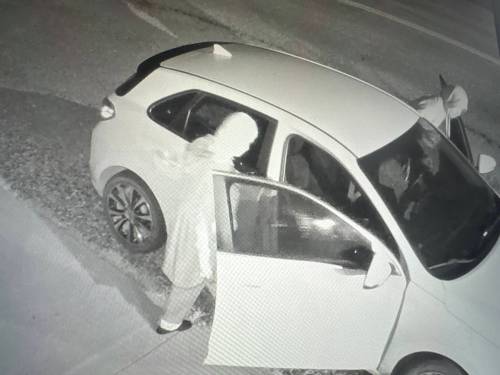
A Manitoba man says he is dumbfounded after his car was stolen, impounded by a Winnipeg towing company and given back — to someone that wasn’t him.

Cody Lamb lives in the western Manitoba community of Douglas, about 18 kilometres east of Brandon, but spends weeks away from home working on oil rigs in Alberta.

The 24-year-old says on Sept. 11, while away for work, he heard from his girlfriend who told him his car wasn’t in their driveway. Lamb reported the car stolen to Brandon RCMP the same day.

After filing the report, he heard from Steinbach RCMP on Oct. 1 that his car was recovered that day in the community of Mitchell, roughly five km west of Steinbach.

Read
Friday, Oct. 9, 2026

Chopped trees will leave a ‘blight’ on Windsor Park

Kelly-Anne Riess 3 minute read Preview

Chopped trees will leave a ‘blight’ on Windsor Park

Kelly-Anne Riess 3 minute read Friday, Oct. 9, 2026

Robert Gordon has watched the trees grow along a popular Windsor Park walking path for nearly six decades.

Now, as Manitoba Hydro cuts them down to protect nearby power lines, he says a familiar part of his childhood neighbourhood is disappearing.

Although he no longer lives in the area, Gordon regularly returns to walk or cycle along the tree-lined path, which runs parallel to Archibald Street.

He was concerned when he recently spotted crews clearing vegetation near the entrance to the path, but initially assumed they were removing brush. When he returned, he discovered the clearing had extended farther along the corridor.

Read
Friday, Oct. 9, 2026

Final hurdles are moving on in your mind and life

Maureen Scurfield 3 minute read Yesterday at 2:01 AM CDT

DEAR MISS LONELYHEARTS: I just ran into my former husband with his new woman. It was a shock. She looked nothing like me — not nearly as good. In fact, she’s the opposite of me — red-haired, freckled, tall and skinny like a rake. I’m short, dark, with golden skin from my Italian background. That was what my husband used to say he loved in a woman.

Does that mean he lied — that he really didn’t like my looks and secretly longed for the opposite? That seems crazy to me. But I should mention that in our last miserable years together he didn’t even want to hold me in his arms and look at me. He sometimes slept at his office (or so he said) because he was “too tired to drive home.”

He could have been elsewhere — like in some other woman’s home — because he always used his cellphone to call me, not his office line.

How can I forget about the man I loved so much and finally move on?

Longtime voice of the Blue and Gold marks major milestone

David Sanderson 8 minute read Preview

Longtime voice of the Blue and Gold marks major milestone

David Sanderson 8 minute read Friday, Oct. 9, 2026

Bob McGregor made his debut as the Winnipeg Blue Bombers’ public-address announcer on June 7, 1997, during a pre-season game at Winnipeg Stadium between the hometown Blue Bombers and their western rivals, the Calgary Stampeders.

McGregor will be behind the microphone again this Saturday, detailing the action on the field in addition to leading a boisterous Princess Auto Stadium crowd through what has become his signature call, “And that is another Winnipeg Blue Bombers first down!”

The Bombers’ final home date of the 2026 regular season will mark a major milestone for McGregor, and the former newscaster feels it’s only fitting the same two teams as 10,717 days ago — the Bombers and Stampeders — will be the ones butting helmets.

“I knew at the start of the season I was closing in on 300 games as the PA guy, only it wasn’t until I went through the schedule that I realized my 300th would be Winnipeg-Calgary, which struck me as kind of cool,” McGregor says, seated in a St. James breakfast nook, dressed in dark trousers and a blue-and-gold Blue Bombers golf shirt.

Read
Friday, Oct. 9, 2026

Protein crests current appetite wave

Laura Rance-Unger 4 minute read Preview

Protein crests current appetite wave

Laura Rance-Unger 4 minute read Yesterday at 2:01 AM CDT

Holiday feasts often reflect the latest fads and trends influencing how we eat.

This Thanksgiving’s table is likely to feature more Canadian content than it might otherwise as a point of national pride.

In the recent past, the carb-free craze has made cauliflower a substitute for the mashed potatoes on some family spreads. Some have gone meatless, while others have added more. Still others offer gluten-free, dairy-free or fat-free alternatives.

Nowadays, it seems consumers can’t get enough protein. Desmond Sobool, deputy chief economist Farm Credit Canada, told a recent economic update for the agri-food sector there are two converging influences in play.

Read
Yesterday at 2:01 AM CDT

Landlords will face fines for breaching confidentiality

Carol Sanders 4 minute read Preview

Landlords will face fines for breaching confidentiality

Carol Sanders 4 minute read Friday, Oct. 9, 2026

The province is amending legislation to allow landlords to be penalized if they breach the confidentiality of tenants who break their lease by obtaining a domestic violence certificate.

“Hopefully, now there’s going to be measures in place so that if this happens again, and God forbid it happens again to anyone else, that there would be penalties imposed on landlords who do that,” said one victim whose concerns were published on the front page of the Free Press last month.

Under current legislation, landlords must ensure that any information received from those tenants regarding the termination of the tenancy is kept confidential, but there are no penalties for landlords who violate that section of the act. After hearing from victims put at risk when landlords broke the law by violating their confidentiality, the government announced Monday that it is amending the Residential Tenancies Act to allow for penalties.

The young woman who spoke to the Free Press showed that her landlord copied her alleged abuser in email correspondence that included her personal email address and the domestic violence certificate she obtained in 2025 to end a tenancy agreement early and leave an abusive relationship.

Read
Friday, Oct. 9, 2026