Back to butter
Chef calls unhealthy allegations 'slander'; uses award-winning cookbook to fire back and educate
Advertisement
Read this article for free:
or
Already have an account? Log in here »
To continue reading, please subscribe:

Digital Subscription
One year of digital access for only $205*
- Enjoy unlimited reading on winnipegfreepress.com
- Read the E-Edition, our digital replica newspaper
- Access News Break, our award-winning app
- Play interactive puzzles
*First annual payment billed as $205.00 + GST for one year. This annual subscription will automatically renew at $233.00 + GST every 52 weeks (10% off the regular annual price of $259.35). Offer available to new and qualified returning subscribers only. Cancel any time.
To continue reading, please subscribe:
Add Free Press access to your Brandon Sun subscription for only an additional
$1 for the first 4 weeks*
- Enjoy unlimited reading on winnipegfreepress.com
- Read the E-Edition, our digital replica newspaper
- Access News Break, our award-winning app
- Play interactive puzzles
*Your next Brandon Sun subscription payment will increase by $1.00 and you will be charged $17.95 plus GST for four weeks. After four weeks, your payment will increase to $24.95 plus GST every four weeks.
Read unlimited articles for free today:
or
Already have an account? Log in here »
Hey there, time traveller!
This article was published 07/02/2018 (3164 days ago), so information in it may no longer be current.
From music for your ears to music for your mouth: That’s the shorthand that would sum up the career of Canadian chef Brad Long.
He started out as a musician — even went to school for it — but after he took an “under-the-table” gig as a dishwasher — he fell into in the culinary world.

In truth, it was a circuitous route that developed, for a time, into a love-hate relationship with the kitchen. At 28, deciding there was more security in the kitchen than in rock ‘n’ roll, he enrolled at George Brown College in Toronto, then did a stint as an apprentice in a kitchen that boasted a proud culture of professionalism from the chef to the waiters.
And that was the name of that tune.
Long, now 55, is acclaimed owner and chef of Café Belong and Belong Catering in Toronto, and is a co-host of Food Network’s Restaurant Makeover. He is a feisty advocate of sustainable farming and ethical treatment of livestock.
“Food is fuel; food is medicine, food is love,” says Long.
He believes that the better you eat, the better you are.
“I try to educate people — I’m a truth seeker and I try to tear down some of the false idols of the last 100 years.”
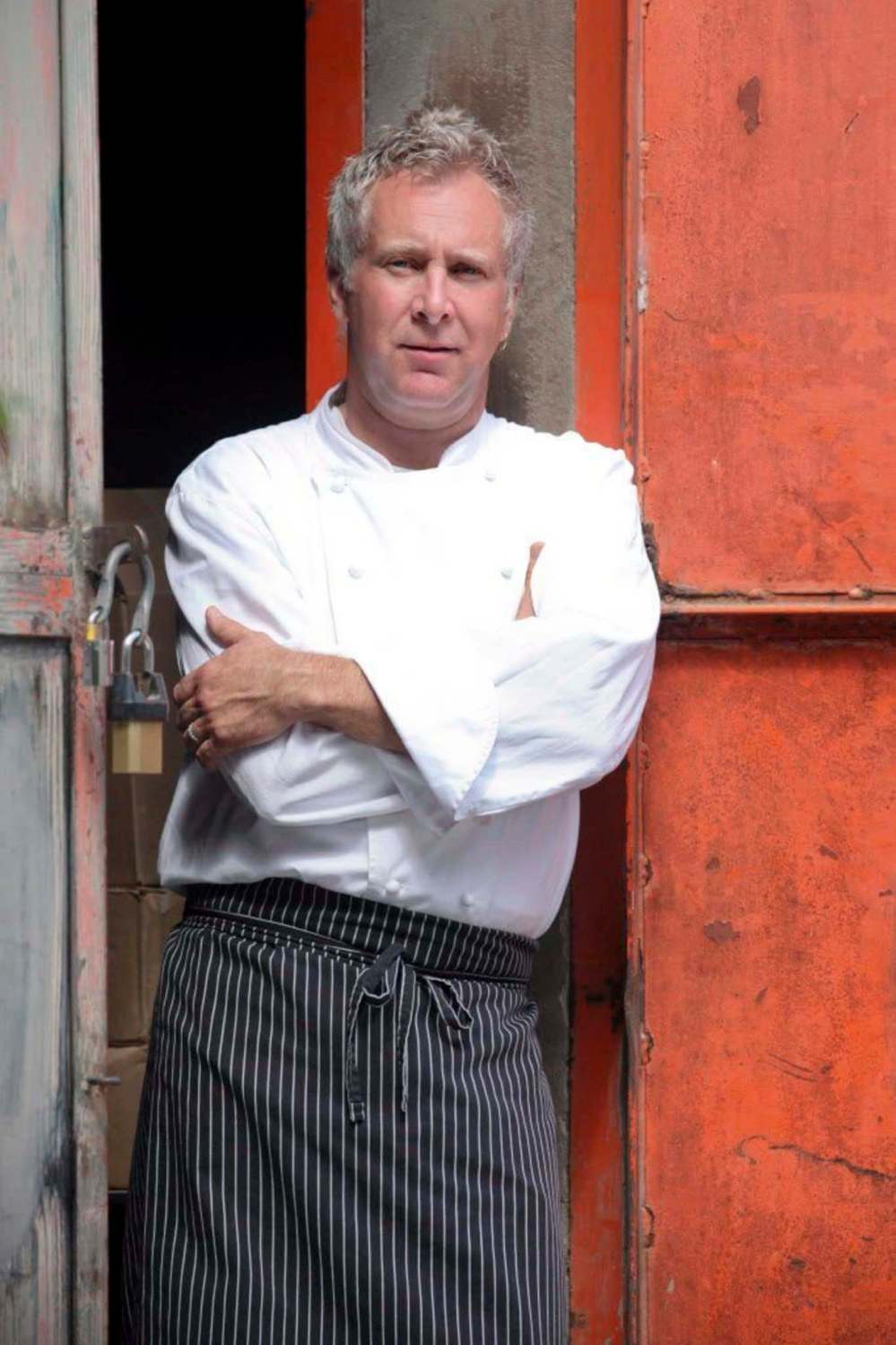
His new book Brad Long on Butter (The Harvest Commission, $28) the first from the new series Chef to Reader, won best single subject cookbook for Canada at the Gourmand World Cookbook Awards. It is his literary volley at a pervasive “false idol”: the idea that butter is unhealthy, even harmful.
“We’ve been misled for commerce and business,” says Long.
“There’s a handful of guys making money off of hydrogenated fats, and they’ve made hydrogenated corn oil and fats so they’ll stay stable at room temperature and then they slander other foods like butter and other oils.”
“We’ve had someone make up a load of crap that hydrogenated oil is good for you and it’s 100 per cent false.”
He says part of the problem is that people just don’t know better.
“Even now, you will find somebody who will say butter is bad for you,” he says. “We have a lack of real and proper education around food and cooking.”
It wasn’t just the general public who fell under the sway of the “butter is bad” curse.
“When French chefs abandoned fats and creams, they felt that maybe lighter and fresher was better — that was a really good exercise and we got a lot of really good things out of that,” he says.
“But it’s time to return to butter and even though, for me, it’s not my only thing — it is foundational.”
Long gets down to business in Brad Long on Butter. In a readable, conversational style, he shows you what you need to know to get butter back in to your kitchen, how to properly cook with it and how to make the best use of it. He does seem to have some mixed feelings about cookbooks.
“Of all of them, I’ve always hated those chefs’ books!” he says.
He rejected writing one for years, partly because he didn’t want his own voice edited out.
“The butter book is one topic that I’m interested in, but mostly I get to say whatever I want,” says Long.
“That’s my voice. Those are my stories. I wanted it to be funny. I wanted it to be readable as a book but also impart useful information.”
The following recipe marries chicken and butter — two excellent things made better by culinary matrimony. The recipe and accompanying text are excerpted with permission, from Brad Long on Butter published by The Harvest Commission.
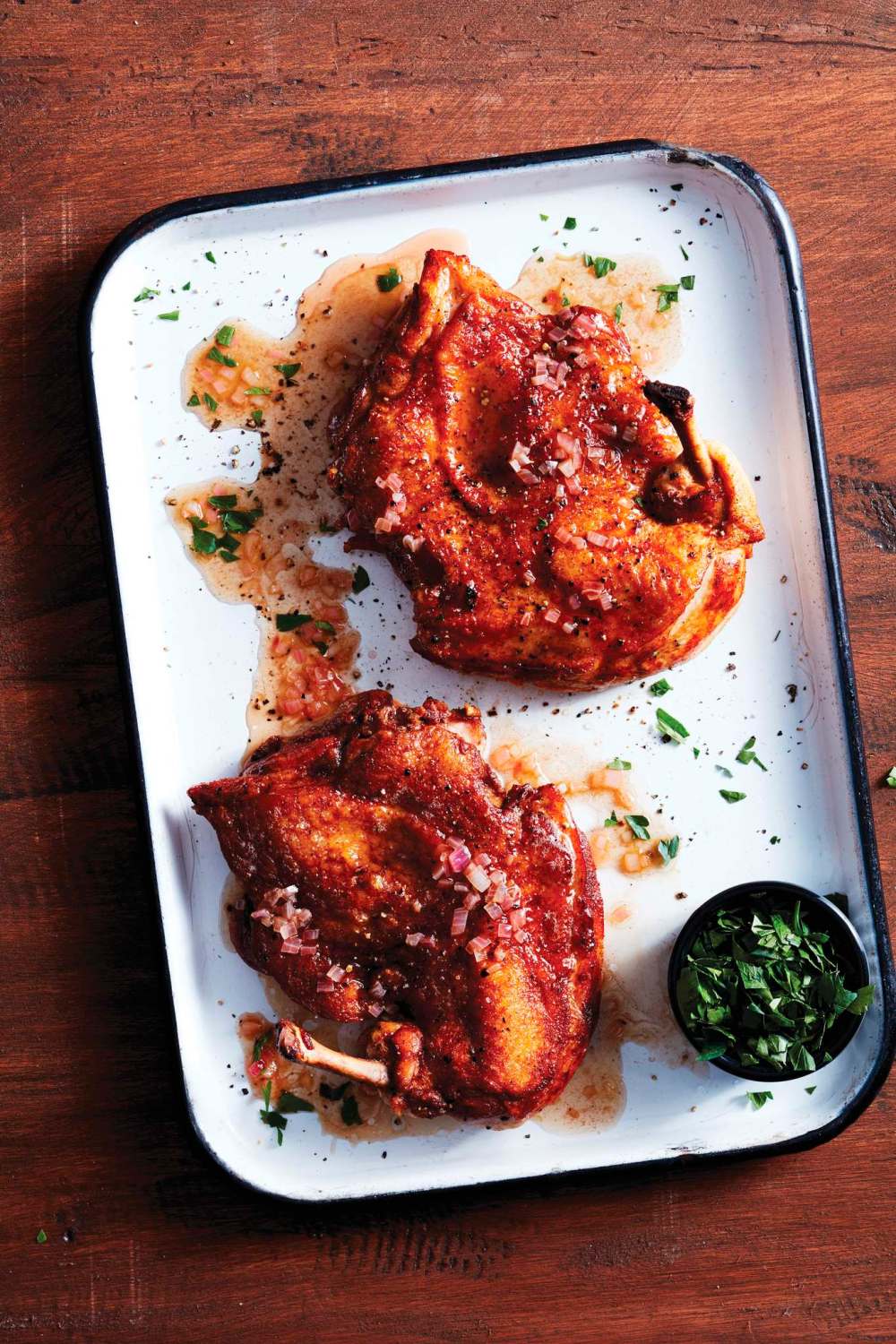
Butter-Seared Boneless Half Chicken: Searing, Pan-Browning, Oven-Finishing and the Sauce that Magically Appears with It

Makes enough for 1, 2, or more servings, depending on the size of the chicken.
A standard-size roaster is 1.5 kilograms (3¼ pounds), and although I can easily eat a boneless half myself (not that I necessarily should), it is certainly a reasonable size for two people.
This is a delicious example of the way hot butter helps with crisping. This isn’t deep-frying. We’re pan-searing, and the chicken we are cooking will sit in relatively little fat compared to deep-frying. Butter works beautifully when your food isn’t perfectly flat, unlike, say, a piece of properly cut red meat. The butter bubbles and boils away under the chicken flesh, hitting all the nooks and crannies, essentially doing your job for you so you don’t have to keep it moving or baste it. If you don’t use butter and just sear the chicken in some other fat, it won’t get consistently browned. That means some of the skin will be pale and limp — that simply will not do.
By the way, I’m calling for a boneless half chicken here or two skin-on boneless chicken breasts if you’re one of those “white meat only” types (not that there’s anything wrong with that). If you are flummoxed by how to cut the lovely juicy flesh of a chicken off the bone, your local butcher will be able to do it for you if you ask nicely. While the no-bones thing certainly aids ease of eating, in this case it also helps the chicken lie flat in the pan. Yes, this will work with a full spatchcocked chicken, but it’s really better with a half chicken because you get a lot more crispy skin.
1 boneless half chicken or 2 skin-on boneless chicken breasts
15 ml (1 tbsp) vegetable oil, plus more for rubbing over the bird
Salt, to taste
90 to 120 ml (6 to 8 tbsp) salted butter
1 medium shallot, finely diced
50 ml (1/4 cups) cider vinegar (or red wine)
You can start by rubbing the chicken with herbs, spices, or pretty much whatever you want, but at the very least it needs to be rubbed with some good oil — meaning not margarine or corn oil but something with a simple flavour and the ability to handle at least 180 C (350 F), preferably higher — and thoroughly salted on all sides.
Once you’ve done that, get ready to cook this thing: Cut the butter into tablespoon-size chunks and turn your oven on to 190 C (375 F). Choose a flat-bottomed frying or sauté pan with a metal or other non-melting handle (so, oven-ready pan, because you’ll be putting it into a hot oven) that will allow the chicken to lie completely flat. Add the vegetable oil and turn the heat on to high. Leave it until the oil just begins to throw smoke, then immediately place the chicken in the pan, skin-side down. If your pan and oil are properly hot, the chicken will begin to sizzle and hiss. Carefully, using tongs, try to pull and spread out the chicken as even and flat as possible. Then, using those tongs, lift up an edge of the chicken and slide a piece of butter underneath. Do this all the way around the chicken, placing probably 6 or 8 pieces of butter total, until the chicken is sitting in a mass of bubbles foaming up and around it.
The butter is doing two important things:
— It’s very effectively spreading and directly hitting the skin of the chicken with heat, transferring it from the pan to meat, speeding up the cooking and crisping the skin.
— It’s browning itself, simultaneously adding a deep, rich, nutty flavour to the chicken.
Again, using your tongs, lift a corner of the chicken and check the colour of the skin. Once it’s deep golden brown, add whatever butter you have left, then turn the chicken over in the pan so the skin side is up. Carefully put the whole pan in the hot oven. By turning the chicken over and transferring the pan to the oven, you are not only cooking it through from both sides, but instead of the top cooling as it would if left on the stove, you are also continuing to brown the skin on top, making it crisper.
If you spent 5 or 6 minutes cooking the first side, you will need another 7 or 8 minutes in the oven. Check for doneness by slitting the underside of the chicken slightly and taking a peek: You shouldn’t see any translucent flesh or blood.
Once the chicken is cooked through, remove the pan from the oven (use a towel or oven mitt!) and then transfer the chicken to the plate or platter that you wish to serve it on. Whatever you do, don’t dump the juices out of the pan! Put the pan back on the stovetop. You shouldn’t really need a burner as the entire pan will be extremely hot, but if it cooled for some reason, heat the pan juices to at least boiling temp. Then dump the diced shallot in the pan and immediately pour in the vinegar.
Using a wooden spoon and the juices in the pan, do your best to loosen all the brown bits stuck to the bottom of the pan, stirring it around to blend the flavours. Then hold a fine-mesh sieve over the chicken (which is on a plate or platter, remember?) and pour the contents of the pan through the sieve and over the entire chicken.
You should be looking at a very brown, very crispy, and absolutely lovely piece of chicken with a simple sauce that is perhaps fatty but perfectly suited and seasoned to best complement your chicken.
Mmmmm, crispy skin and buttery sauce. It looks good, but it tastes even better.
Twitter: @wendykinginwpg
History
Updated on Wednesday, February 7, 2018 7:26 AM CST: Photos fixed.