

Bored, confused and grateful, Mr. Juster

Advertisement
Read this article for free:
or
Already have an account? Log in here »
To continue reading, please subscribe:
Digital Subscription
One year of digital access for only $1.44 a week*
- Enjoy unlimited reading on winnipegfreepress.com
- Read the E-Edition, our digital replica newspaper
- Access News Break, our award-winning app
- Play interactive puzzles
*Billed as $5.77 plus GST every four weeks. After 52 weeks, price increases to the regular rate of $19.95 plus GST every four weeks. Offer available to new and qualified returning subscribers only. Cancel any time.
To continue reading, please subscribe:
Add Free Press access to your Brandon Sun subscription for only an additional
$1 for the first 4 weeks*
- Enjoy unlimited reading on winnipegfreepress.com
- Read the E-Edition, our digital replica newspaper
- Access News Break, our award-winning app
- Play interactive puzzles
*Your next Brandon Sun subscription payment will increase by $1.00 and you will be charged $17.95 plus GST for four weeks. After four weeks, your payment will increase to $24.95 plus GST every four weeks.
Read unlimited articles for free today:
or
Already have an account? Log in here »
Hey there, time traveller!
This article was published 13/03/2021 (1904 days ago), so information in it may no longer be current.
Last week, Norton Juster died, at age 91, in Northhampton, Mass.
I read this with sadness but also with great gratitude for his life and work. Juster was the author of my favourite childhood book.
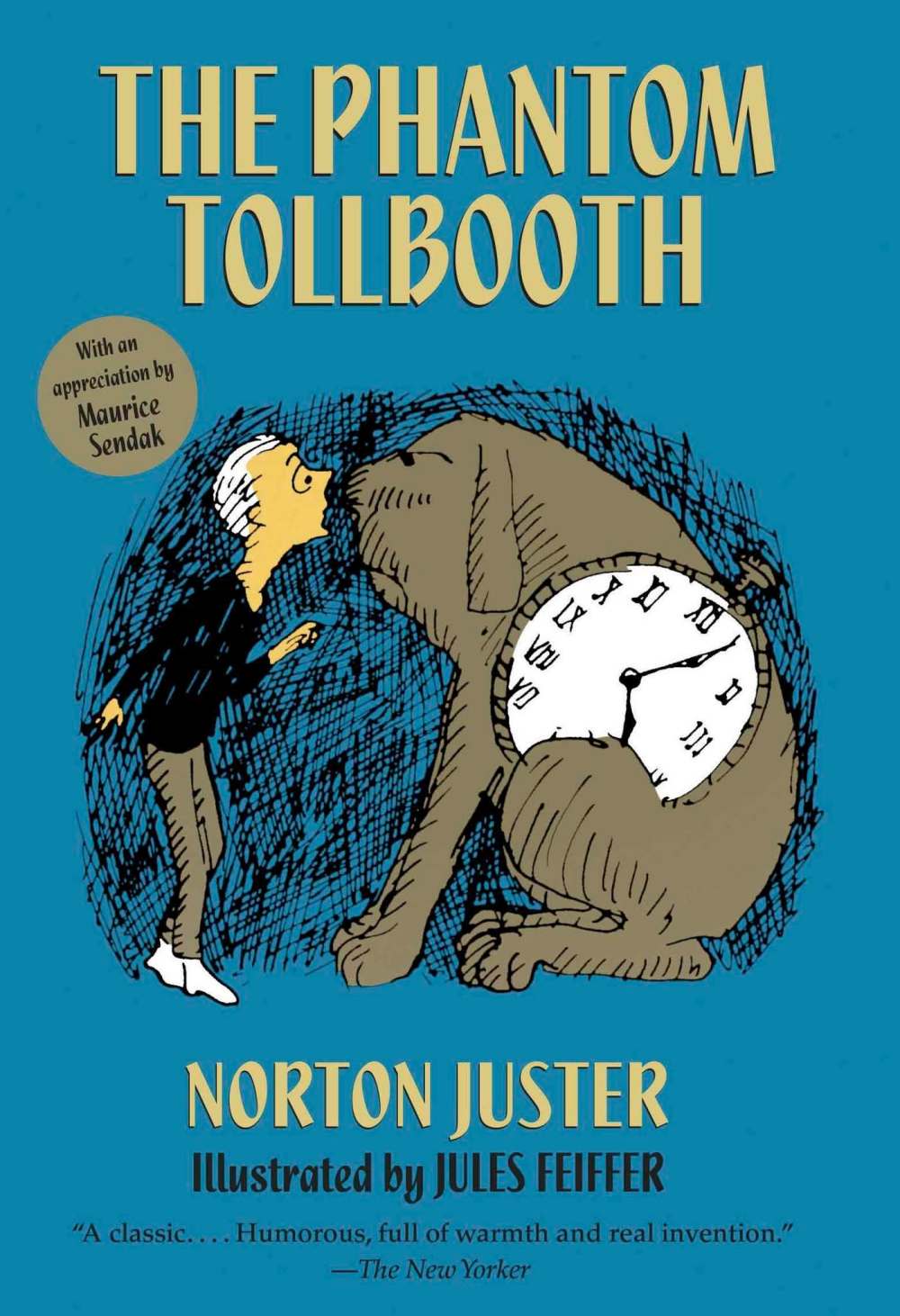
The Phantom Tollbooth was published way back in 1961, but it has a lot to say about where we are right now. Wise, clever and silly, the book is basically a treatise on how not to be bored.
I don’t want to speak for anyone else, but I know my ambitious plans from the early days of the pandemic lockdown — reading deeply, walking widely, playing a musical instrument — have too often devolved into me staring at my Netflix queue and not even being able to summon the mental energy to choose something.
Maybe that’s why The Phantom Tollbooth still touches me. It’s about a boy named Milo, “who didn’t know what to do with himself — not just sometimes, but always.”
Nothing interests Milo, “least of all the things that should have.”
For Milo, this problem is solved by the arrival of a mysterious package, inviting him to take a trip past a purple tollbooth into the Lands Beyond.
There Milo learns of a nasty feud between two factions of the kingdom of Wisdom, the number-crunchers of Digitopolis and the word-lovers of Dictionopolis. This problem can only be solved by the return of two banished princesses, Rhyme and Reason.
Milo attends a banquet in Dictionopolis where you literally eat your words. In Digitopolis, he tries subtraction stew (the more you eat the hungrier you get). He hears about the unexpected relationship between the city of Reality and the city of Illusions. He learns about the dangers — literally — of jumping to Conclusions.
Milo also has some scary run-ins with the monsters of ignorance and malice, like the Triple Demons of Compromise — one short and fat, one tall and thin and the third exactly like the first two.
Full of whimsy and irony, absurdist dream logic and punning wordplay, The Phantom Tollbooth has been compared to everything from The Pilgrim’s Progress to Alice’s Adventures in Wonderland to the Marx Brothers.
The book is packed with odd information. At the age of nine I found out that a dodecahedron is a geometrical shape with 12 flat faces and a shandrydran is a kind of vehicle (or conveyance, rig, charabanc, chariot, buggy, coach or brougham — there are a lot of synonyms zinging around Dictionopolis).
Juster is never didactic or dull, though. He doesn’t really care whether the reader learns individual facts. He just wants you to find that sense of wonder and curiosity and purpose that makes all learning possible.
As Princess Rhyme says, “It’s not just learning things that’s important. It’s learning what to do with what you learn and learning why you learn things at all that matters.”
Princess Reason adds that you shouldn’t worry about making mistakes when you’re on the journey of learning: “For you often learn more by being wrong for the right reasons than you do by being right for the wrong reasons.”
Juster started writing during a stint in the U.S. navy, where he combated boredom by penning his first children’s story — and was reprimanded by his commanding officer. (That seems like a good beginning.) He later wrote The Phantom Tollbooth when he was supposed to be writing something else. He published several books while also working for decades as an architect and professor of architecture. (That might explain The Phantom Tollbooth’s interest in the reunification of art and science, since architecture requires both.)
Juster said he was writing for the kind of kid he was — “quiet, introverted, and moody.” He recalled reading the big, fat novels he found on his parents’ shelves, translated from Russian and Yiddish: “I would read them and have no idea what I was reading, but I just loved the language and the way you read it and how the words sounded.”

Juster was able to pass on to new generations that feeling of being intrigued by the unknown. In doing so, he was often up against conventional approaches to children and reading. Some educators believe that children’s lit should stick to language the target age group already knows, fearing that unfamiliar words and concepts might discourage young readers.
But what’s the fun in reading what you already know about?
In 2011, Juster said, “Today’s world of texting and tweeting is quite a different place, but children are still the same as they’ve always been. They still get bored and confused, and still struggle to figure out the important questions of life.”
The only thing I would add to that is that it’s not just children. Thank you, Mr. Juster, from my nine-year-old self and from me here and now.
alison.gillmor@freepress.mb.ca
Studying at the University of Winnipeg and later Toronto’s York University, Alison Gillmor planned to become an art historian. She ended up catching the journalism bug when she started as visual arts reviewer at the Winnipeg Free Press in 1992.
Our newsroom depends on a growing audience of readers to power our journalism. If you are not a paid reader, please consider becoming a subscriber.
Our newsroom depends on its audience of readers to power our journalism. Thank you for your support.
Studying at the University of Winnipeg and later Toronto’s York University, Alison Gillmor planned to become an art historian. She ended up catching the journalism bug when she started as visual arts reviewer at the Winnipeg Free Press in 1992.
Our newsroom depends on a growing audience of readers to power our journalism. If you are not a paid reader, please consider becoming a subscriber.
Our newsroom depends on its audience of readers to power our journalism. Thank you for your support.
Advertisement Advertise With Us
Advertisement Advertise With Us