

Burying the lede
Media’s COVID coverage taken to task in persuasive but polemic prose
Advertisement
Read this article for free:
or
Already have an account? Log in here »
To continue reading, please subscribe:
Monthly Digital Subscription
$1 per week for 24 weeks*
- Enjoy unlimited reading on winnipegfreepress.com
- Read the E-Edition, our digital replica newspaper
- Access News Break, our award-winning app
- Play interactive puzzles
*Billed as $4.00 plus GST every four weeks. After 24 weeks, price increases to the regular rate of $19.95 plus GST every four weeks. Offer available to new and qualified returning subscribers only. Cancel any time.
Monthly Digital Subscription
$4.99/week*
- Enjoy unlimited reading on winnipegfreepress.com
- Read the E-Edition, our digital replica newspaper
- Access News Break, our award-winning app
- Play interactive puzzles
*Billed as $19.95 plus GST every four weeks. Cancel any time.
To continue reading, please subscribe:
Add Free Press access to your Brandon Sun subscription for only an additional
$1 for the first 4 weeks*
*Your next subscription payment will increase by $1.00 and you will be charged $16.99 plus GST for four weeks. After four weeks, your payment will increase to $23.99 plus GST every four weeks.
Read unlimited articles for free today:
or
Already have an account? Log in here »
Hey there, time traveller!
This article was published 08/01/2022 (1536 days ago), so information in it may no longer be current.
Presuming to have written the definitive account of Canada’s reaction to the COVID-19 pandemic is a dubious proposition when the bulk of that account ends in March 2021.
The emergence of the Omicron variant in November 2021 has dated Nora Loreto’s post mortem on how Canada handled the virus.
More critically, too often when she presents her considerable evidence, rather than simply assess it and urge acting on the facts, she spirals off into an ideological screed.
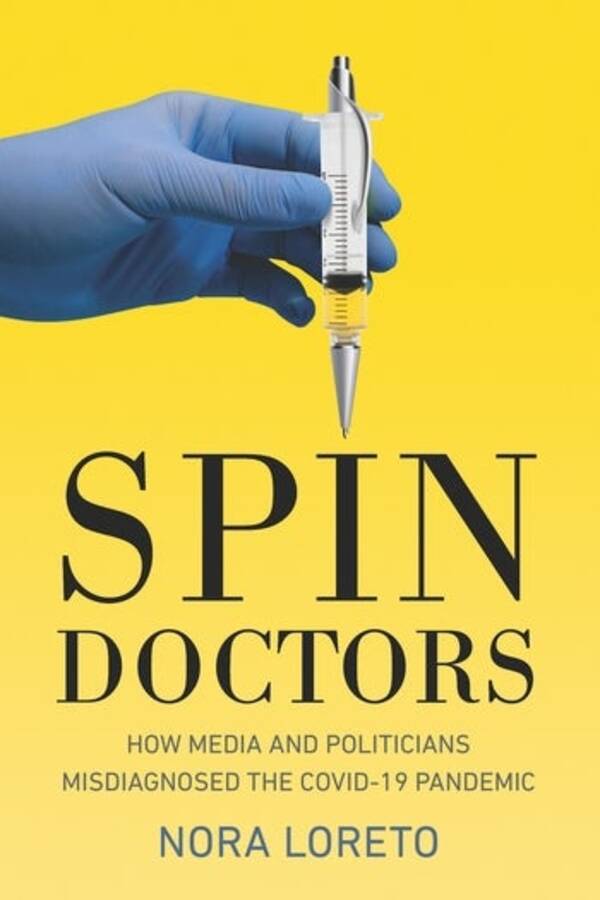
Loreto is a Quebec City-based activist and the author of Take Back the Fight (2020) and From Demonized to Organized (2013).
Each chapter of her book documents a single month of, and a single issue of, the pandemic, commencing in March 2020 and ending in March 2021. April 2020, for example, deals with long-term residential care, May with the food processing industry, June with racism and so on over the course of the next 13 months.
Her writing is clear, but not particularly user friendly.
She has a propensity for paragraphs that contain large blocks of text that in turn house multiple ideas. In the result, the research is cogent, but in need of a firm editorial hand to make her propositions more clearly differentiated and accessible.
Much of her media criticism is based on ignorance of how newsrooms work. General assignment reporters, tasked with meeting daily deadlines and keeping up with the flood of COVID-19 news, often didn’t, and still don’t, have the time or expertise to do the research and formulate the questions she indicts them for not presenting.
And while she does appear to have conducted an impressive survey of media coverage, there are prominent omissions in her critique.
For example, in her otherwise exhaustive account of the mass deaths in long-term residential care homes, she fails to credit probably the best pandemic coverage in the country, in the columns of Globe and Mail health columnist André Picard and latterly (save for a cursory reference) in his book, Neglected No More, which documents the national disgrace that’s our long-term care system.
Only in her final monthly chapter, on March 2021, about “media cuts,” does Loreto belatedly acknowledge the deleterious effects of staffing cuts in both print and electronic media — an admission that might have better informed her prior criticism of media coverage of the pandemic.
In her August 2020 chapter on the Canadian Emergency Response Benefit (CERB) and the wage subsidization program paid to employers, the Canadian Emergency Wage Subsidy (CEWS), she correctly points out some of the gaps and failures of the programs. However, she grossly overstates the case when she alleges “journalists, politicians and profit advocates created the illusion that people collecting CERB were simply refusing to do anything productive.”

She also attacks these programs as vehicles for “elevating employer groups who wanted to use the pandemic to ensure their corporations would lose as little money as possible.” She apparently views any business that tried to minimize the losses caused by the ravages of COVID-19 as somehow engaging in reprehensible conduct.
She latterly uses that same chapter as a platform to lobby for her real, but different, objective — the creation of a guaranteed annual income.
Too often she presents credible research, and marshals a reasoned argument, only to descend into employing stridently leftist buzzwords like “white supremacy” and “predatory capitalism” and highly emotive allegations of “systemic racism” and matters being “racialized.”
When she sticks to the facts she’s persuasive; when she veers off into polemics, she’s not.
Douglas J. Johnston is a Winnipeg lawyer and writer.