Chinese writers a welcome addition to English sci-fi universe
Advertisement
Read this article for free:
or
Already have an account? Log in here »
To continue reading, please subscribe:

Digital Subscription
One year of digital access for only $205*
- Enjoy unlimited reading on winnipegfreepress.com
- Read the E-Edition, our digital replica newspaper
- Access News Break, our award-winning app
- Play interactive puzzles
*First annual payment billed as $205.00 + GST for one year. This annual subscription will automatically renew at $233.00 + GST every 52 weeks (10% off the regular annual price of $259.35). Offer available to new and qualified returning subscribers only. Cancel any time.
To continue reading, please subscribe:
Add Free Press access to your Brandon Sun subscription for only an additional
$1 for the first 4 weeks*
- Enjoy unlimited reading on winnipegfreepress.com
- Read the E-Edition, our digital replica newspaper
- Access News Break, our award-winning app
- Play interactive puzzles
*Your next Brandon Sun subscription payment will increase by $1.00 and you will be charged $17.95 plus GST for four weeks. After four weeks, your payment will increase to $24.95 plus GST every four weeks.
Read unlimited articles for free today:
or
Already have an account? Log in here »
Hey there, time traveller!
This article was published 28/01/2017 (3519 days ago), so information in it may no longer be current.
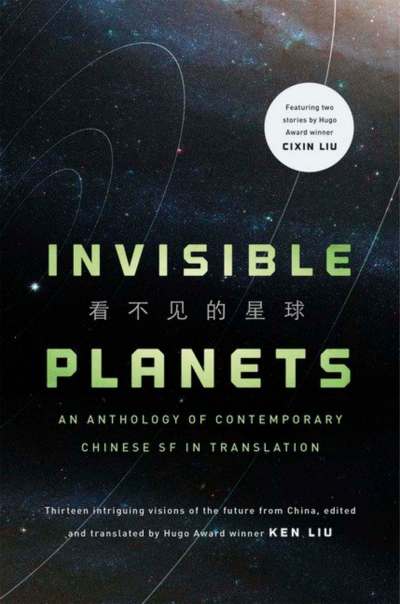
Chinese science fiction is quite new to the English-speaking world. It’s only been a couple of years since Liu Cixin burst onto the scene with his acclaimed novel, The Three-Body Problem, claiming some of the field’s top awards and putting Chinese literature on the radar of English readers and critics.
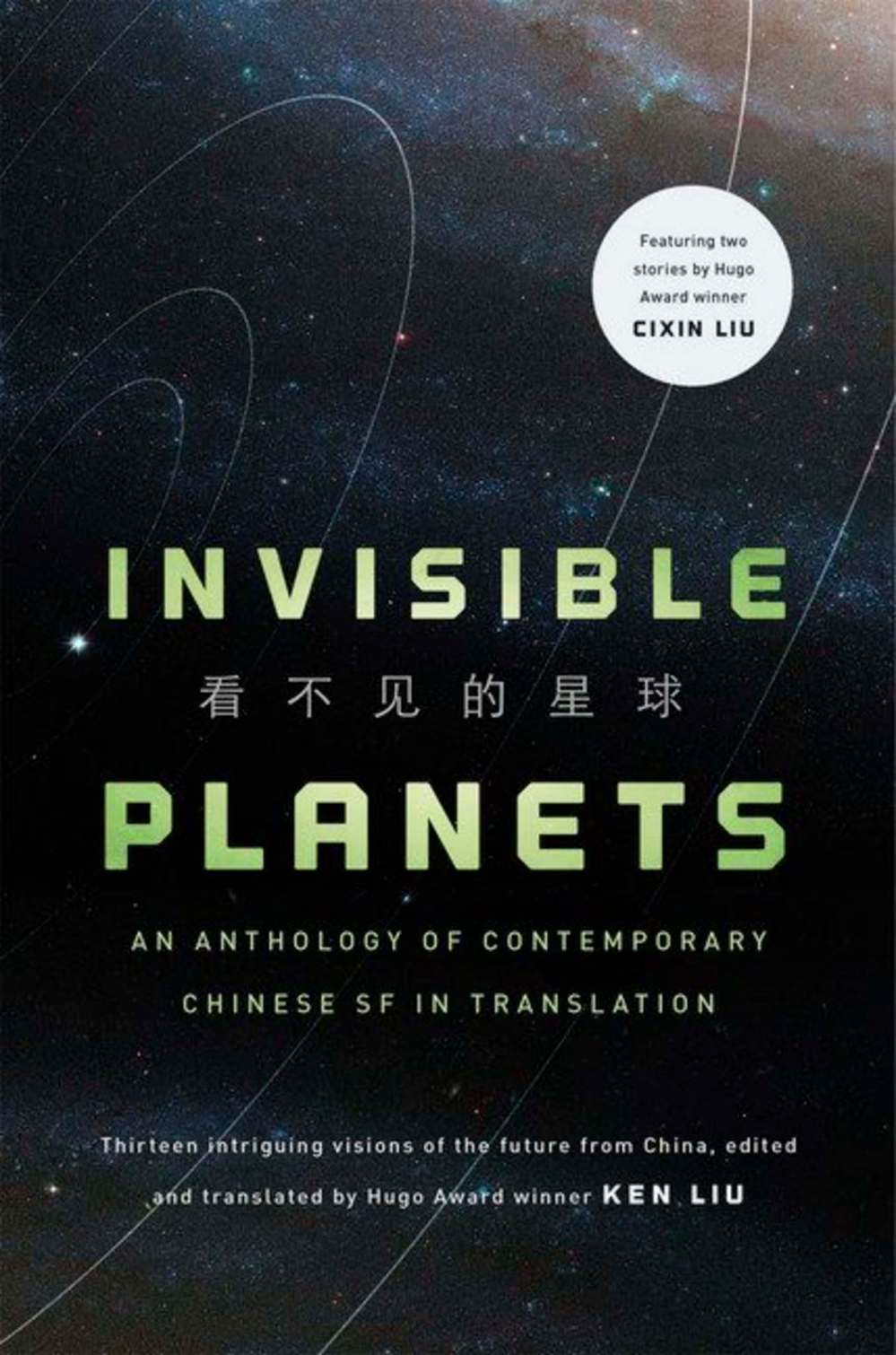
This collection of 13 stories, edited by Chinese-American writer, translator and editor Ken Liu, has a lot of potential. With so few Chinese-language writers known to English audiences, there’s every reason to pick the cream of the crop. And while Liu claims to have been somewhat haphazard in his selections, choosing a mix of award-winners and personal favourites to curate, the result is indeed excellent and eclectic.
One of the few things the stories in this collection have in common are genre, and several stretch the boundaries. Xia Jia’s A Hundred Ghosts Parade Tonight and Night Journey of the Dragon-Horse, Tang Fei’s Call Girl and Cheng Jingbo’s Grave of the Fireflies may provide a technological explanation for spirits and creatures of legend, and the inversion is clever, but they hit the emotional beats of fantasy or ghost stories.
Other stories are very rooted in the now, like Chien Quifan’s The Fish of Lijiang, which tackles the current derailment of work-life balance, if ever there were such a thing. The story takes the increasing prevalence of 80-hour work weeks for salary-men and -women to its logical conclusion, imagining a near future where employees are mentally accelerated, so that hundreds of hours of work can be subjectively accomplished in a single day, and are then sent to retreats to re-temporalize when their brains reach their limits.
Hao Jingfang’s Folding Beijing looks in turn at the income gap, describing in rich detail a future where the geography of class separation has become absolute. His version of China’s capital city is a mechanical work of origami — a city that transforms on a daily schedule, with the poor literally folded away after their long labour shifts, their homes and workplaces disappearing beneath the city streets as the middle managers, and then the elites, experience their own periods of life and consciousness. Social mobility could hardly be less possible.
Xia Jia’s Tongtong’s Summer is a more optimistic story, but not less socially relevant. It follows the introduction of robot health-care providers in response to an aging population. The story is told from the perspective of a six-year-old girl, and through her eyes we see her beloved grandfather frustrated by the inconvenience and loss of aging. The questions raised are interesting, but it’s the family relationship that makes the story work.
There are several more standouts — too many, in fact, to mention. The stories are followed by several essays on Chinese science fiction, which has a history that sometimes mirrors and at other times diverges from our own, though not everyone agrees on why. In one essay, Liu Cixin counters the claim of Robert J. Sawyer, the “Canadian dean of science fiction,” that our science fiction is optimistic (while Chinese works are pessimistic) for historical reasons. In fact, even were this generalization true, Liu points out that the admittedly dark alien invasion story of his recent trilogy could hardly be more analogous to the history of colonialism in Canada. He directs his Canadian colleague to Georges Erasmus and Joe Saunders’ essay Canadian History: An Aboriginal Perspective for further information on Canadian optimism.
For English-speaking science-fiction fans, this new bounty of fresh viewpoints and dissimilar experiences is a gift. Hopefully it will prove only the first trickle in a torrent of great new literature to come to our shores. Hopefully, too, the translators can handle the load.
Joel Boyce is a Winnipeg writer and educator.