Disbelief and displacement
Lama’s heartfelt novel documents Tibetan family’s exile, mulls meaning of home
Advertisement
Read this article for free:
or
Already have an account? Log in here »
To continue reading, please subscribe:

Digital Subscription
One year of digital access for only $205*
- Enjoy unlimited reading on winnipegfreepress.com
- Read the E-Edition, our digital replica newspaper
- Access News Break, our award-winning app
- Play interactive puzzles
*First annual payment billed as $205.00 + GST for one year. This annual subscription will automatically renew at $233.00 + GST every 52 weeks (10% off the regular annual price of $259.35). Offer available to new and qualified returning subscribers only. Cancel any time.
To continue reading, please subscribe:
Add Free Press access to your Brandon Sun subscription for only an additional
$1 for the first 4 weeks*
- Enjoy unlimited reading on winnipegfreepress.com
- Read the E-Edition, our digital replica newspaper
- Access News Break, our award-winning app
- Play interactive puzzles
*Your next Brandon Sun subscription payment will increase by $1.00 and you will be charged $17.95 plus GST for four weeks. After four weeks, your payment will increase to $24.95 plus GST every four weeks.
Read unlimited articles for free today:
or
Already have an account? Log in here »
Hey there, time traveller!
This article was published 11/06/2022 (1547 days ago), so information in it may no longer be current.
Forcible removals, occupations, war, natural disasters and other abrupt disruptions are now acknowledged to be responsible for trauma that resonates for generations. Even through the span of decades and distance, people are haunted by injustices done to their families and communities.
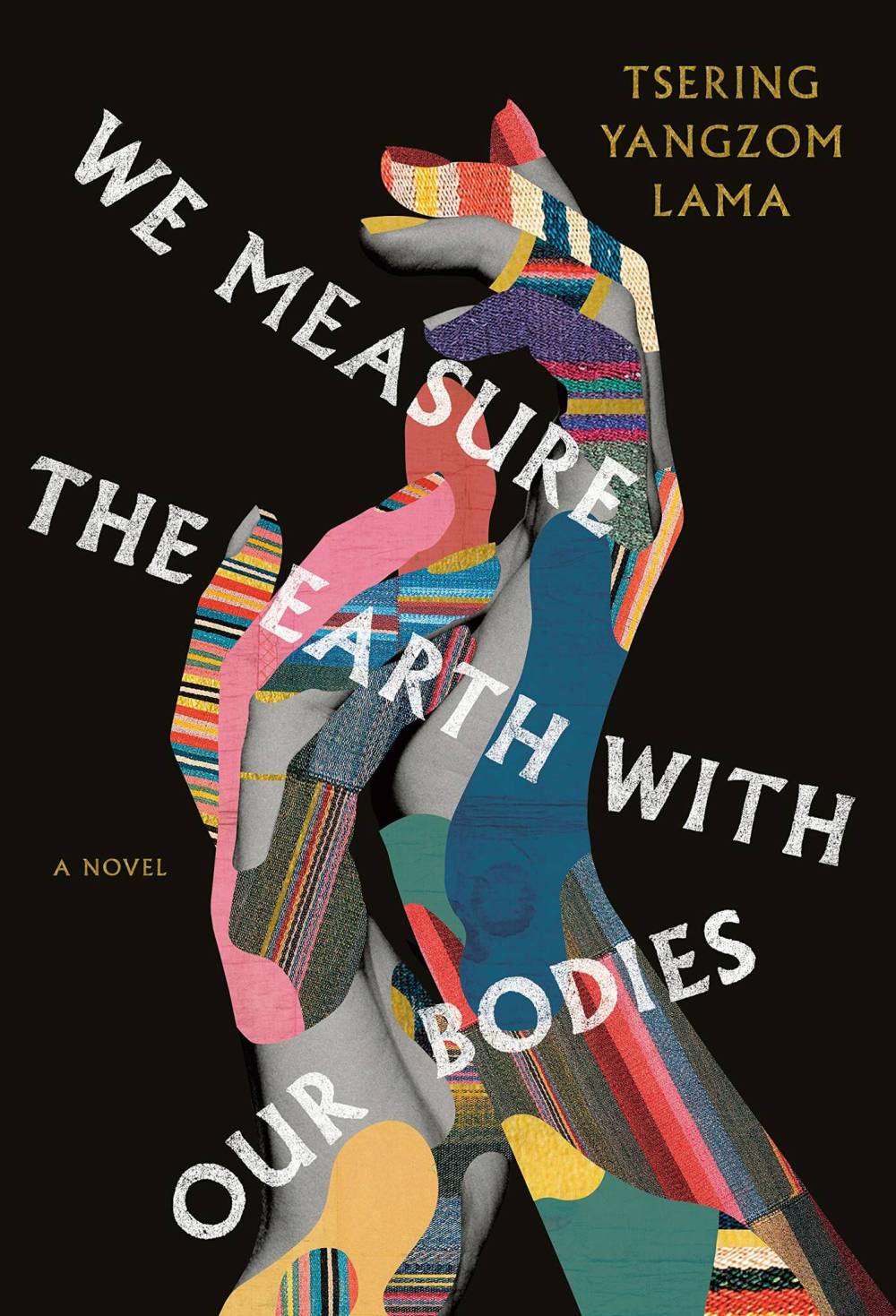
Tibetan writer Tsering Yangzom Lama is one of those whose origins weigh heavily on her. In her tender debut novel, We Measure the Earth with Our Bodies, she documents a family’s journey through the voices of different characters as they flee Tibet in 1960 after the Chinese occupation, all the way to 2012, when they are scattered across the world. Her writing is realistic and effective, representative of each generation’s feeling of disbelief and displacement, no matter how much time has passed.
Lama’s child character watches the life of a Himalayan village turn upside-down after the People’s Army of China moves in. The world changes completely for Tashi’s community, from the prohibition of Buddhist prayer flags to the installation of mind-numbing speakers strung along every path, continually blaring high-pitched music and hectoring propaganda. Food becomes scarce, and like tens of thousands of others, Tashi’s family escapes, navigating a treacherous route through freezing mountain paths. Her parents die, leaving Tashi, barely a teen, in charge of her 10-year-old sister.

The hardships of living in the refugee camp, where people are desperate to find food and purpose, are described precisely. Life is a drudge, the minutes slowly tick by. Refugee aid workers note that there is always a percentage of refugees who refuse any type of assistance that might result in permanent resettlement. They cannot accept the notion that they won’t be returning home soon, no matter how long they have lived in limbo. Lama creates characters who never unpack and never adapt while others, like Tashi, think about how to move forward. She encourages her sister, Tenkyi, to get away, and deliberately sends her on a different path in life.
A small statue (a ku) called the Nameless Saint unifies the different characters’ experiences. For Tashi, it’s a symbol of the past and of hope, even though she asks “Where are our gods? Are we truly alone in this new earth?” When the ku goes missing, the refugees still hope its return will bring them some sort of salvation.
Decades later, Tenkyi is living in expensive Toronto. Like many immigrants, she ekes out a living in menial, low-paying jobs, restricted by her lack of English and credentials. Her role in life is to support Tashi’s daughter, Dolma, so the young woman can pursue university studies and get ahead — hopefully to get the family out of poverty and out of Nepal.
But despite being a generation away from Tibet, Dolma is out of place. She feels the sting of discrimination, the patronizing attitude of Canadians. She notes the opulence of her professors’ homes in contrast to her family’s privations. Ironically, while she has lived Tibetan history, she must please non-Tibetan “experts” who prattle authoritatively about Tibet, without interest in her background or the suffering of her people. For them, it’s academic. For her, the Chinese invasion and its consequences are as if they happened yesterday.
Revolts against the Chinese occupation of Tibet have resulted in thousands of deaths and a seemingly permanent diaspora. Born and raised in Nepal, Lama has published numerous articles in newspapers and journals, and helped found a blog for Tibetan youth in exile. A lifelong activist, she works as a storytelling advisor at Greenpeace International. Through her touching story, she tells a universal tale that home is not where you are, but where your heart is.
Harriet Zaidman is a children’s and freelance writer in Winnipeg. Her latest novel, Second Chances, is set in the polio epidemics of the 1950s.