Essays paint politics as a dirty game
Advertisement
Read this article for free:
or
Already have an account? Log in here »
To continue reading, please subscribe:

Digital Subscription
One year of digital access for only $205*
- Enjoy unlimited reading on winnipegfreepress.com
- Read the E-Edition, our digital replica newspaper
- Access News Break, our award-winning app
- Play interactive puzzles
*First annual payment billed as $205.00 + GST for one year. This annual subscription will automatically renew at $233.00 + GST every 52 weeks (10% off the regular annual price of $259.35). Offer available to new and qualified returning subscribers only. Cancel any time.
To continue reading, please subscribe:
Add Free Press access to your Brandon Sun subscription for only an additional
$1 for the first 4 weeks*
- Enjoy unlimited reading on winnipegfreepress.com
- Read the E-Edition, our digital replica newspaper
- Access News Break, our award-winning app
- Play interactive puzzles
*Your next Brandon Sun subscription payment will increase by $1.00 and you will be charged $17.95 plus GST for four weeks. After four weeks, your payment will increase to $24.95 plus GST every four weeks.
Read unlimited articles for free today:
or
Already have an account? Log in here »
Hey there, time traveller!
This article was published 05/08/2017 (3304 days ago), so information in it may no longer be current.
Recently, Donald Trump Jr. tried to justify seeking assistance from a Russian lawyer to undermine Hillary Clinton’s presidential campaign against his father by saying, “I think politics is a dirty game.”
In a 2014 Ryerson University survey, a majority of Canadians held views similar to Trump Jr., and believed that engaging in politics would tend to corrupt normally honest people.
Ian Greene and David Shugarman, professors at York University and obviously a pair not easily daunted, wrote this book to further democratic education and sustain and strengthen Canadian democracy. Their first sentence bluntly promises a framework for sorting out right from wrong in politics.
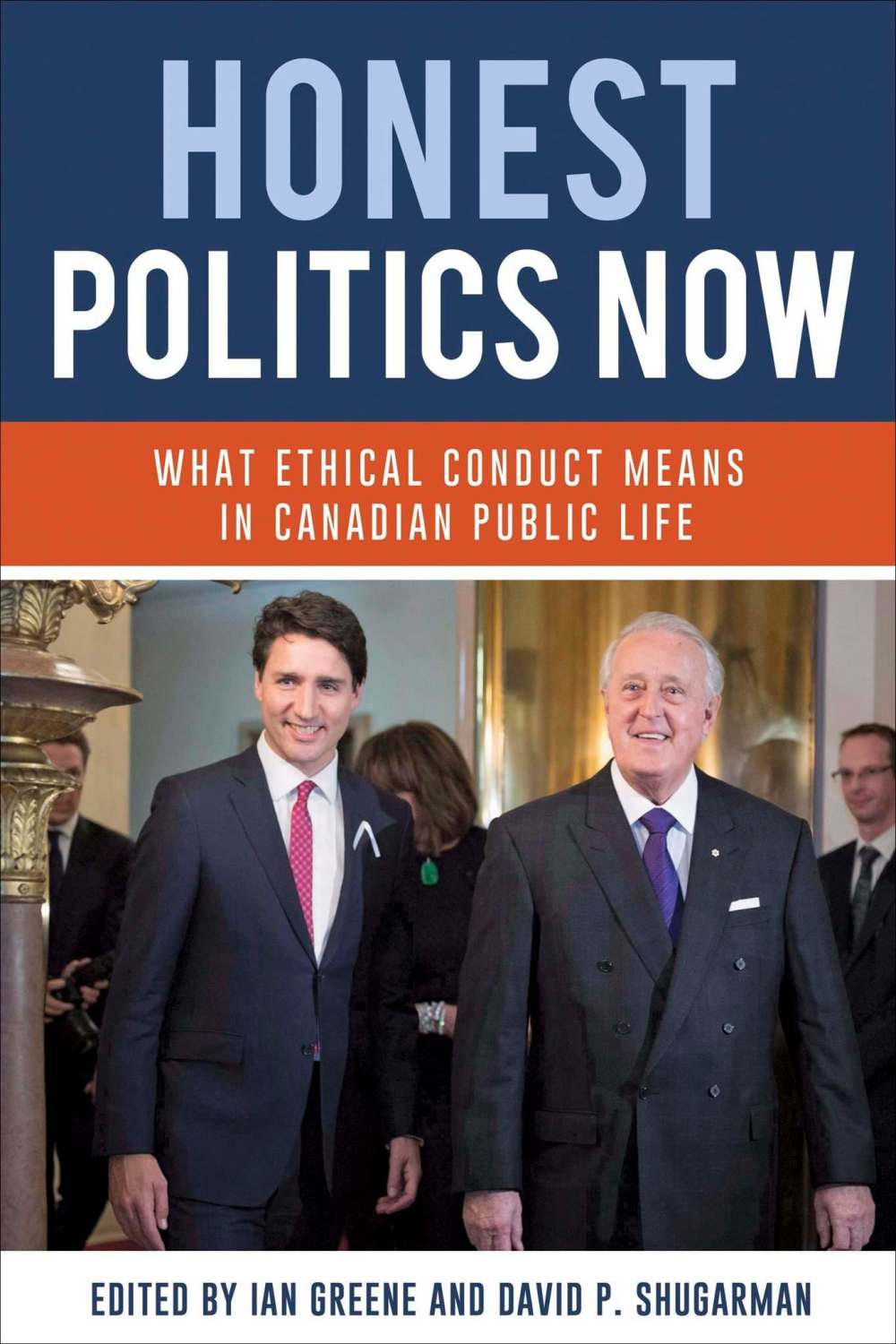
Their format is that of a textbook comprising 11 chapters written by Greene, Shugarman and six others with extensive experience in teaching, politics and ethics. They introduce issues such as conflicts of interest, lobbying, money and whistleblowing, provide case studies at the federal, provincial and municipal levels (the area “where corruption is most likely to occur”) and make conclusions based on them.
While this does not provide the thrills of more popular muck-raking efforts, it will provide the interested reader with an invaluable guide to the fundamentals of ethical democratic citizenship and governance.
They do not mince words. If, as the cynics and the disillusioned say, politics is a dirty game, then we do not have democracy. “Deceiving the people for the sake of the people is a self-contradictory notion in a democracy.” A loss of faith by the people in the role of government inevitably opens the door to charlatans governing in their own interests rather than for the public good.
The brevity of their case studies allow them to reintroduce us to an appalling gallery of scandals. Sinclair Stevens, Brian Mulroney, Jacques Corriveau, Rob Ford, Mike Duffy and their ilk all make their appearances in a line that might seem to “stretch out to the crack o’ doom.”
Again and again, these public servants gave priority to their friends and corporate interests over the general public, accepted enrichment and revolving-door employment as their deserved rewards, cheated on expenses and, amazingly, often got away with it by pleading that lying and cheating were not specifically forbidden in government conflict-of-interest codes.
The authors see patronage, the practice of providing special favours to partisan supporters in the selection of appointments or the awarding of contracts, as a major threat to the integrity of government.
The most bizarre examples of apparent patronage concern the Security Intelligence Review Committee, one of the agencies overseeing the Canadian Security Intelligence Service (CSIS). One chairman, Dr. Arthur Potter, had to resign when it became public that he had ties to a foreign arms dealer. Another, Chuck Strahl, resigned when it was revealed that he was a lobbyist for Enbridge at the same time CSIS was surveilling pipeline protestors.
Thankfully, Greene and Shugarman also provide us with heroes — politicians who have resigned rather than compromise their integrity, whistleblowers who sacrificed their careers by putting the public interest before loyalty to their employers and commissioners of enquiry who defied the powerful in the pursuit of the truth.
Since the first edition of their book was published in 1997, the authors take heart from the fact that public outrage over corrupt politics is leading to stricter safeguards such as limits on political contributions and independent ethics commissioners.
If ethical politics are someday to become as much a hallmark of our democratic system as free elections, we must have a critical mass of citizens who understand, practise and promote public integrity.
Reading this book might help us get there.
To his surprise, John K. Collins could find no reference to “Winnipeg” in the index.