Everyday superheroes
Valuable volume explores bias, offers insight into core feminist concepts
Advertisement
Read this article for free:
or
Already have an account? Log in here »
To continue reading, please subscribe:

Digital Subscription
One year of digital access for only $205*
- Enjoy unlimited reading on winnipegfreepress.com
- Read the E-Edition, our digital replica newspaper
- Access News Break, our award-winning app
- Play interactive puzzles
*First annual payment billed as $205.00 + GST for one year. This annual subscription will automatically renew at $233.00 + GST every 52 weeks (10% off the regular annual price of $259.35). Offer available to new and qualified returning subscribers only. Cancel any time.
To continue reading, please subscribe:
Add Free Press access to your Brandon Sun subscription for only an additional
$1 for the first 4 weeks*
- Enjoy unlimited reading on winnipegfreepress.com
- Read the E-Edition, our digital replica newspaper
- Access News Break, our award-winning app
- Play interactive puzzles
*Your next Brandon Sun subscription payment will increase by $1.00 and you will be charged $17.95 plus GST for four weeks. After four weeks, your payment will increase to $24.95 plus GST every four weeks.
Read unlimited articles for free today:
or
Already have an account? Log in here »
Hey there, time traveller!
This article was published 14/11/2020 (2136 days ago), so information in it may no longer be current.
What might feminism mean to young readers, and how can they understand it in a fun, accessible way?
Aimed at tweens and young teens, French-Canadian cartoonist Mirion Malle’s The League of Super Feminists provides answers to these questions in a series of comics that guide readers through foundational feminist issues and simplifies complex concepts with bright, whimsical illustrations.
Having previously explored women’s representation in media (notably, in her webcomic Commando Culotte), Malle begins with “Representation” as a framework here as well. She offers situational diagrams to demonstrate and dissect the insidiousness of gender stereotypes in media. She mentions how certain characters often have the same gender-based roles, and how this can alienate folks who don’t see themselves reflected in these characters.
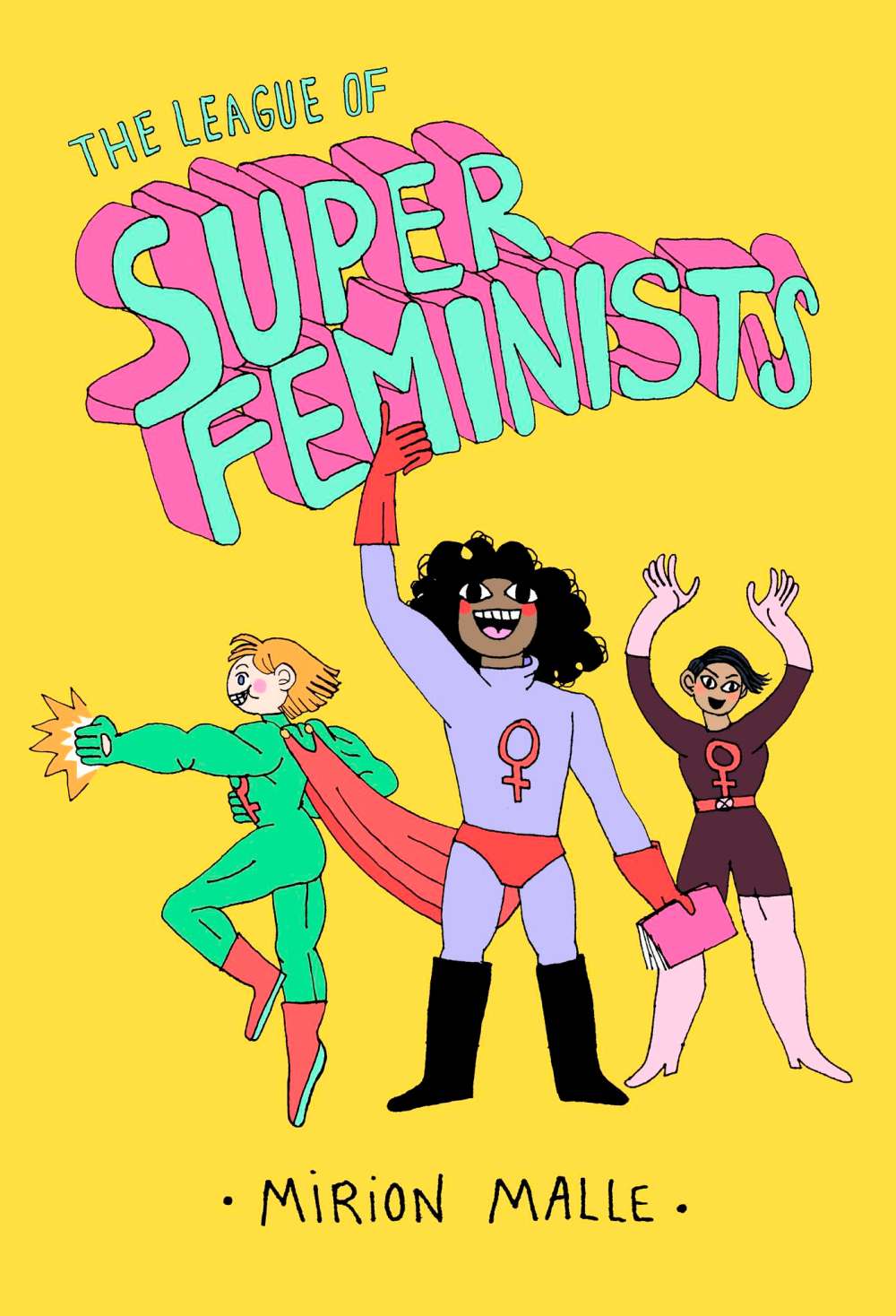
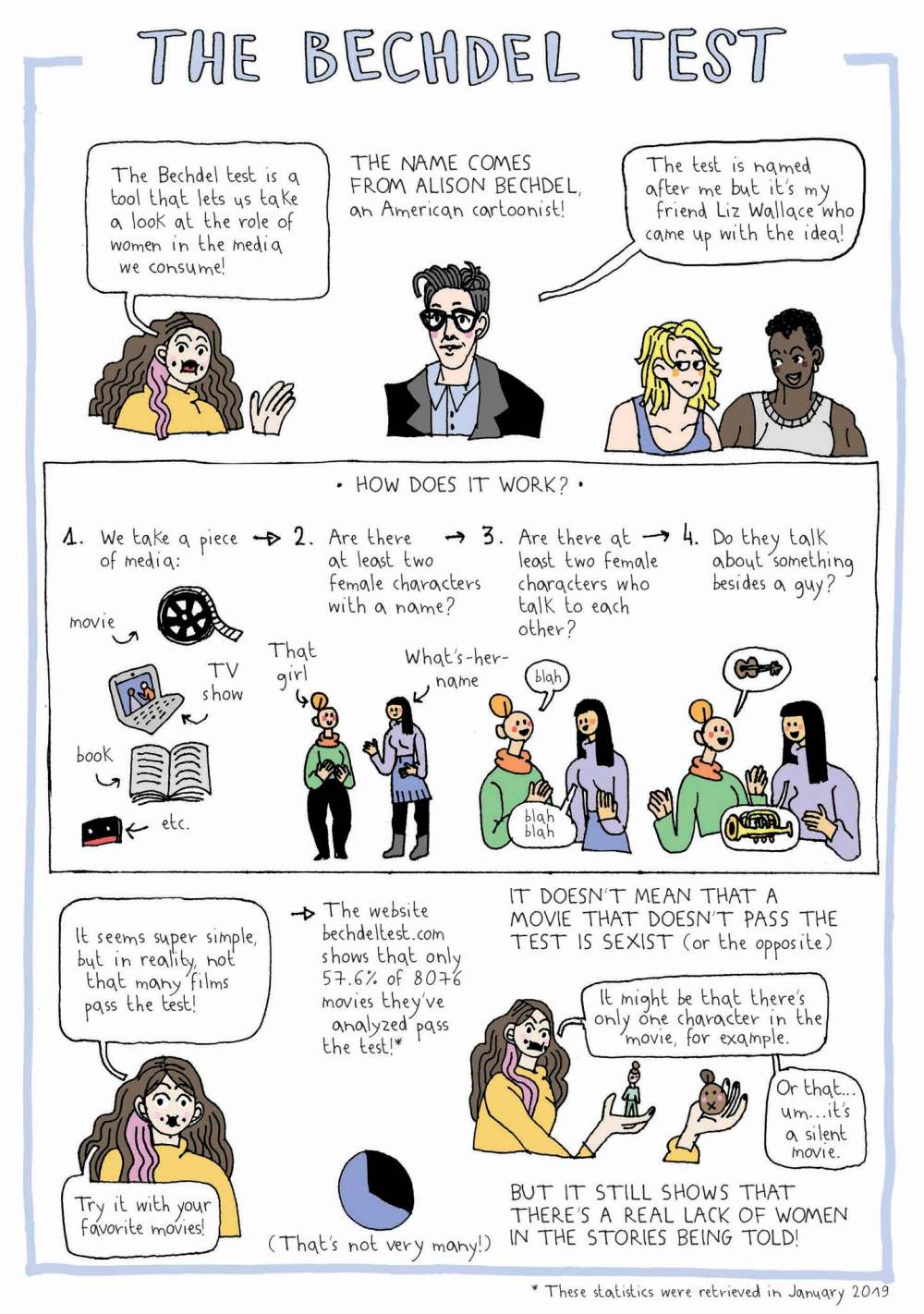
Alison Bechdel’s famous test about the role of women in media also makes an appearance. Most of all, Malle makes it clear to her audience that “we just need to understand what we’re seeing and really think about it,” explaining media literacy in this simple way while also providing a helpful suggestion on how to approach the rest of her interrelated topics. She starts by looking at representations of friendship, beauty and romance, and then ties these to larger issues like consent, sexism, racism and homophobia.
Malle also stresses the importance of not being afraid to criticize media, and incidentally, her own irreverent voice is a real asset to the book’s accessibility. Aleshia Jensen’s English translation lends a conspiratorial tone that immerses readers in more complicated concepts from later chapters such as privilege and intersectionality.
And though this may sound like hard work for those unfamiliar with these ideas, Malle’s audience can easily engage visually to understand what’s being discussed by way of many loose, lively illustrations showing folks with a diverse array of bodies, skin tones and fashion choices (many of which are non-gender conforming in appearance.)
True to her word about the importance of representation, most readers should find at least one person in this book who looks at bit like them.
This cartoon collective also functions as a built-in surrogate audience, with characters often shown in dialogue with each other. Malle adapts the comics form to suit her needs, foregoing traditional panels and instead using arrows or numbers to direct the flow of information. She also strategically positions her characters and their text-bubbles in a direct, user-friendly sequence to break down ideas.
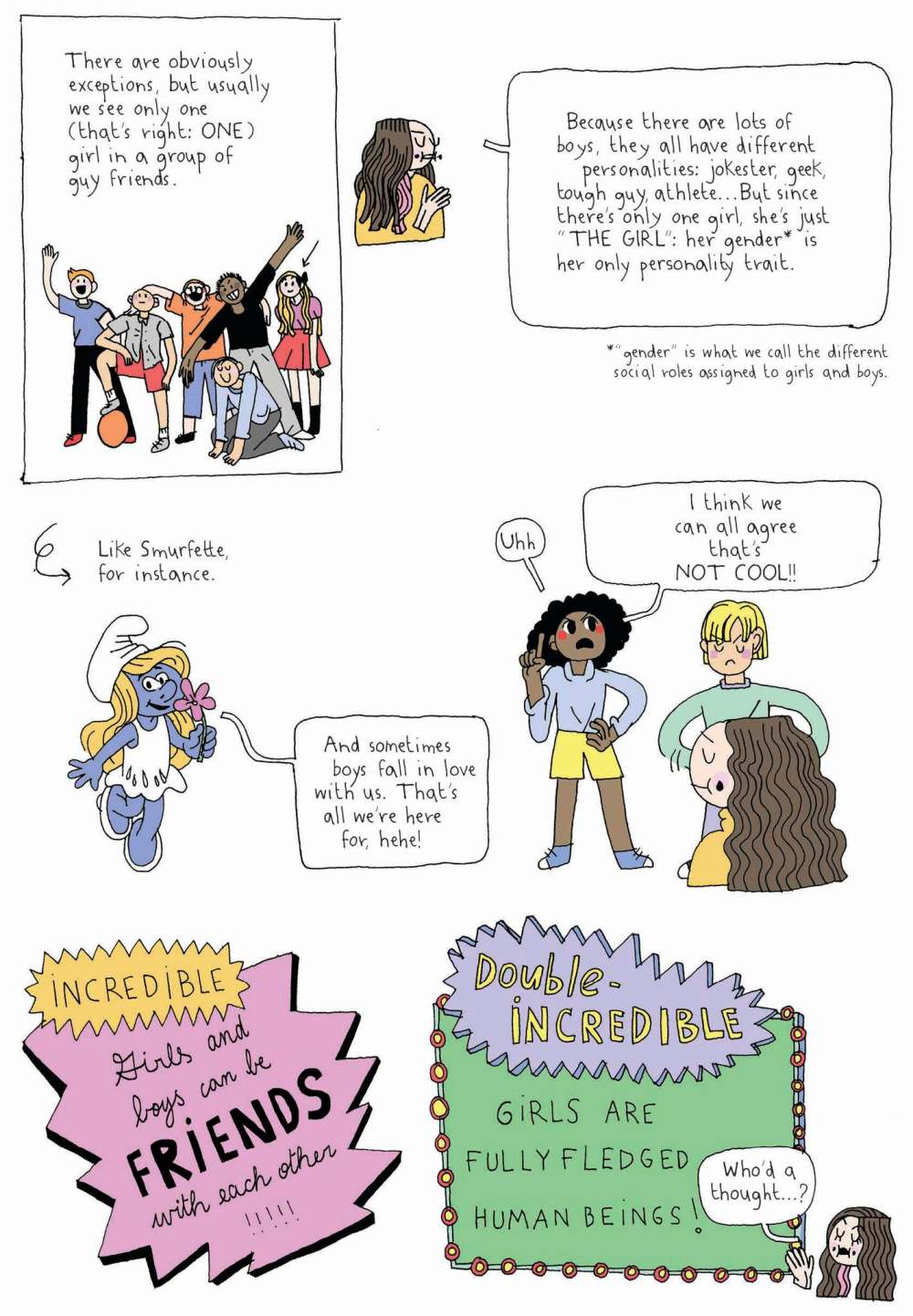
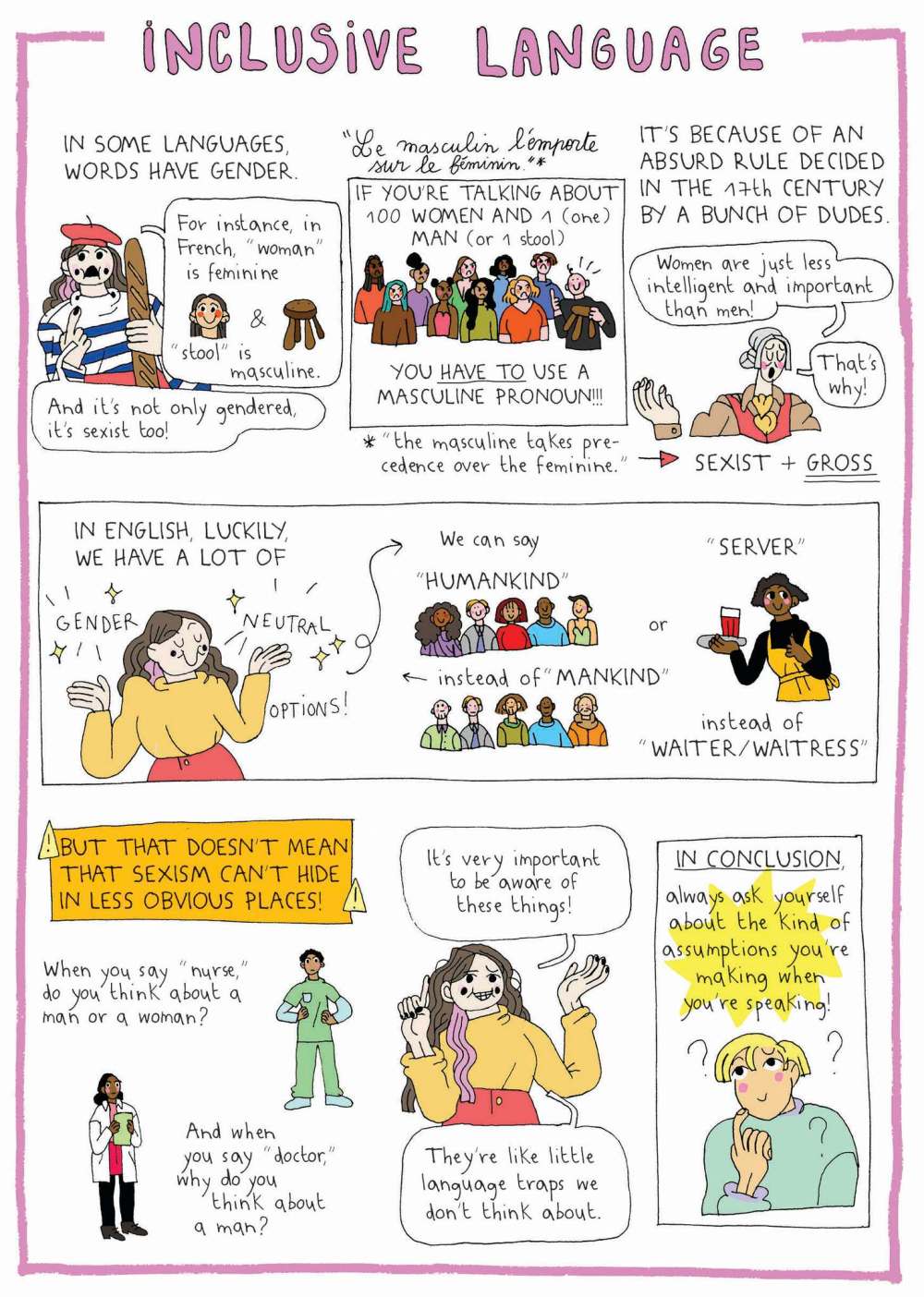
These characters explore important questions Malle has anticipated from her readers, especially related to more complex concepts like the important differences between gender and sexuality, or sex and gender identity, and how inclusive language and pronoun use functions as a result. She also candidly addresses the stigma around feminism itself (“Do Feminists Hate Men???”) and how privilege plays into misinformation around the ultimate goal of equality. The link between privilege and oppression is also discussed, with Malle naming transphobia, capitalism and ableism among others. She also alludes to Peggy McIntosh’s essay White Privilege: Unpacking the Invisible Knapsack to explain intersectionality.
There is a lot included in this slim volume, which would make an excellent classroom tool; each section builds on the previous one as dialogues set up between characters push readers to examine their own biases and expand their critical thinking skills — or, as Malle puts it, to put into practice “the superpower of reading between the lines.”
Ending on a note of inclusivity also reflects the book’s spirit as a whole — Malle repeats that “we need to listen, support, and help one another,” after having provided a vibrant, engaging primer on how to do this.
Packed with tools to understand feminism and its surrounding concepts, her league of super feminists is one that all readers are welcome to join.
Winnipeg’s Nyala Ali writes about race and gender in contemporary narratives.