Few firm answers to physicist’s big questions
Advertisement
Read this article for free:
or
Already have an account? Log in here »
To continue reading, please subscribe:

Digital Subscription
One year of digital access for only $205*
- Enjoy unlimited reading on winnipegfreepress.com
- Read the E-Edition, our digital replica newspaper
- Access News Break, our award-winning app
- Play interactive puzzles
*First annual payment billed as $205.00 + GST for one year. This annual subscription will automatically renew at $233.00 + GST every 52 weeks (10% off the regular annual price of $259.35). Offer available to new and qualified returning subscribers only. Cancel any time.
To continue reading, please subscribe:
Add Free Press access to your Brandon Sun subscription for only an additional
$1 for the first 4 weeks*
- Enjoy unlimited reading on winnipegfreepress.com
- Read the E-Edition, our digital replica newspaper
- Access News Break, our award-winning app
- Play interactive puzzles
*Your next Brandon Sun subscription payment will increase by $1.00 and you will be charged $17.95 plus GST for four weeks. After four weeks, your payment will increase to $24.95 plus GST every four weeks.
Read unlimited articles for free today:
or
Already have an account? Log in here »
Hey there, time traveller!
This article was published 29/05/2021 (1938 days ago), so information in it may no longer be current.
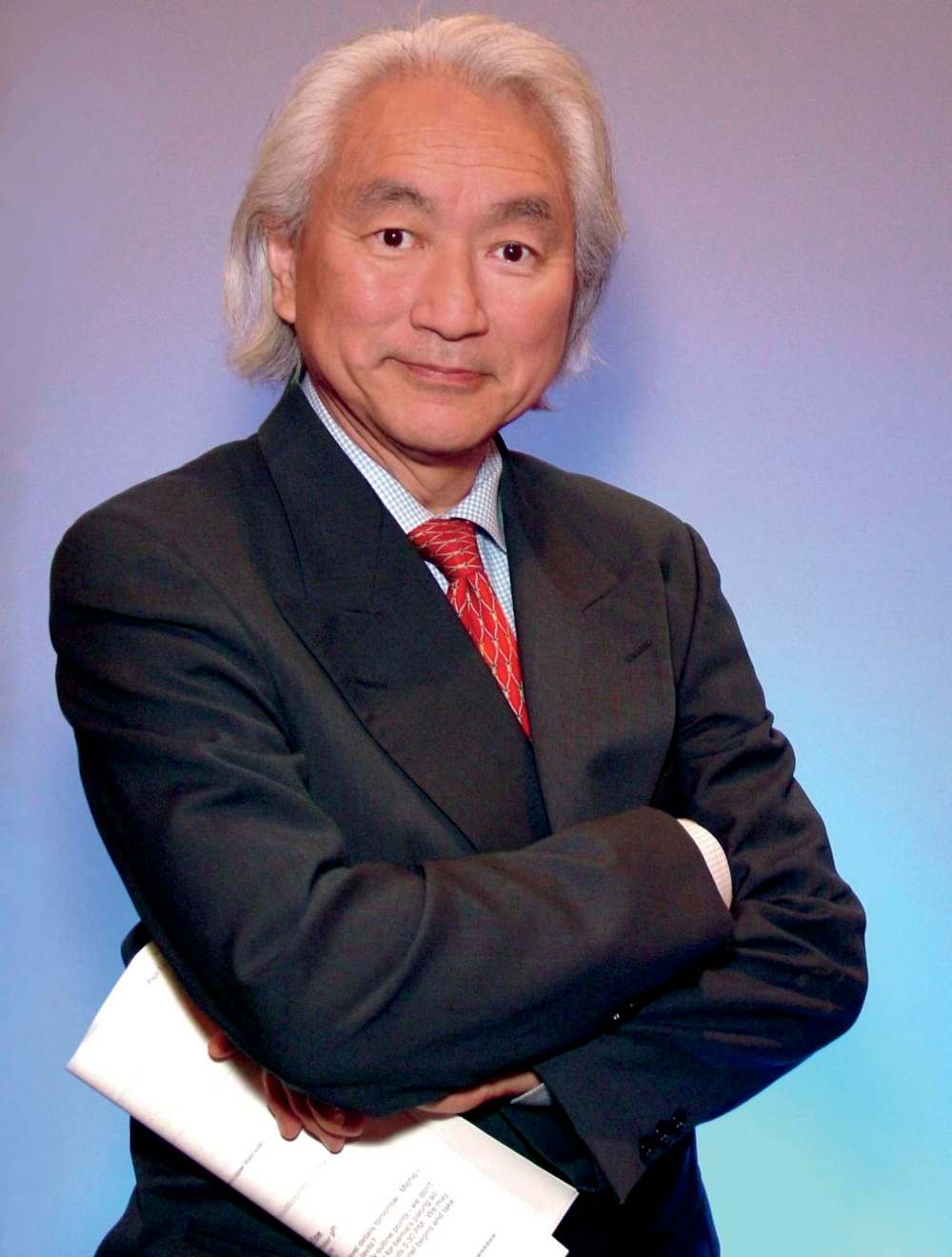
This latest work by Michio Kaku, professor of theoretical physics, explores the hidden world of subatomic particles, while confronting some philosophical questions often posed by curious star gazers seeking a connection between the vastness of the universe and the meaning of their own existence.
As suggested by the subtitle, it’s also a tribute to famed British theoretical physicist Stephen Hawking, whose 2002 book titled The Theory of Everything spoke of the challenges in writing an equation uniting all known laws of physics that could encompass the moment of the Big Bang, and essentially answer the question of why the universe exists.
Kaku teaches at City University of New York and hosts radio programs and TV specials on Discovery and Science Channels. He is the author of several critically acclaimed books, including The Future of Humanity (2018) and Parallel Worlds (2004), parts of an intriguing body of work that has made him a popular contributor to debates involving an especially profound question: Where did the universe come from?
Kaku’s quest for an answer begins with a strong defence of “string theory,” the basis of his PhD thesis and a theoretical supposition that the universe may consist not of “particles” but of tiny vibrating strings, each corresponding to a subatomic particle.
He believes that if we built a powerful enough microscope, we would see miniscule vibrating loops within electrons, resembling rubber bands with the potential to vibrate differently and act like all the known particles in the universe.
His often-quoted “the universe is a symphony” comes from believing that laws of physics emerge from the harmony of these strings, and that even the wonders of chemistry are simply the various “melodies” played on them.
A tendency to wax poetic, while presenting analogies that will be easily grasped by the average reader, is a trademark writing style used to explain complex and mainly unseen functions of theoretical physics, making The God Equation another useful addition to libraries everywhere.
Cerebral theories of quantum mechanics, for example, are reduced to systems of Lego-like building blocks making up matter and energy, showing that within atomic structures is the capacity to build the tech-related gadgets we use and enable the “artificial intelligence” guiding them.
Kaku reminds readers that quantum physics has controversial effects on our world, like its role in creating the world’s first nuclear weapon, then having its reputation redeemed by enabling the atomic descriptions of DNA that can identify one individual amongst countless others.
The similarities in the construction of life forms, along with the presence of encoded cells which construct diverse species, suggests “everything” is connected by the known laws of physics that apply to the entire universe.

As Kaku’s assessments confirm, our world that began with the Big Bang is still expanding, and displays definitive proof of billions of years of existence, but some day it all will end because those same laws of physics portend a universe that will eventually cease to exist, given that the natural order of things is to “decay, rust, or fall apart.”
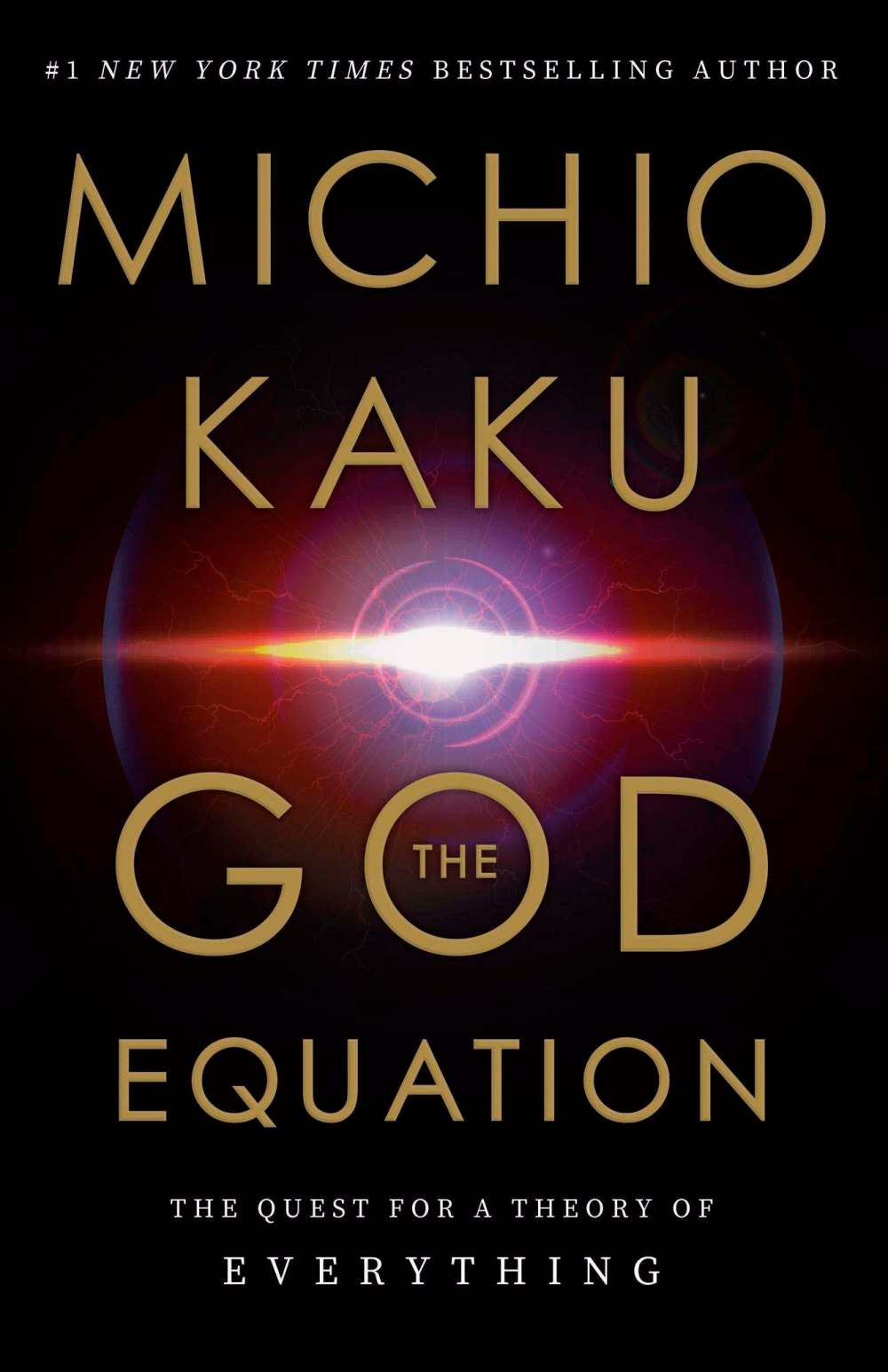
Lacking what Hawking also sought, which is a provable equation depicting the beginning and end of the universe and explaining all physical phenomena, readers are given a brief consideration of reality as promoted by religions featuring God, a beginning, and an end to the world.
Deferring to Hawking — who didn’t believe in God because, “the Big Bang took place in a brief instant of time, so there was no time for God to create the universe as we see it” — Kaku then invites readers to ponder Buddhism’s reality, with no God and no beginning or end but a timeless Nirvana.
Philosophical musings may remain unanswered in this otherwise compelling book, but it confirms that reality is questioned throughout our lives — like, for example, by lyrics in the Burt Bacharach and Hal David song Alfie, as heard over the closing credits of the 1966 film of the same name: “What’s it all about, Alfie?”
Joseph Hnatiuk is a retired teacher.