Freud’s reactions to Italian paintings parsed

Advertisement

Advertise with us

Psychoanalyzing Sigmund Freud is a bit like plotting a murder with Alfred Hitchcock — a guiltily delectable experience.

Read this article for free:


or

Already have an account? Log in here »

To continue reading, please subscribe:

Subscribe and receive a limited-edition Free Press branded hat or tote.

Digital Subscription

One year of digital access for only $205*

  • Enjoy unlimited reading on winnipegfreepress.com
  • Read the E-Edition, our digital replica newspaper
  • Access News Break, our award-winning app
  • Play interactive puzzles

*First annual payment billed as $205.00 + GST for one year. This annual subscription will automatically renew at $233.00 + GST every 52 weeks (10% off the regular annual price of $259.35). Offer available to new and qualified returning subscribers only. Cancel any time.

To continue reading, please subscribe:

Add Free Press access to your Brandon Sun subscription for only an additional

$1 for the first 4 weeks*

  • Enjoy unlimited reading on winnipegfreepress.com
  • Read the E-Edition, our digital replica newspaper
  • Access News Break, our award-winning app
  • Play interactive puzzles
Start now

*Your next Brandon Sun subscription payment will increase by $1.00 and you will be charged $17.95 plus GST for four weeks. After four weeks, your payment will increase to $24.95 plus GST every four weeks.

Hey there, time traveller!
This article was published 30/06/2017 (3357 days ago), so information in it may no longer be current.

Psychoanalyzing Sigmund Freud is a bit like plotting a murder with Alfred Hitchcock — a guiltily delectable experience.

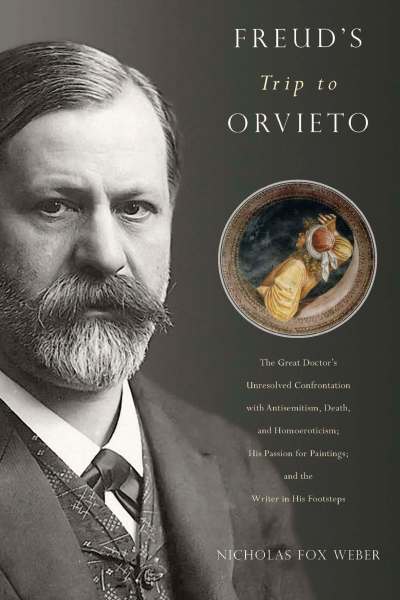
Nicholas Fox Weber’s latest book is a delving exploration into Freud’s perplexing response to a series of frescoes he viewed in Orvieto, Italy, shortly after the death of his father.

The frescoes, whose theme is the Last Judgment, depict a frenzy of naked, athletic men in various forms of physical combat. Freud described them as “the greatest I have seen so far.” While commending the work to his travelling companion, he suddenly found himself unable to recall the name of the artist who created these frescoes that had impressed him so forcefully. Later, when informed of the name of the artist, he immediately became unable to recall any details of the paintings themselves.

This odd case of amnesia has been the subject of psychoanalytic investigation by both Freud and his descendants. It is assumed to be a case of “parapraxis” or memory repression resulting from a thought or desire one cannot face. Weber, like others before him, pursues answers to the following questions: “Why did Freud forget these details? In this particular order? What was it about the frescoes that was too unsettling to face?”

Freud’s own explanation is that he was trying to avoid upsetting his sensitive travelling companion and had therefore repressed any subject matter dealing with sex and death. The price of this repression, in his view, was that the name of the painter went into that psychic receptacle for refuse known as the subconscious. But what about the details of the paintings themselves? Here our story begins.

Weber, a respected American writer, art historian and psychoanalytic patient himself, captivates the reader with this wonderful psychological mystery, assigning himself the role of Freudian detective. He revisits earlier attempts to explain the memory loss, delving into Freud’s early life and hangups (yes, of course, Freud had hangups — even total blind spots), and goes so far as to visit the frescoes in Italy to determine what clues, if any, might be held therein.

A variety of fascinating explanations emerge out of this subterranean investigation — explanations which lead us into a deeper understanding of Freud’s ambivalence about being Jewish, his conflicted feelings toward his father and his surprising views on homosexuality. Weber offers us his own experience growing up in a Jewish intellectual family in an attempt to provide a view of the particular lens through which Freud viewed the world. However, Weber grew up in such a luxurious life of privilege that, at times, he has trouble bringing the less-privileged, non-truffle-eating reader alongside him. A tone of false humility and self-congratulation is sometimes evident, and readers will vary in their tolerance to this lightly pretentious narrative voice.

To spend such time and effort unearthing reasons for a simple case of forgetting may strike one as utterly pointless — psychoanalysts, perhaps, love to make mountains out of molehills. Sometimes a molehill is just a molehill, but the process of making it into a mountain is both enthralling and illuminating in Weber’s hands.

Jennifer Robinson is a Winnipeg psychotherapist.
Report Error Submit a Tip

More Stories

‘Soapy disco’ for your ride

Aaron Epp 4 minute read Preview

‘Soapy disco’ for your ride

Aaron Epp 4 minute read Friday, Sep. 4, 2026

For Kyle Thompson, foam is where the heart is.

As a high school student at Winnipeg’s Transcona Collegiate, one of his classes required him to create a business plan. He was cleaning vehicles part-time at the Chamois Car Wash and Detail Centre, so he used the assignment to envision a car wash of his own — one with a Regent Avenue address.

Fast forward some 25 years later and that dream is a reality. Thompson is the co-owner and general manager at Flamingo Express Car Wash.

Located at 868 Regent Ave. West — east of the row of car dealerships that call the thoroughfare home and across the street from an Amazon distribution hub — Flamingo opened last month.

Read
Friday, Sep. 4, 2026

Enrolment up at alternative schools

Maggie Macintosh 5 minute read Preview

Enrolment up at alternative schools

Maggie Macintosh 5 minute read Yesterday at 10:02 AM CDT

Independent schools are preparing to welcome a record number of students as more families pay for faith-based instruction and secular alternatives.

The overwhelming majority of Manitoba children — 200,000 — are starting in the public school system this fall. Since 2000, the percentage of students enrolled elsewhere — in homeschools, funded and non-funded independent schools — has nearly doubled, to 12 per cent from seven per cent.

“If money was no object, we could fill dozens and dozens more classrooms with the demand for independent education,” said Andrew Micklefield, executive director of the Manitoba Federation of Independent Schools, who is a former Tory government house leader.

The King’s School, Dasmesh School, Springs Christian Academy, Beautiful Saviour Lutheran School, Steinbach Christian School and IQRA Islamic School have all either upscaled at some point over the last five years or are actively in the process of expanding their footprint.

Read
Yesterday at 10:02 AM CDT

Fanning takes aim at Canadian title on home course

Mike McIntyre 4 minute read Preview

Fanning takes aim at Canadian title on home course

Mike McIntyre 4 minute read 2:00 AM CDT

Todd Fanning would love to make this a September to remember.

The decorated Manitoba golfer — who added a second straight provincial senior men’s championship to his impressive resumé earlier this summer — is now laser-focused on trying for a national title.

Fanning, 58, is one of the favourites as the Canadian senior men’s championship begins today at Niakwa Country Club, which just so happens to be his home course.

“Anyone who thinks they’re going to come out and see a bunch of old guys just whacking it around (is mistaken),” Fanning recently told the Free Press. “It’s going to be a heck of a week.”

Read
2:00 AM CDT

Dynacare labs quickly reach capacity ahead of strike

Nicole Buffie 5 minute read Preview

Dynacare labs quickly reach capacity ahead of strike

Nicole Buffie 5 minute read Saturday, Sep. 5, 2026

Patients were being turned away from several Dynacare locations Saturday morning as people packed the labs in hopes of getting their blood collection done before workers strike.

By 10:30 a.m. the lobby at the Dynacare at 1581 Regent Ave. was standing-room only and walk-up patients were being turned away as the wait time for those lucky enough to get in creeped past two hours.

One woman got in right before workers cut off walk-ins at 10 a.m. after travelling to two other locations.

“I was driving by at 7:15 this morning and there was already a line-up to the road, so I was like ‘nope, not going there’ so I went to the one on Sterling Lyon (Parkway) and it was closed, and then I went to the one at St. Vital Mall and there had a line zig-zagging all the way through the corridors so I gave up and came back,” said Joanna, who declined to give her last name.

Read
Saturday, Sep. 5, 2026

Freud’s reactions to Italian paintings parsed

Reviewed by Jen Robinson 3 minute read Preview

Freud’s reactions to Italian paintings parsed

Reviewed by Jen Robinson 3 minute read Friday, Jun. 30, 2017

Psychoanalyzing Sigmund Freud is a bit like plotting a murder with Alfred Hitchcock — a guiltily delectable experience.

Nicholas Fox Weber’s latest book is a delving exploration into Freud’s perplexing response to a series of frescoes he viewed in Orvieto, Italy, shortly after the death of his father.

The frescoes, whose theme is the Last Judgment, depict a frenzy of naked, athletic men in various forms of physical combat. Freud described them as “the greatest I have seen so far.” While commending the work to his travelling companion, he suddenly found himself unable to recall the name of the artist who created these frescoes that had impressed him so forcefully. Later, when informed of the name of the artist, he immediately became unable to recall any details of the paintings themselves.

This odd case of amnesia has been the subject of psychoanalytic investigation by both Freud and his descendants. It is assumed to be a case of “parapraxis” or memory repression resulting from a thought or desire one cannot face. Weber, like others before him, pursues answers to the following questions: “Why did Freud forget these details? In this particular order? What was it about the frescoes that was too unsettling to face?”

Read
Friday, Jun. 30, 2017

Education student designs lesson plans to take a bite out of food marketing

Maggie Macintosh 4 minute read Preview

Education student designs lesson plans to take a bite out of food marketing

Maggie Macintosh 4 minute read Yesterday at 5:22 PM CDT

Instead of apples, Emma Caronte is handing out lesson plans on local food history to Manitoba teachers this back-to-school season.

The undergraduate researcher spent her summer break creating a social studies unit that investigates food guide evolution, marketing tactics and how honey dill sauce became a pantry staple on the Prairies.

“I want students to develop a greater interest in food and what outside influences affect their choices and what we consider ‘healthy,’” said Caronte, a final-year education student at the University of Manitoba.

She is advertising her 112-page project as a user-friendly resource for classroom teachers and “a fun sub plan” targeted at Grade 6, 7, 8 and 9.

Read
Yesterday at 5:22 PM CDT