Hay’s memoir ponders fraught relationship with parents
Advertisement
Read this article for free:
or
Already have an account? Log in here »
To continue reading, please subscribe:

Digital Subscription
One year of digital access for only $205*
- Enjoy unlimited reading on winnipegfreepress.com
- Read the E-Edition, our digital replica newspaper
- Access News Break, our award-winning app
- Play interactive puzzles
*First annual payment billed as $205.00 + GST for one year. This annual subscription will automatically renew at $233.00 + GST every 52 weeks (10% off the regular annual price of $259.35). Offer available to new and qualified returning subscribers only. Cancel any time.
To continue reading, please subscribe:
Add Free Press access to your Brandon Sun subscription for only an additional
$1 for the first 4 weeks*
- Enjoy unlimited reading on winnipegfreepress.com
- Read the E-Edition, our digital replica newspaper
- Access News Break, our award-winning app
- Play interactive puzzles
*Your next Brandon Sun subscription payment will increase by $1.00 and you will be charged $17.95 plus GST for four weeks. After four weeks, your payment will increase to $24.95 plus GST every four weeks.
Read unlimited articles for free today:
or
Already have an account? Log in here »
Hey there, time traveller!
This article was published 29/09/2018 (2918 days ago), so information in it may no longer be current.
Iconic Canadian author Elizabeth Hay is an accomplished, beautiful and elegant writer and that accomplishment, beauty and elegance are evident in her latest book, All Things Consoled.
Like Hay’s eight previous books, which include non-fiction, short fiction and the novels Alone in the Classroom and the Giller Prize winner Late Nights on Air, this latest offering is poignant, poetic and sharply observed.
In mid-September, it was announced as a shortlisted title for the $60,000 Hilary Weston Writers’ Trust for Nonfiction.
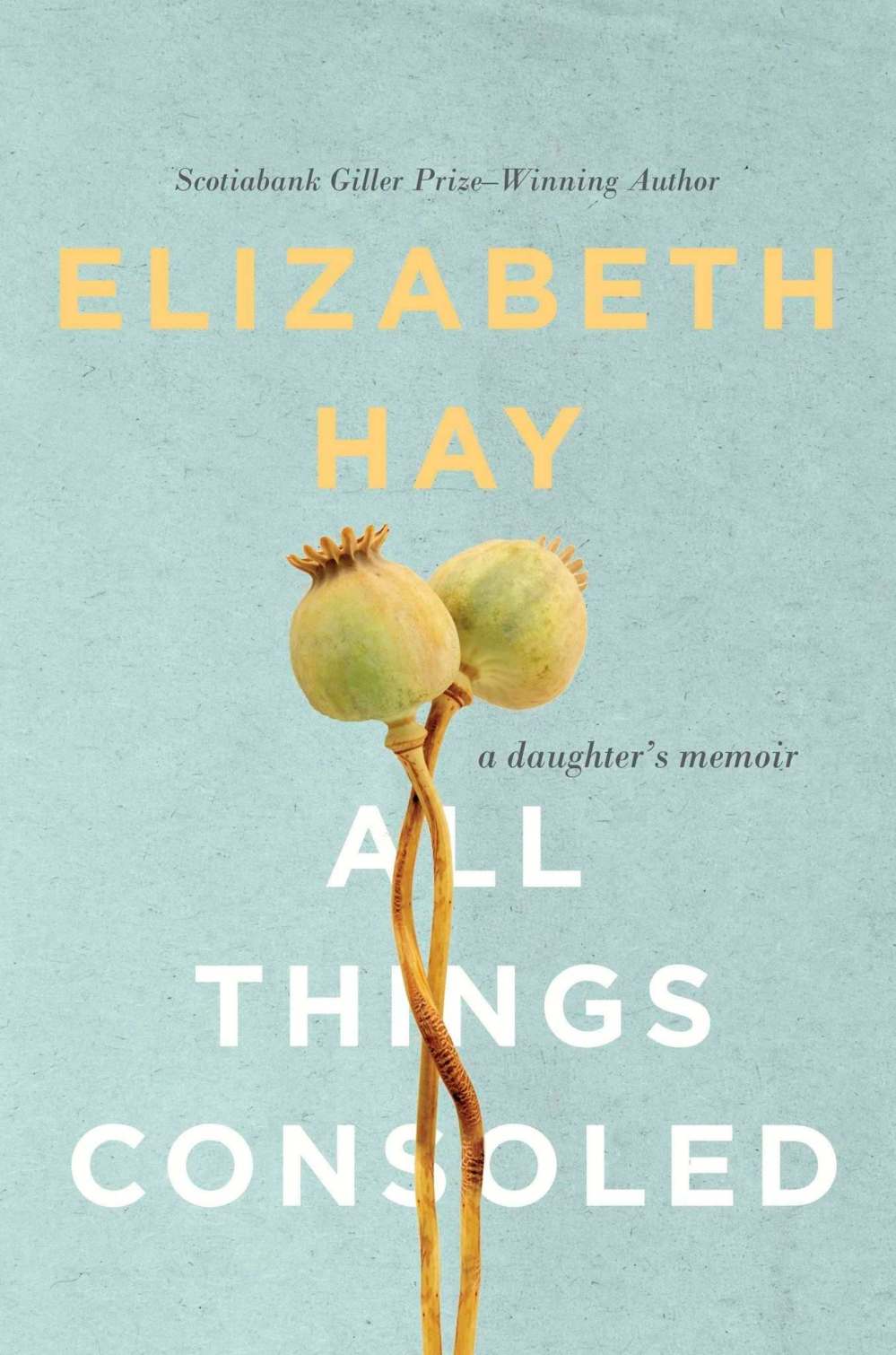
But All Things Consoled is also different than most of Hay’s earlier writings because of its genre — the book is a memoir and, by its very nature, is in part obtrusive, self-indulgent and, arguably, unnecessary.
Hay’s memoir focuses primarily on the last few years of her parents’ lives and the manner in which she, both by choice and by circumstance, devoted herself to their comfort and care.
Jean and Gordon Hay had been less-than-perfect parents to Elizabeth and her three siblings.
Gordon, a school teacher and principal with a deep chip on his shoulder, was envious of his daughter’s writing successes, quick to anger and often violent. Jean, a homemaker and talented painter, was eccentrically frugal and far too forgiving of her husband’s brusqueness and ill temper.
As a child, the author suffered the brunt of that ill temper and then was forced to feign understanding when her mother insisted her father was a good man in spite of his outbursts.
As an adult, Hay uses this memoir to unapologetically recreate those scenes but is able to see that, in fact, her mother was right. Gordon was much more than his rages.
It is because of her ability to forgive and to empathize that Hay is able to open up her heart to her parents as their independence diminishes. With the support of her husband, Mark, she moves them from their London, Ont., home to an assisted-living facility in Ottawa down the street from her house.
There, their physical and mental decline is fairly rapid, and Hay unflinchingly describes this change with accuracy and candour.
Begrudgingly putting aside her own writing and her own wants, she visits them daily, takes them out for walks, brings them to her home for dinner, listens to their stories and soothes their regrets.

“How strange it was to be walking toward my past,” she writes, “which was also my future: to see what the future held for me, yet to be once again the obedient child. I arrived at their rooms and here were the two vivid giants in my life — still massive no matter how shrunken they had become, while for them I suppose I had grown huge.”
That hugeness, Hay recognizes, comes with power — the power to give and to forgive; the power to be kind and gentle; and the power to listen to and treasure the stories, both good and bad, that motivated and made up her parents’ individual lives.
Hay, the writer, has chosen to share those stories. Hay, the daughter, might have kept them to herself.
Sharon Chisvin is a Winnipeg writer.
Elizabeth Hay launches All Things Consoled: A Daughter’s Memoir on Thursday, Oct. 18, at 7 p.m. at McNally Robinson Booksellers’ Grant Park location, in conversation with Winnipeg author/professor Kathleen Venema.