His side of the story
Greg Gilhooly writes about the sexual abuse he endured from Graham James, and how he will never get over it

Advertisement
Read this article for free:
or
Already have an account? Log in here »
To continue reading, please subscribe:

Digital Subscription
One year of digital access for only $205*
- Enjoy unlimited reading on winnipegfreepress.com
- Read the E-Edition, our digital replica newspaper
- Access News Break, our award-winning app
- Play interactive puzzles
*First annual payment billed as $205.00 + GST for one year. This annual subscription will automatically renew at $233.00 + GST every 52 weeks (10% off the regular annual price of $259.35). Offer available to new and qualified returning subscribers only. Cancel any time.
To continue reading, please subscribe:
Add Free Press access to your Brandon Sun subscription for only an additional
$1 for the first 4 weeks*
- Enjoy unlimited reading on winnipegfreepress.com
- Read the E-Edition, our digital replica newspaper
- Access News Break, our award-winning app
- Play interactive puzzles
*Your next Brandon Sun subscription payment will increase by $1.00 and you will be charged $17.95 plus GST for four weeks. After four weeks, your payment will increase to $24.95 plus GST every four weeks.
Read unlimited articles for free today:
or
Already have an account? Log in here »
Hey there, time traveller!
This article was published 12/03/2018 (3072 days ago), so information in it may no longer be current.
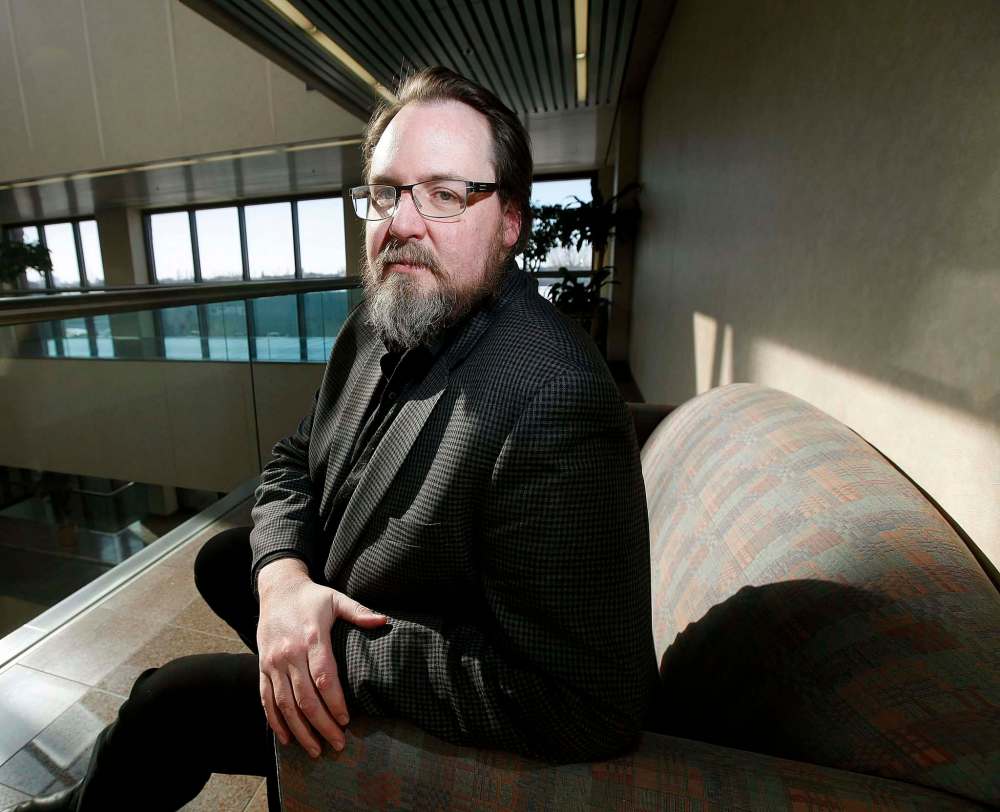
From the outside, Greg Gilhooly’s life looked perfect.
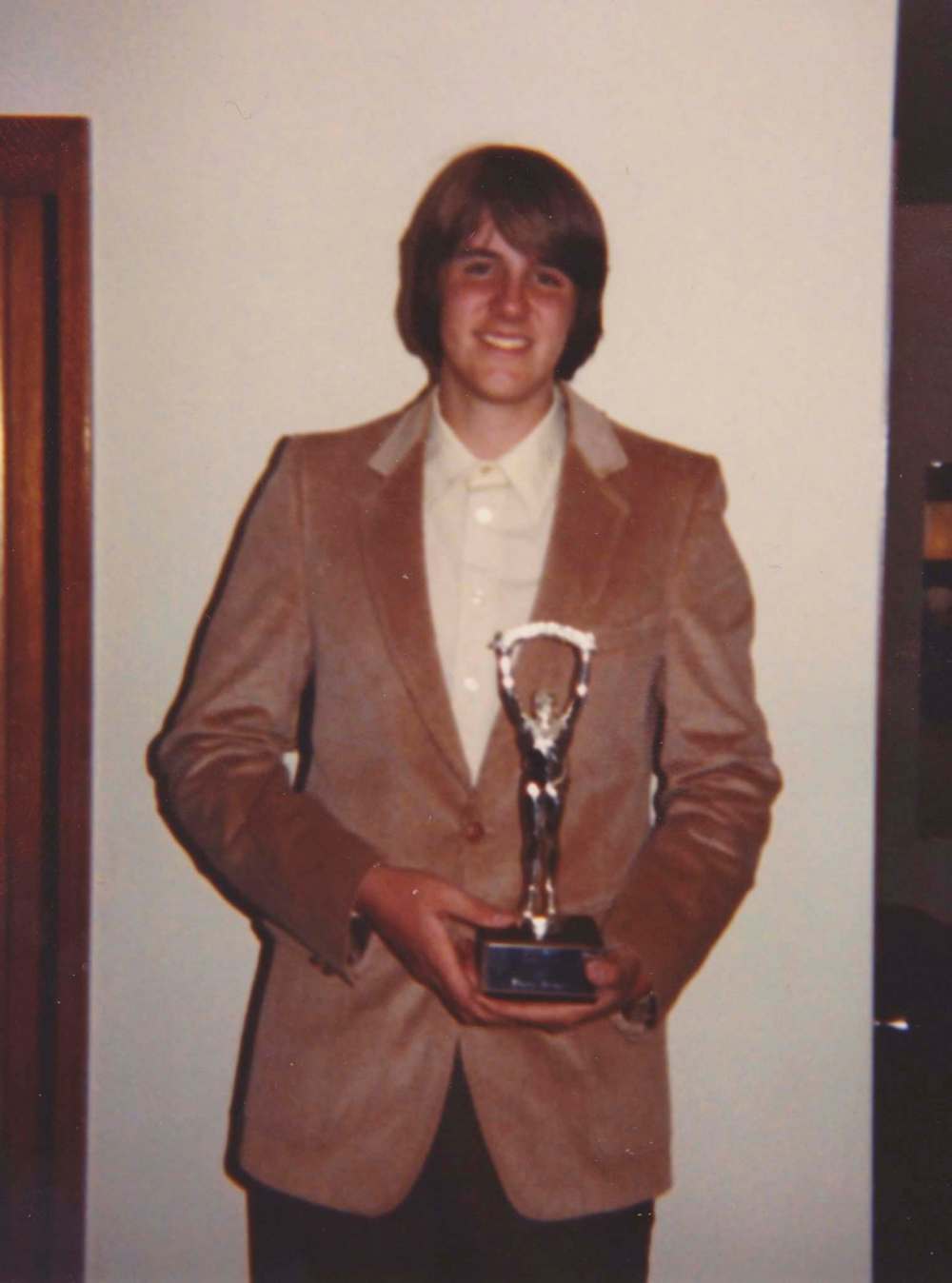
Here was a rising young hockey star and academically gifted young man, who later went on to earn degrees from Princeton University and the University of Toronto Law School. He was tall, handsome and incredibly driven — yet gentle and kind.
But he was also harbouring a terrible secret, one that was leading him down a dark and deeply self-destructive path: starting when he was 14 years old, Gilhooly was abused by Graham James, the notorious sexual predator who was later convicted of sexually assaulting former NHL hockey players Sheldon Kennedy and Theo Fleury.
Now, Gilhooly is telling his story. His new book, I Am Nobody, offers an unflinching, heartbreaking account of the abuse he suffered at the hands of a man he looked up to as a mentor, and the long road to recovery. In advance of a speaking engagement at the University of Manitoba’s Robson Hall at noon today, the Free Press sat down with Gilhooly, who grew up in Winnipeg, to discuss the #MeToo movement, how the legal system could do better by sexual assault victims, and why there is no such thing as closure.
FP: What made you want to write this book?
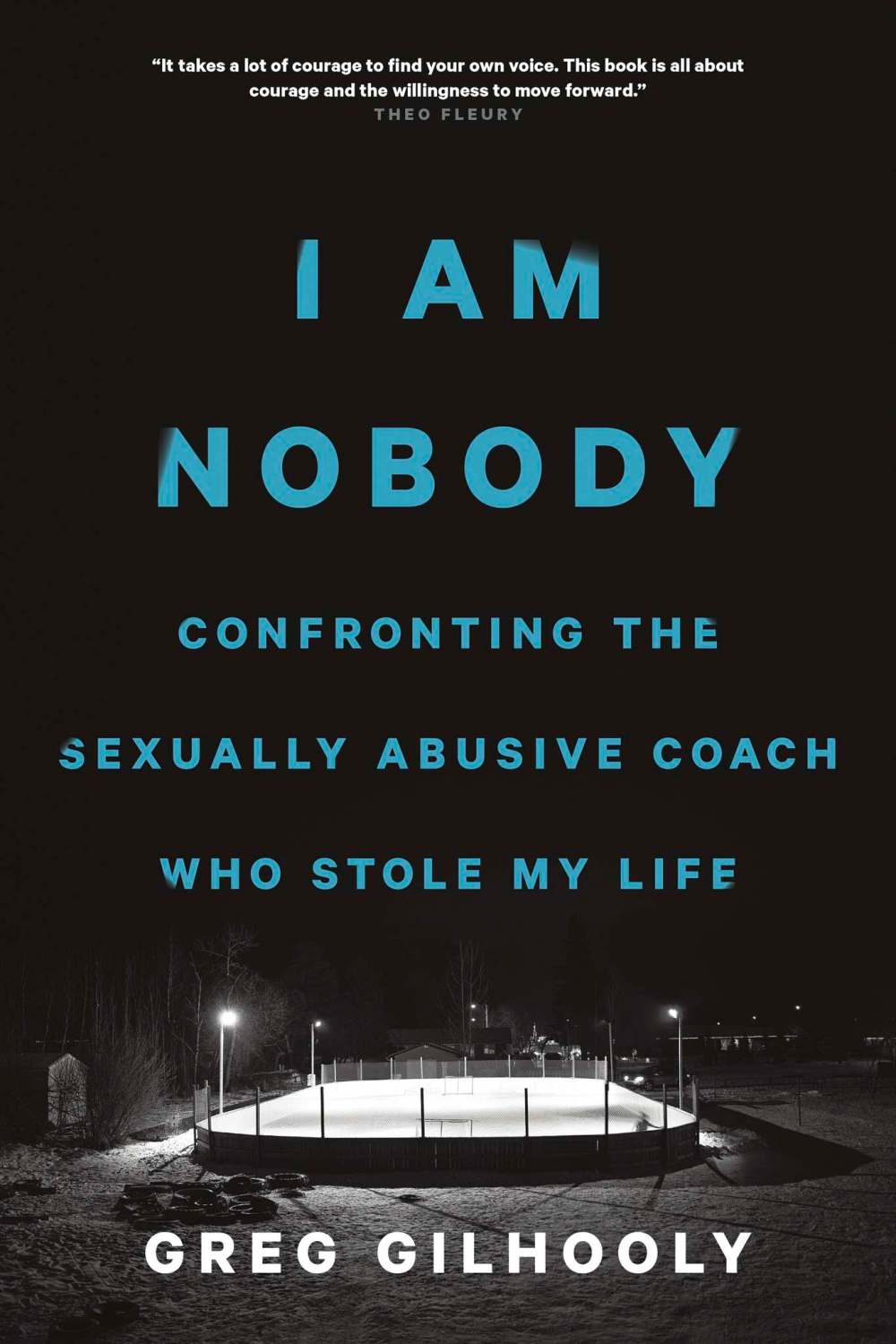
Gilhooly: I never set out to write a book initially. I never set out to tell my story to anyone but the people closest to me, and I certainly never set out to have my name public. When Graham didn’t admit to abusing me, enough was enough. It was going to be problematic in my recovery. But the concept of having a book served a wonderful purpose in that it was an external driver in keeping me on the path to recovery. It was something out there that I had to do because I had made a committment that I was going to write a book. And I couldn’t not keep recovering. I couldn’t keep running away from the problem as I had in the past. I had to address it.
FP: One of the things the book addresses really well is the fact that recovery is a process, it’s messy and non-linear. It’s not, “just get over it.”
Gilhooly: That’s one of the more frustrating things I’ve had to deal with for the past almost four decades now. I was the first person to tell myself, ‘Just get over it. Just move on with your life, he’s not there anymore.’ And yet, there’s obviously something inside that doesn’t let you get over it. Dealing with other people giving their advice to just do that, it’s been frustrating. But the process is real. It’s not like you go to the hospital, have your broken arm fixed, and four weeks later you have an arm that works again. It’s a process. And it’s always going to be there. It’s always going to be part of who I am in that tapestry of life. I just have to make sure it doesn’t dictate the future. That’s what we victims have to do.
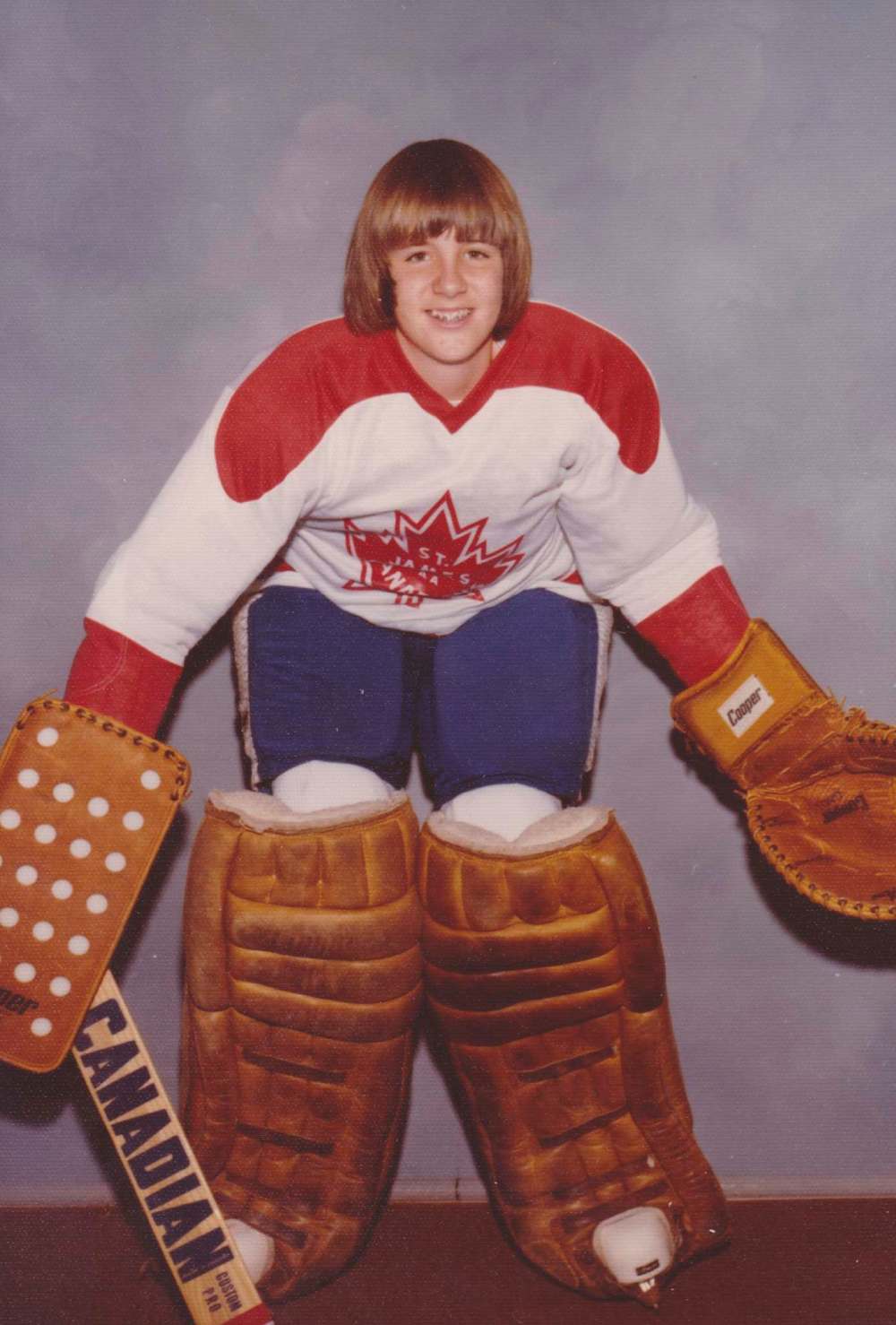
FP: You write about referring to yourself as a victim versus a survivor. Can you elaborate on that and the language used around sexual assault?
Gilhooly: I’m not fussed by the language that’s used. There are people out there who insist on being referred to as a survivor, and detest even the notion of being referred to as a victim because in that view, being referred to as a victim is something that takes away your power and it throws it back onto the abuser. It’s the terms that crop up in other senses, like sexual assault itself — a term that was created for a very good reason in terms of not wanting to revictimize a victim but pointing out the physical acts. But now it covers so much that it’s almost a meaningless term and, in effect, protects the abuser because it diminishes the impact of the crime.
FP: You have an interesting perspective on the legal system as both a victim and a lawyer. You wrote that we have a legal system, not a justice system, and that often the human at the centre, the victim, is forgotten when we have intellectual debates about the law.
Gilhooly: And that’s the thing. The way the law is taught, we learn the precedents, we learn the package of the law, we learn the legal themes and then future decisions are based on what’s happened in the past. But what gets lost in the telling are the human stories behind the cases. You can have precedent that sets out what intellectually makes sense in terms of sentencing someone who committs a crime against a child and get to the point in our system where we, in Canada, sentence people who rob banks for more time than those who prey upon children. That’s just insane. What has to be included in the teaching of the law, I believe, is a more a humanistic approach where the case is more than the legal prinicple. The case is that individual who was vicitimized, who was assaulted. What happened to that person? How did the act impact that person? And when we as a society take a look on that more holistic humanistic basis, we’re better able to assess what the penalties should be. Until we understand what the impact of the crime is, we can’t possibly sentence appropriately for what the crime.
FP: I wanted to ask you about being a male victim.
Gilhooly: Big stigma.
FP: Huge stigma. I think we’re in an interesting time, culturally, with the #MeToo movement. Is it helpful in breaking that stigma?
Gilhooly: It’s a very interesting time to be a victim of sexual assault. There’s so much good coming out of the #MeToo movement. It is fantastic that we, as a society, are becoming increasingly receptive to hearing voices of people who have been victimized. That willingness to listen only increases the possibility that people will come forward with the stories. We have to be careful, though, that we don’t jump to the next conclusion and just say that, ‘if someone comes forward, they are telling the truth and the accused is guilty.’ We have to hold two seemingly distinct concepts that are diametrically opposed, we have to hold them true at the same time. Absolutely, the presumption of innocence is there and is essential — but absolutely we should believe people who are coming forward, too.
FP: For survivors of sexual assault, can justice be found in criminal court?
Gilhooly: There’s never going to be justice. The notion that there’s a justice system out there that delivers justice is a bit of a myth. Whatever happens in court happens months or years long after whatever happened happened and, by that point, it’s a game played by lawyers to determine whether or not someone goes to jail. The issue at hand isn’t justice for the victim or whoever had something done to them, the issue is whether the sentence given the accused will be just, or whether the finding of guilt on the accused will be just. The justice system is there only with respect to the accused. It effectively yields a legal result in a game refereed by the court. So long as the game being played is to determine whether or not somebody’s going to jail, it has to be in the courts. That says two things. The first, victims should have access to the civil courts to ensure restitution is paid in appropriate circumstances, but even more importantly: people have to get away from the notion that courts are going to yield them anything close to justice.

At one time I believed that if Graham had been sentenced, there’d be closure and I’d move on and live happily ever after. It’s offensive how little time Graham spent in jail, and it’s even more offensive that he spent the time doing easy time and not hard time, but at the end of the day, even if Graham was still in jail, in the worst penitentiary imaginable going through whatever atrocities he deserves to go through on a daily basis for the rest of his life, I’m still me. And I still have the same nightmares.
FP: Do you believe in closure?
Gilhooly: No. I’d like to believe in closure, just like I liked to believe in Santa Claus when I was a kid. Unfortunately, as with Santa Claus, you learn there’s never going to be closure. It’s always going to be there. The issue is how I’m going to deal with it on a go-forward basis, and that can change. I can take steps to better my life and make my future better. That’s why I’m not fussed about using survivor instead of victim. I don’t believe it’s a sign of weakness to be honest about the inner hell I’m dealing with on an ongoing basis. I don’t believe the mental-health issues I’ve been left to grapple with are anything I should be running away from. I still feel victimized about what happened. Not in a ‘poor Greg’ kind of way, but in a ‘I understand why I am the way that I am kind of way.’
This interview has been condensed and edited for clarity.
jen.zoratti@freepress.mb.ca
Twitter: @JenZoratti
Jen Zoratti is a columnist and feature writer working in the Arts & Life department, as well as the author of the weekly newsletter NEXT. A National Newspaper Award finalist for arts and entertainment writing, Jen is a graduate of the Creative Communications program at RRC Polytech and was a music writer before joining the Free Press in 2013. Read more about Jen.
Every piece of reporting Jen produces is reviewed by an editing team before it is posted online or published in print – part of the Free Press‘s tradition, since 1872, of producing reliable independent journalism. Read more about Free Press’s history and mandate, and learn how our newsroom operates.
Our newsroom depends on a growing audience of readers to power our journalism. If you are not a paid reader, please consider becoming a subscriber.
Our newsroom depends on its audience of readers to power our journalism. Thank you for your support.
Jen Zoratti is a columnist and feature writer working in the Arts & Life department, as well as the author of the weekly newsletter NEXT. A National Newspaper Award finalist for arts and entertainment writing, Jen is a graduate of the Creative Communications program at RRC Polytech and was a music writer before joining the Free Press in 2013. Read more about Jen.
Every piece of reporting Jen produces is reviewed by an editing team before it is posted online or published in print – part of the Free Press‘s tradition, since 1872, of producing reliable independent journalism. Read more about Free Press’s history and mandate, and learn how our newsroom operates.
Our newsroom depends on a growing audience of readers to power our journalism. If you are not a paid reader, please consider becoming a subscriber.
Our newsroom depends on its audience of readers to power our journalism. Thank you for your support.
Related Articles
‘No humanity’: James accuser’s claim rejected third time

Advertisement Advertise With Us
Advertisement Advertise With Us
History
Updated on Monday, March 12, 2018 6:32 PM CDT: Updates tile headline