Holocaust trauma resonates across generations
Advertisement
Read this article for free:
or
Already have an account? Log in here »
To continue reading, please subscribe:

Digital Subscription
One year of digital access for only $205*
- Enjoy unlimited reading on winnipegfreepress.com
- Read the E-Edition, our digital replica newspaper
- Access News Break, our award-winning app
- Play interactive puzzles
*First annual payment billed as $205.00 + GST for one year. This annual subscription will automatically renew at $233.00 + GST every 52 weeks (10% off the regular annual price of $259.35). Offer available to new and qualified returning subscribers only. Cancel any time.
To continue reading, please subscribe:
Add Free Press access to your Brandon Sun subscription for only an additional
$1 for the first 4 weeks*
- Enjoy unlimited reading on winnipegfreepress.com
- Read the E-Edition, our digital replica newspaper
- Access News Break, our award-winning app
- Play interactive puzzles
*Your next Brandon Sun subscription payment will increase by $1.00 and you will be charged $17.95 plus GST for four weeks. After four weeks, your payment will increase to $24.95 plus GST every four weeks.
Read unlimited articles for free today:
or
Already have an account? Log in here »
Hey there, time traveller!
This article was published 14/05/2022 (1593 days ago), so information in it may no longer be current.
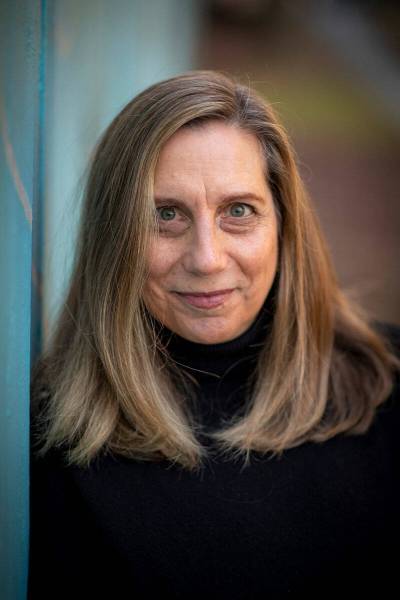
Jews have an obligation to remember, Vancouver author Marsha Lederman tells us. In her new book Kiss the Red Stairs, Lederman, an arts reporter for the Globe and Mail, fulfils that obligation with a memoir of Holocaust survival, intergenerational trauma and divorce. She takes scraps and shards of family memories and pastes them together with the broad sweep of Holocaust history to try and develop an understanding of herself and her parents as she struggles through her divorce.
Lederman’s Holocaust education began when she was five years old, when she asked her mother why she didn’t have any grandparents, like most of her friends did. Her mother told her how her grandparents had been gassed.
Her parents, both of them Polish, were Holocaust survivors, and much of the book is devoted to an obsessive quest for details it never occurred to the author to ask while her parents were still alive.

Her father, the only person in his immediate family to survive the Holocaust, managed to get forged papers giving him a new identity. He escaped to Germany, where he spent the war working as a farm labourer. He felt safer there than in his native Poland. Lederman’s mother, meanwhile, was a slave labourer in a munitions factory.
While Polish people today argue that the infamous camps such as Auschwitz and Bergen-Belsen were German creations built on Polish territory, Lederman does not let them off the hook, pointing out that the Poles conducted pogroms against the Jews both before and after the Second World War.
“My parents wore their sorrow on their sleeve — my mother quite literally on her arm,” writes Lederman. “I was raised on a diet of quiet sorrow… Sometimes not completely silent but transmitted in bits and pieces of conversation, or deafening absences.”
This family background left her with all sorts of nightmares as a child and a host of unpleasant fantasies as an adult, in which she was able to bundle her divorce, sorrow and fear and hatred of the Nazis. “It took me many years to understand that my life itself was the real revenge. The fact that I existed, that I walked the earth. I was a testament to the failure of the Nazi project.”
The author is not in sync with Zionists’ pro-Israel propaganda. As a 19-year-old on a group tour of Israel, she took part in an exercise where the group was asked whether they were Jews first or Canadians. Her answer, “I am Canadian first,” was not what they were looking for.
“Don’t be so comfortable in that Canada you think of as home; you never know what could happen,” Lederman was told. “I still resent that little tutorial.” And despite the family’s tragic history in eastern Europe, Lederman still considers eastern Europe, not Israel, to be her homeland.
The author also delved into a number of studies on Holocaust survivors and intergenerational trauma. These studies found that “children of survivors suffered from guilt, anxiety, depression and low self esteem,” she writes. Studies further showed that survivor parents were left with few emotional resources for coping with their children.

Recent studies, the author discovered, have shown that “the transmission of the trauma was about more than parenting style; it was about biology.” The studies have shown that trauma can leave a chemical mark on parents‘ genes that can be passed on their children. Researchers have found that descendants of Holocaust survivors have different stress hormone profiles than other Jewish adults of the same age.

This discovery led the author to wonder about her divorce, “Was I impossible to live with because of the hell my parents had been through?”
Any exposure to a stressful event sends the author’s brain scurrying back to the Holocaust, including her grandparents’ decision not to leave Poland, although they had visas for Palestine. “This was home. Everything will work out, they must have told themselves,” she writes. “How bad could it get? Everything and everyone they knew and had was right there. We’ll wait it out together. Comfort and love, I thought, can be fatal.”
With this book, Lederman has passed on to readers the obligation to remember. There is much to ponder here, including the lessons for intergenerational trauma that can be applied to Canada’s Indigenous population.
Gordon Arnold is a Winnipeg writer.