

Ice capades
Canada’s hard-fought win over Soviets in Summit Series recalled in Morrison’s latest
Advertisement
Read this article for free:
or
Already have an account? Log in here »
To continue reading, please subscribe:
Monthly Digital Subscription
$1 per week for 24 weeks*
- Enjoy unlimited reading on winnipegfreepress.com
- Read the E-Edition, our digital replica newspaper
- Access News Break, our award-winning app
- Play interactive puzzles
*Billed as $4.00 plus GST every four weeks. After 24 weeks, price increases to the regular rate of $19.95 plus GST every four weeks. Offer available to new and qualified returning subscribers only. Cancel any time.
Monthly Digital Subscription
$4.99/week*
- Enjoy unlimited reading on winnipegfreepress.com
- Read the E-Edition, our digital replica newspaper
- Access News Break, our award-winning app
- Play interactive puzzles
*Billed as $19.95 plus GST every four weeks. Cancel any time.
To continue reading, please subscribe:
Add Free Press access to your Brandon Sun subscription for only an additional
$1 for the first 4 weeks*
*Your next subscription payment will increase by $1.00 and you will be charged $16.99 plus GST for four weeks. After four weeks, your payment will increase to $23.99 plus GST every four weeks.
Read unlimited articles for free today:
or
Already have an account? Log in here »
Hey there, time traveller!
This article was published 11/06/2022 (1377 days ago), so information in it may no longer be current.
There’s an uncanny parallel between Russia’s recent invasion of Ukraine and Canada’s most famous hockey game.
An arrogant Russia attacked Ukraine, expecting not much of a fight, and 50 years before it a smug Canada took to the ice against Russia, expecting to win in a cakewalk.
Both were wrong.
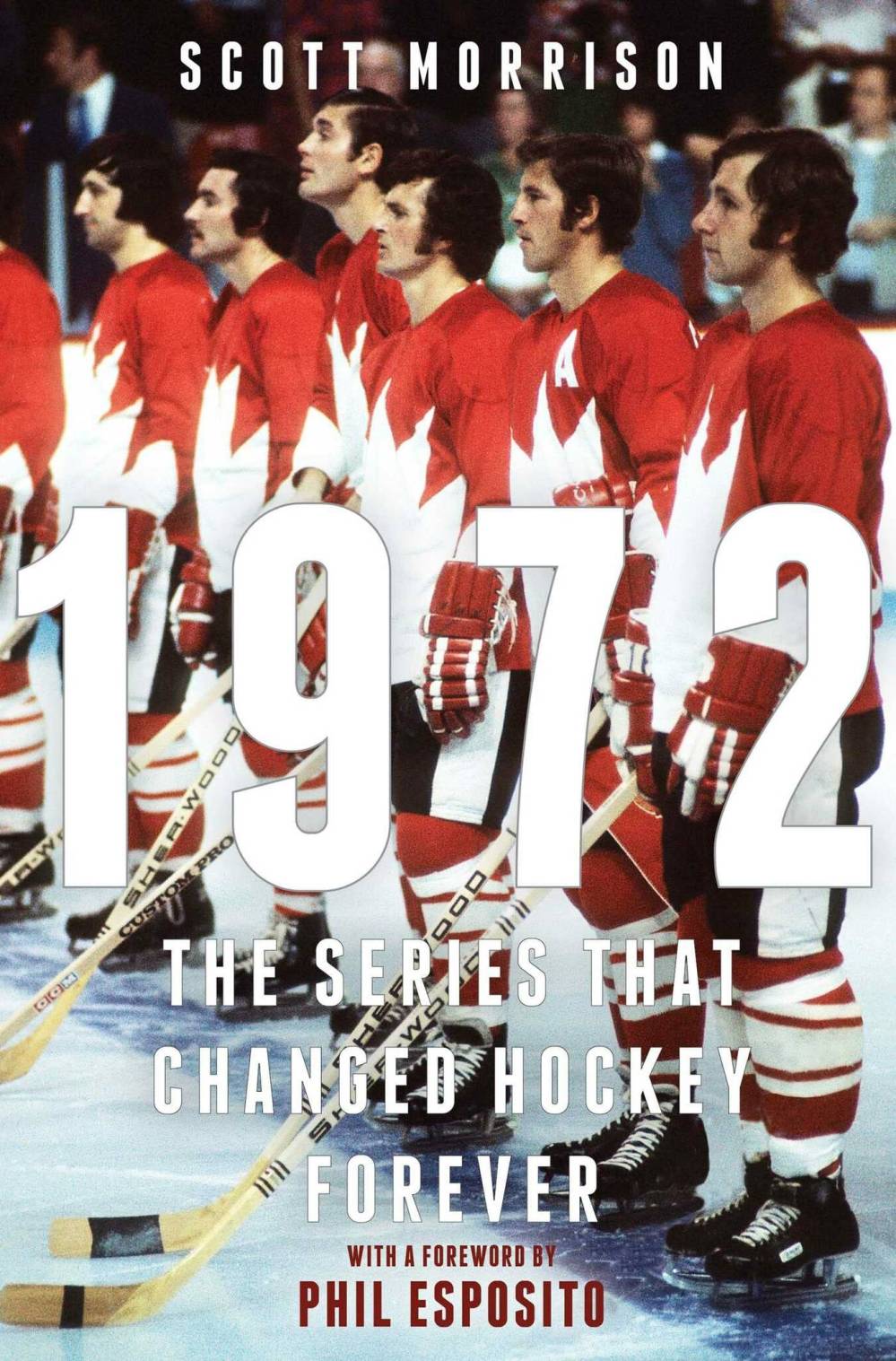
Unlike the war — by far the most earth-shattering and impactful event of the two — the most famous hockey series in history is over, but still being debated and defined as it is in dramatic detail in Scott Morrison’s latest book entitled 1972: The Series that Changed Hockey Forever.
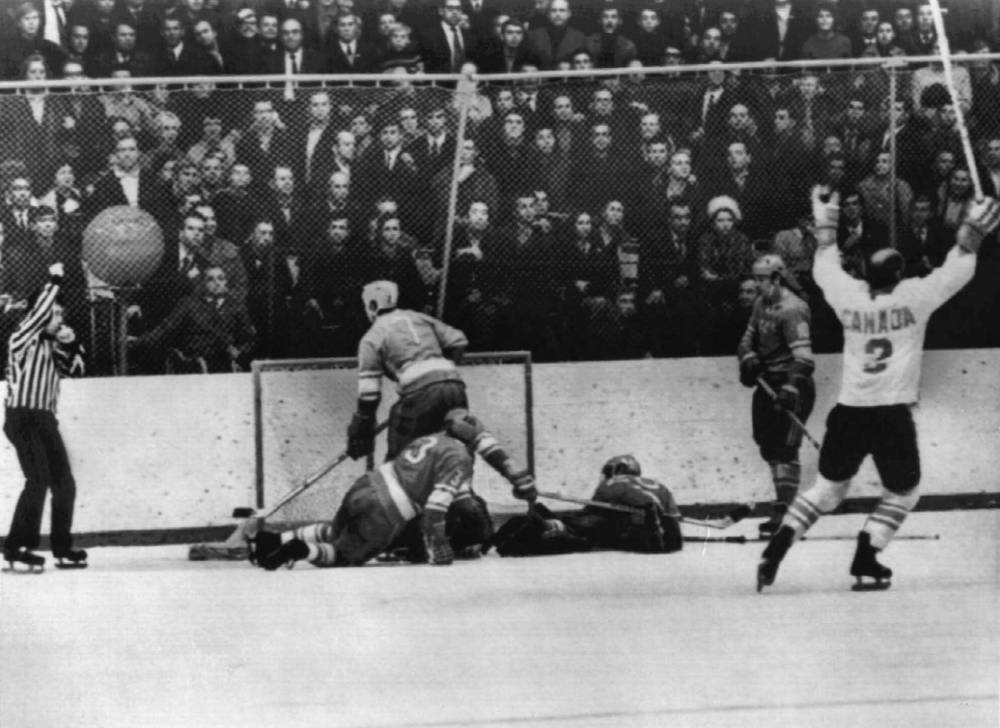
In the end, it wasn’t so much that Canada won the series, but that Russia lost it. As explained by Morrison, the final game that would decide the winner was tied, with little more than a minute to go, and if it ended in a tie Russia would claim they won the series because they had scored more goals in the eight games — four bouts in Canada, four in Moscow. But then, with less than a minute to go, the puck ended up between two Russians, still in their own zone, who didn’t seem to know for an instant what to do with it. Forward Phil Esposito, skating backwards, stretched out his stick to shoot the puck weakly on goal. Goaltender Vladislav Tretiak easily stopped it but, inexplicably, kicked the rebound straight out to Paul Henderson alone in front. It took Henderson two whacks to get it past Tretiak with 34 seconds to go. Canada had beaten the by-then mighty Soviets. (Back in Canada, watching TV, then prime minister Pierre Trudeau leaped up from his chair in triumph.)
Morrison is a veteran hockey analyst and broadcaster and author of numerous books, including an earlier one on the Canada-Russia Summit series. He lives in Toronto.
When Henderson scored his golden goal, Canadians in front of their TVs collectively sighed in relief. For as Morrison described, Canada had set out believing Russia would be a pushover, only to find in game one the Russians were in much better shape than the Canadians, played a feverish style of hockey they’d never seen and outscored them 7 to 4. And at game four in Vancouver, another Canadian loss, the team was roundly booed by the fans.
Morrison writes that the series was not just about hockey, but quickly became a clash of two cultures and political entities: democracy versus communism, and a competition between two ways of playing — the emotional intensity of the Canadians versus the team concept and dizzying passing patterns of the Soviets. There also was the mistaken belief that Canadians grew up playing hockey while Russians favored chess.

Morrison has a lot to say about the emotional wreck Canadian fans had become by the time the series moved to Moscow. They had expected quick victory, were bewildered when Russia starting winning, began to doubt their hockey sense, started to blame the Canadians and then were overjoyed in disbelief when they won. (Everybody who watched that final game on television knows exactly where they were when Canada won.)
Flin Flon’s Bobby Clarke will be remembered most for his two-handed blatant slash with his stick on the ankle of one of Russia’s top players, Valeri Kharlamov, in game 6. Clarke cracked Kharlamov’s ankle and he was never so good for the rest of the series. Morrison says Clark thought the Canadian coach, Harry Sinden, wanted somebody to injure the Russian superstar, and was looking at Clarke when he said it. Even some of his fellow players thought it the wrong thing to do, and said so afterwards.
While the Canadians played a very rough style of hockey as they did in the NHL, the Soviets too had ways to hurt you, according to Morrison, including spearing and hitting behind the kneecaps with their sticks. The Canadians complained to Morrison that the Soviets were very sly and got few penalties when they misbehaved. Meanwhile, the European referees in the games in Moscow were mistaking the Canadians’ legitimate rough play as unacceptable because they weren’t used to seeing such aggression in hockey. The mild-mannered Canadian forward J.P. Parise got so frustrated with the officiating he raised his stick to the head of a referee as if to lop it off, and was thrown out of the game.
Tretiak said he became more famous for letting in Henderson’s goal than if he had stopped it. One of the world’s greatest goaltenders said in his autobiography in 1987: “I will always count that goal (Henderson’s in game eight) as the most maddening of all goals scored on me.”
Barry Craig was at the Vancouver game.
History
Updated on Saturday, June 11, 2022 2:46 PM CDT: Corrects reference to prime minister