WEATHER ALERT

Identity questioned in fabulous fragments

Advertisement

Advertise with us

Jessi MacEachern’s debut collection offers six long poetic sequences that swirl around the maelstrom of a female speaker caught in a process of crafting and disassembling her identity.

Read this article for free:

or

Already have an account? Log in here »

To continue reading, please subscribe:

Subscribe and receive a limited-edition Free Press branded hat or tote.

Digital Subscription

One year of digital access for only $205*

  • Enjoy unlimited reading on winnipegfreepress.com
  • Read the E-Edition, our digital replica newspaper
  • Access News Break, our award-winning app
  • Play interactive puzzles

*First annual payment billed as $205.00 + GST for one year. This annual subscription will automatically renew at $233.00 + GST every 52 weeks (10% off the regular annual price of $259.35). Offer available to new and qualified returning subscribers only. Cancel any time.

To continue reading, please subscribe:

Add Free Press access to your Brandon Sun subscription for only an additional

$1 for the first 4 weeks*

  • Enjoy unlimited reading on winnipegfreepress.com
  • Read the E-Edition, our digital replica newspaper
  • Access News Break, our award-winning app
  • Play interactive puzzles
Start now

*Your next Brandon Sun subscription payment will increase by $1.00 and you will be charged $17.95 plus GST for four weeks. After four weeks, your payment will increase to $24.95 plus GST every four weeks.

Hey there, time traveller!
This article was published 27/03/2021 (1946 days ago), so information in it may no longer be current.

Jessi MacEachern’s debut collection offers six long poetic sequences that swirl around the maelstrom of a female speaker caught in a process of crafting and disassembling her identity.

“She keeps a notebook labelled dreams to have,” begins the first sequence, establishing a core tension between the dreams she is supposed to have versus the ones she wants to have. Is this notebook filled with prescriptions or desires? What would it mean to “have” a dream? Are they process or possession?

MacEachern plays with the subtleties of this sort of doubleness in fragmentary phrases that lack the kind of context that might pin down and fix them, and therefore develops long poems where story gives way to scope. Other voices break in: “It is proper that the women should remain indoors,” says someone, something.

“Unclean lives / are best suited to indoor rain // Best considered against a wall against / which the only mirror // Has fallen.” Has the mirror fallen over from the weight of the images it is expected to hold, the ones women are expected to embody?

Half of the joy of MacEachern’s lines lies in questioning their purpose in this way, and how one crashes against the other in a manner suggestive of so much, without confirming anything.

Later poems pull in a bureaucratic tone, inserting the concept of social and political governance of gender identities, as when an “automaton locks a door. The subjects are left with Kafka.” Never good to be left with Kafka for long.

If all this sounds too esoteric and clinical, it can be, but the poet manages to wend into it all threads of visceral affect. Higher-level discourse around discourse itself can seem abstract and academic, but manifests in dark, cold realities on the ground.

“It looks like she / tried // to call // for help.” This statement seems more straightforward than it might actually be — is this an after-the-fact autopsy of some horrible event, or is this a meta-level confession that MacEachern is trying and failing to make herself heard in these poems?

Either way, it’s a startling and sad moment in a smart and stellar debut.

Other notable poetry

Museum of Bone and Water, by Nicole Brossard, translated by Robert Majzels and Erín Moure

(Anansi, 120 pages, $17)

A republication with a special introduction by its innovative translators (who themselves happen to be two of Canada’s best writers), Brossard’s classic is as strange and startling as the day it first appeared in 2003.

Chimera, by James Knight

(Penteract, 56 pages, $24)

Visual poems constructed out of phrases from Bram Stoker’s horror classic The Lair of the White Worm and nightmarish, symmetrical computer art resembling monstrous waveforms. Engrossing and disturbing.

Coconut, by Nisha Patel

(NeWest/Crow Said, 106 pages, $20)

The debut collection from the Canadian national slam champion, which finds the poet questioning the social roles assigned to her and what she desires for herself, in this world of paradox where “the life of the party shows up alone.”

Jonathan Ball’s newest book is the short story collection The Lightning of Possible Storms (Book*hug, 2020). Visit him online at jonathanball.com.

Report Error Submit a Tip

More Stories

Almost 250 people moved from city encampments under provincial strategy

Scott Billeck 6 minute read Preview

Almost 250 people moved from city encampments under provincial strategy

Scott Billeck 6 minute read Updated: Yesterday at 4:31 PM CDT

Nearly 250 people have moved out of Winnipeg encampments under the Manitoba government’s Your Way Home strategy, which is more than 70 per cent of the NDP’s goal for its first term in office.

Read
Updated: Yesterday at 4:31 PM CDT

Former Tory cabinet minister runs for Brandon trustee

Abiola Odutola 4 minute read Preview

Former Tory cabinet minister runs for Brandon trustee

Abiola Odutola 4 minute read 2:01 AM CDT

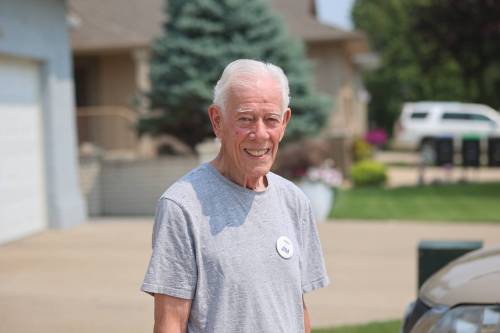
BRANDON — Jim McCrae, a former attorney general of Manitoba, has registered to run for a seat on the Brandon School Division board of trustees.

McCrae, 77, had a long political career as a Tory cabinet minister and before that, a Brandon city councillor.

He said his decades of public service and education experience have prepared him to contribute to the governance of the school division.

“My last cabinet position was as minister of education and training. I travelled extensively in Manitoba and met with many teachers and others involved with the education of our children,” McCrae told the Brandon Sun.

Read
2:01 AM CDT

A distraction for the war-weary

Gwynne Dyer 5 minute read 2:01 AM CDT

I have been writing this column twice a week for a long time, so I have a finely developed sense for when the audience is sick of a subject. We have definitely crossed that boundary with regard to the wars currently being fought up and down the strip of land between the longitudes of 40°E and 50°E (Eastern Ukraine/Persian Gulf/Israel, Gaza and Lebanon).

It’s not just that they are stupid wars, launched by men who were too ignorant or too arrogant to realize that they could not win them (Vladimir Putin, Donald Trump, Benjamin Netanyahu), and it’s certainly not because they are harmless wars.

Not only are they killing thousands of people every week, but in every case the country that started the war also has nuclear weapons. In each case there is a small but real possibility that the leader in question might resort to using at least one “tactical” nuclear weapon as a final warning rather than accept the blame for a humiliating failure to achieve his aims.

Yet nothing much new and interesting is happening from one day to the next in any of these wars, and the audience would really like to move on. I have been trying to write about something else at least once a week, so I thought: maybe I could do a piece about Kim Jong Un’s teenage daughter’s chance of being North Korea’s next dictator.

Dropping the gloves to make the point

Editorial 4 minute read Preview

Dropping the gloves to make the point

Editorial 4 minute read 2:01 AM CDT

In hockey parlance, it’s called “shedding,” the moment in a game when you are forced to deal with an instigator by dropping (shedding) your gloves for an all-out brawl.

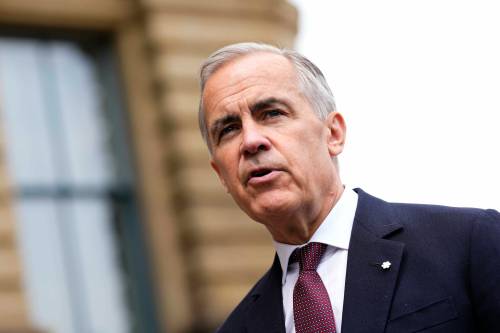
That term is a deep cut from hockey culture that Prime Minister Mark Carney — he of the “elbows up” phenomenon — may need to not only embrace but practise more often in the face of yet another round of overly punitive tariffs imposed by United States President Donald Trump.

To be fair, under Carney’s leadership, Canada has not exactly rolled over in the face of Trump’s bully-boy tactics.

Yes, Canada has made concessions to placate Trump to further a new continental trade agreement: investing more money to combat the cross-border flow of fentanyl that isn’t actually happening, stalling efforts to tax streaming companies as most European countries already do, and — most recently — giving Trump a cut of profits from the Canadian-made, Canadian-paid Gordie Howe bridge between Windsor and Detroit.

Read
2:01 AM CDT

You can work out your social situation

Maureen Scurfield 4 minute read Yesterday at 2:00 AM CDT

DEAR MISS LONELYHEARTS: When I was a young bisexual guy going to university and working in bars at night, I was surrounded by new people — guys and girls all the time.

There were a lot of great late-night parties after work, and I always had my eye on somebody new. I was never lonely in those days. Where did all that fun and happiness go?

Now I’m a few years older with a career and don’t need a job as a bartender to help support me. But it seems like there’s nobody around to meet, other than at bars.

Also, I’m realizing that while there are lots of straight people out there looking for fun and relationships, it’s hard to convince them that I could be true to them alone, being bisexual. But I’m true to whomever I’m with — and I only want one lover at a time.

Automation reaches new heights on farm

Laura Rance-Unger 4 minute read Preview

Automation reaches new heights on farm

Laura Rance-Unger 4 minute read 2:01 AM CDT

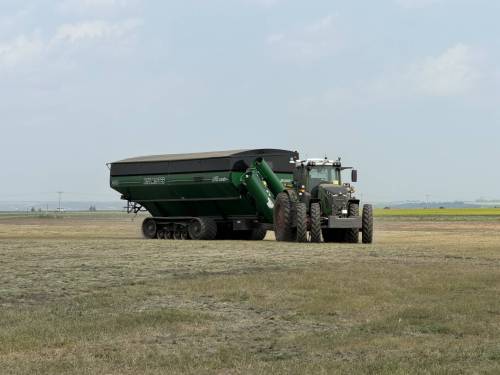
LANGHAM, Sask. — The thousands of farmers from across the Prairies who flock to the annual Ag in Motion show every July seem oblivious to the possibility the technology on display could one day replace many of them.

Families with children in tow, Hutterite colony workers, grandparents and young couples just starting out roamed through the 600 or more exhibitor displays, amazed at how everything about farming just keeps getting bigger, more efficient and increasingly more automated.

It’s now possible to seed using a 100-foot-wide drill — a 12-foot jump over the widest available a few years ago — provided the farmer can afford a tractor with enough horsepower to pull it. Those sell for around $850,000 and up.

Granted, the number of farms with enough acres to justify that kind of width and drawing power is still relatively small, but farms continue to grow. And it’s no secret the number of people who have the interest, skills and financial wherewithal to run them continues to shrink.

Read
2:01 AM CDT