Liu strikes at the heart of the unexplainable
Advertisement
Read this article for free:
or
Already have an account? Log in here »
To continue reading, please subscribe:
Digital Subscription
One year of digital access for only $1.44 a week*
- Enjoy unlimited reading on winnipegfreepress.com
- Read the E-Edition, our digital replica newspaper
- Access News Break, our award-winning app
- Play interactive puzzles
*Billed as $5.77 plus GST every four weeks. After 52 weeks, price increases to the regular rate of $19.95 plus GST every four weeks. Offer available to new and qualified returning subscribers only. Cancel any time.
To continue reading, please subscribe:
Add Free Press access to your Brandon Sun subscription for only an additional
$1 for the first 4 weeks*
- Enjoy unlimited reading on winnipegfreepress.com
- Read the E-Edition, our digital replica newspaper
- Access News Break, our award-winning app
- Play interactive puzzles
*Your next Brandon Sun subscription payment will increase by $1.00 and you will be charged $17.95 plus GST for four weeks. After four weeks, your payment will increase to $24.95 plus GST every four weeks.
Read unlimited articles for free today:
or
Already have an account? Log in here »
Hey there, time traveller!
This article was published 01/09/2018 (2968 days ago), so information in it may no longer be current.
At least for the moment, Cixin Liu has the literary distinction of being the only Chinese-language author English readers are at all likely to have heard of. Based out of a small city more than 1,000 kilometres inland from Shanghai, Liu has long been a star in his own country; in translation he’s a trailblazer, leading the way for a country experiencing its own Golden Age of science fiction to potentially export its creative works to a western audience.
Ball Lightning is Liu’s followup to his highly successful Three-Body trilogy, which won the Hugo Award (in translation) and was nominated for the Nebula, the two top prizes for English-language science fiction. Except this actually isn’t a followup; the Three-Body books were published between 2006 and 2008, while Ball Lightning was released in China in 2004.
If you accept what translator Jay Rubin was quoted as saying in a 2013 New Yorker article — “When you read Haruki Murakami, you’re reading me… (he) wrote the names and locations, but the English words are mine” — this is Liu’s latest book, or at least translator Joel Martinsen’s latest book. It’s newer than The Three-Body Problem, translated and published four years later than the award-winning trilogy.
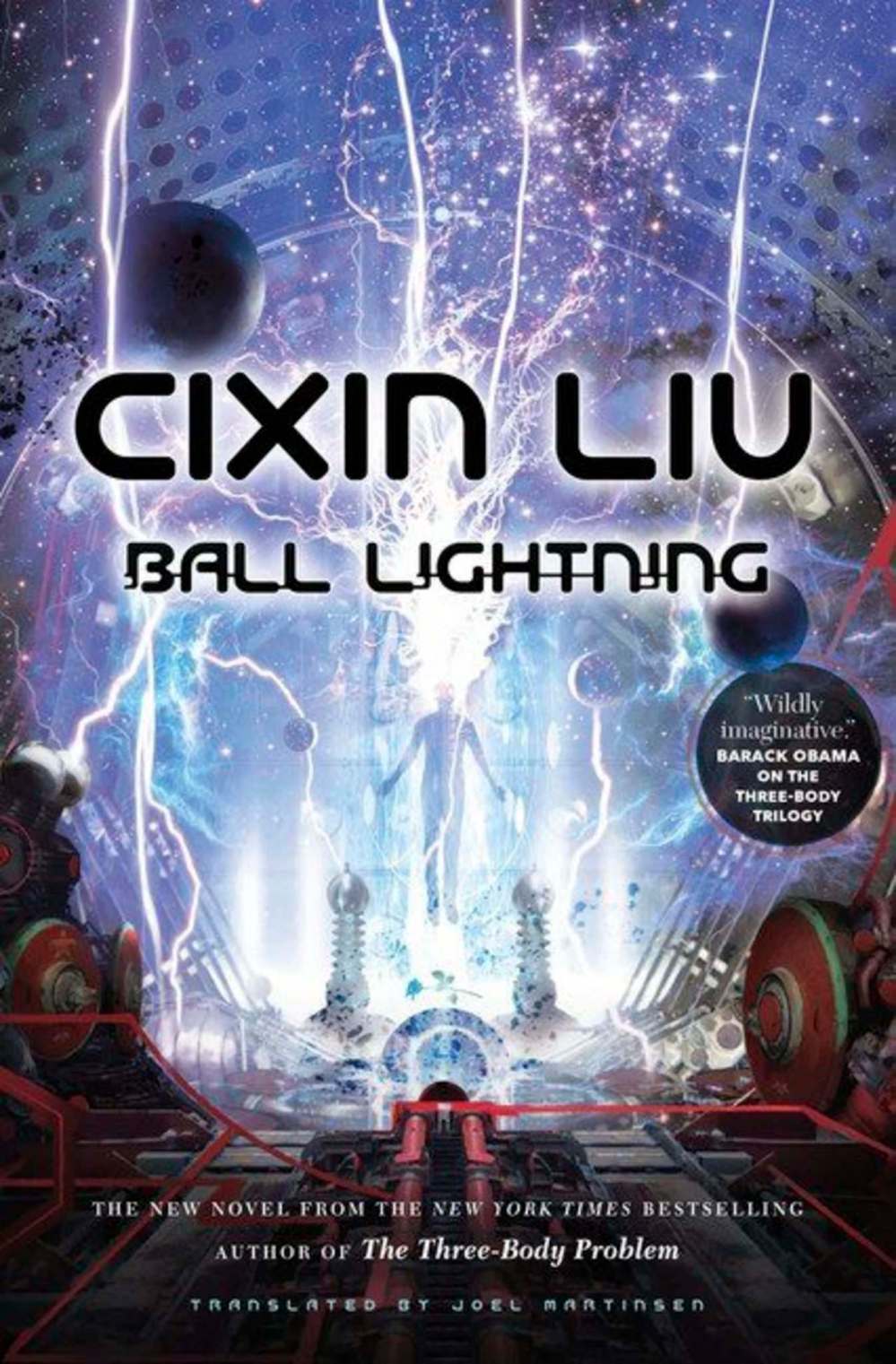
The very different political and social context of a story set almost entirely within China, the unspecified year and speculative nature of the geopolitical context — as well as the layer of ambiguity translation brings — do a lot to disguise the more obvious giveaways that this is not a just-written novel.
Liu’s trilogy was a sprawling, multi-generational, universe-spanning tale with dozens of major characters. This comparatively slim single volume is far tighter. With a single protagonist narrating the story from a limited perspective and only a handful of other key characters across a decade or so of story, Liu nevertheless gets into some pretty wild territory.
In the opening scene, Chen’s 14th birthday is interrupted when a ghostly, will-o’-the-wisp-type apparition drifts into his kitchen, incinerating his parents instantaneously. It was the rare, long-thought mythical weather object known as ball lightning, and the horror and confusion of that moment determines the course of the rest of the young man’s life, which he devotes to understanding and mastering the apparently untameable phenomenon.

Liu’s protagonist meets other equally obsessed individuals with their own goals and motivations. A physicist eschews emotions and social conventions in his pursuit of the fundamental laws of the universe. A military researcher obsessed with weapons has a miniature sword hanging dangerously round her neck, with an atom-thin edge capable of slicing through anything. A Soviet scientist dedicates his life to the search for knowledge, finding only nihilism and tragedy.
While you could compare Liu to western masters of the genre such as Arthur C. Clarke or Isaac Asimov, the Chinese author’s work is character-driven in a way theirs rarely was. There’s introspection that complements big-picture thinking nicely.
It also differs because this is a dark story, the atmosphere thick and foreboding. Ball lightning — deadly and random — represents the unexplainable. The idea of a pitiless and irrational universe is anathema to scientists, and frankly a little Lovecraftian.
The frightful idea that some things might be forever beyond our ken mirrors, at a philosophical level, the individual experience of violent loss. Chen is trying to eff the ineffable for all of humankind but also to exorcise his own ghosts. His story, in some ways, is a recovery from grief — the reclamation of meaning after a loss of sense and control. Most readers will identify with that to some extent.
Joel Boyce is a Winnipeg writer and educator.