Money matters
Authors argue basic income's benefits far outweigh the costs -- financially and otherwise
Advertisement
Read this article for free:
or
Already have an account? Log in here »
To continue reading, please subscribe:

Digital Subscription
One year of digital access for only $205*
- Enjoy unlimited reading on winnipegfreepress.com
- Read the E-Edition, our digital replica newspaper
- Access News Break, our award-winning app
- Play interactive puzzles
*First annual payment billed as $205.00 + GST for one year. This annual subscription will automatically renew at $233.00 + GST every 52 weeks (10% off the regular annual price of $259.35). Offer available to new and qualified returning subscribers only. Cancel any time.
To continue reading, please subscribe:
Add Free Press access to your Brandon Sun subscription for only an additional
$1 for the first 4 weeks*
- Enjoy unlimited reading on winnipegfreepress.com
- Read the E-Edition, our digital replica newspaper
- Access News Break, our award-winning app
- Play interactive puzzles
*Your next Brandon Sun subscription payment will increase by $1.00 and you will be charged $17.95 plus GST for four weeks. After four weeks, your payment will increase to $24.95 plus GST every four weeks.
Read unlimited articles for free today:
or
Already have an account? Log in here »
Hey there, time traveller!
This article was published 31/07/2021 (1873 days ago), so information in it may no longer be current.
It was not very long ago that many Canadians were aghast at the notion of a universal healthcare system and, before that, an old age pension, unemployment insurance and family allowance. All these things were highly contentious and maligned by the few “haves,” but now are considered central to Canada’s social safety net.
All of these reforms and provocations were sparked by crises of consciousness and some, like Old Age Security (OAS) and the family allowance, might be considered a form of basic income. All of these address(ed) the fact that capitalism, and now neoliberalism, leave marginalized and racialized Canadians holding all the eggs in a world that places little value on unpaid work, the care of seniors and the new world of the gig economy.
COVID-19 has highlighted the precariousness of an economy underpinned by a workforce that lives in poverty — doing the things that most Canadians could not fathom. The Canadian Emergency Response Benefit (CERB), as argued by Jamie Swift and Elaine Power in their new book The Case for Basic Income: Freedom, Security, Justice, has demonstrated that when there is political will, “unconditional state aid is both possible and necessary.” The $2,000 relief that many (but not all) Canadians were able to access was a time to breathe, think and have the freedom to make critical next moves.

Looking back from COVID to the history of the basic income movement in Canada and globally, Swift and Power highlight what is now the most famous experiment in Manitoba — Mincome. For four years in the 1970s, the town of Dauphin enjoyed a basic income programme that witnessed reductions in crime, hospital visits, teen pregnancy and divorce, as well as a rise in high school graduation rates and general well-being.
Mincome was a success. It allowed people to not be policed by the social welfare system, to have the time and space to engage in work that is fulfilling and to have the assurance that a bad crop, family emergency, sickness or a global crisis would not lead to certain doom.
Mincome was shuttered in 1979 when Sterling Lyon’s Conservatives assumed power in the province and the reams of data were shelved — until, that is, Evelyn Forget began to sift through the towers of information.
Forget has been part of a global movement to establish basic income programmes to create a “floor,” as opposed to a net, that would ensure freedom, security and justice for all. This movement led to a basic income pilot program in 2017 initiated by Katherine Wynne’s Liberals in Ontario. Lindsay, Hamilton, and Thunder Bay were all selected as saturation communities for the study. The impacts were not surprising. One participant in Lindsay remarked that, “Basic income has given me freedom to live with some dignity with a little extra money to buy essentials in life.”
But as soon as the pilot started, Buck-a-beer Doug Ford nixed the programme, arguing that the best way out of poverty is a job. Despite the abrupt curtailing of the basic income program, lessons were learned from the short pilot: “The monotonous, unhealthy diet, the strangulating restriction of choice, and the indignity of returning to the food bank were particularly crushing after the sense of freedom and well-being.” Basic income works, and its cancelation has been devastating.
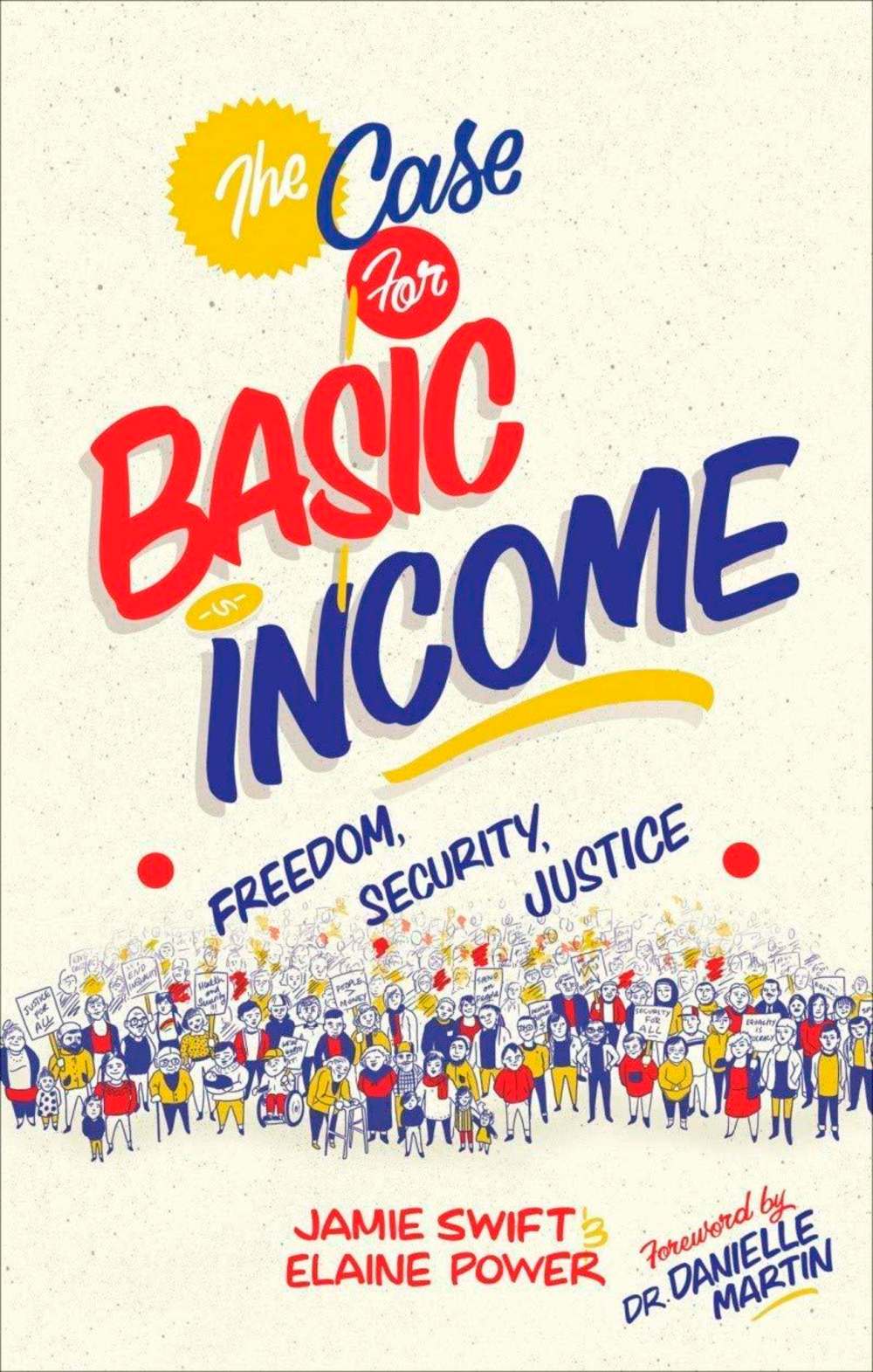
The disdain for basic income demonstrated by Ford and other neoliberal and populist profiteers comes from the imaginative idea that people who receive a basic income will become freeloaders — sucking at the teat of the free market. Swift and Power, with critical thought and evidence, pull the rug out from this superficial argument by arguing that “the freeriders here are actually those who enjoy the benefits of having racialized newcomers look after their parents and grandparents. Care labour is toil that many, particularly men, consider beneath them. ‘Women’s work.’”
Canada has a long tradition of freeloading in the form of an absence of an inheritance tax, offshore investments, weak corporate taxes, subsidies to the fossil fuel industry and an abhorrent resource extraction legacy in the global south. And then there’s the whole idea that we are profiting off of a land grab.
Basic income turns the tables on who benefits from labour and capital and who enjoys freedom, security and justice.
Swift and Power argue that basic income, done right, “would be a modest step to democratization of prosperity at a time when inequality is on the rise.” As the rich are becoming richer, basic income is a tool, as evidenced by CERB, to provide countless Canadians with the freedom to make significant choices, to rest and to not rely on the myth of the protestant work ethic. “An adequate Basic Income would free workers from compulsory wage labour or ‘wage slavery’ and provide space for workers to imagine different forms of work — ones that could be more cooperative and democatic,” argue the authors.
And while basic income seems utopian, despite the clear evidence that it reduces healthcare and other social costs, Swift and Power further argue that liberalism and certainly neoliberalism have no utopian aspirational vision at all. It is what it is.

If we truly wish to address poverty, eliminate food banks and charity organizations, acknowledge unpaid work, care labour and precarious jobs, we need to provide all Canadians, and particularly vulnerable Canadians, with the floor necessary to engage in and create a democratic, just and sustainable society.
Matt Henderson is assistant superintendent of Seven Oaks School Division.