Musings on science imbued with the spiritual
Advertisement
Read this article for free:
or
Already have an account? Log in here »
To continue reading, please subscribe:

Digital Subscription
One year of digital access for only $205*
- Enjoy unlimited reading on winnipegfreepress.com
- Read the E-Edition, our digital replica newspaper
- Access News Break, our award-winning app
- Play interactive puzzles
*First annual payment billed as $205.00 + GST for one year. This annual subscription will automatically renew at $233.00 + GST every 52 weeks (10% off the regular annual price of $259.35). Offer available to new and qualified returning subscribers only. Cancel any time.
To continue reading, please subscribe:
Add Free Press access to your Brandon Sun subscription for only an additional
$1 for the first 4 weeks*
- Enjoy unlimited reading on winnipegfreepress.com
- Read the E-Edition, our digital replica newspaper
- Access News Break, our award-winning app
- Play interactive puzzles
*Your next Brandon Sun subscription payment will increase by $1.00 and you will be charged $17.95 plus GST for four weeks. After four weeks, your payment will increase to $24.95 plus GST every four weeks.
Read unlimited articles for free today:
or
Already have an account? Log in here »
Hey there, time traveller!
This article was published 25/09/2021 (1819 days ago), so information in it may no longer be current.
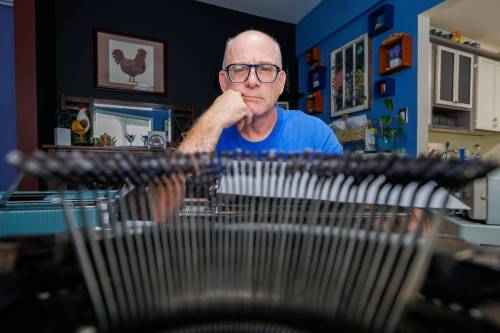
Born and raised a fundamentalist Christian, American technology writer Meghan O’Gieblyn declares her cards early in this brainy meditation on the intersection of religion and science.
“It is meaningless to speak of the soul in the 21st century,” she writes. “It has become a dead metaphor, one of those words that survive in the language long after a culture has lost faith in the concept.”
But just because she has renounced her Christianity for scientific materialism does not mean O’Gieblyn thinks any less about the questions religion poses, or that she believes science and technology will supply all the answers.
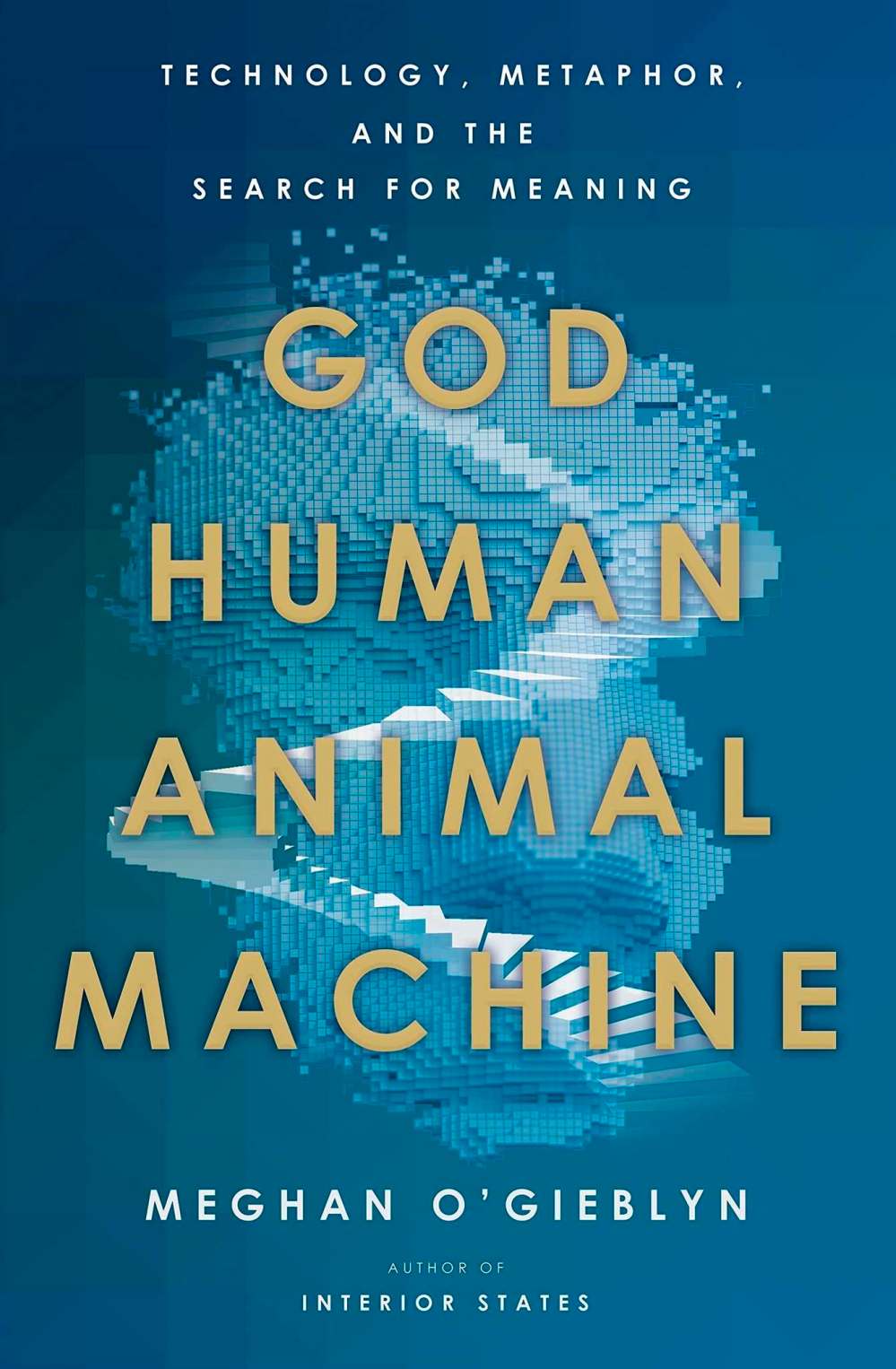
In fact, the main takeaway from God, Human, Animal, Machine is her insistence that we must still use symbolic language to describe the complex concepts we dimly perceive.
“To discover truth,” she notes, “it is necessary to work within the metaphors of our own time, which are largely technological.”
For example, instead of saying we are “made in God’s image,” we use computer terms to describe how we think. We “process” new ideas. We “retrieve” information from our “memory banks.” When we forget someone’s name, we blame “a glitch in our hard drive.”
A Midwesterner and resident of Madison, Wis., O’Gieblyn is best known for her monthly column in the Silicon Valley bible Wired magazine. She has published one other volume, the 2018 essay collection Interior States.
O’Gieblyn has become a minor star among the hipster-intellectual set, a kind of anti-Marilynne Robinson, not just for the quality of her work, but because she stands out as a woman in an arena dominated by such male thinkers as Jaron Lanier, Evgeny Morozov and Tim Wu.
Her cool and cerebral tone occasionally makes those dudes read like tittering school girls. Her historical touchstones are René Descartes, Fyodor Dostoevsky and Hannah Arendt, many of whose ideas she discusses here at length.
But she says her major inspiration is a living writer, the futurist Ray Kurzweil, whose seminal 1999 book The Age of Spiritual Machines prompted her to reclothe her religious questions in modern garb.
She argues that Kurzweil’s creed of “transhumanism,” the idea that people can evolve beyond their physical and mental limitations, mimics the Judeo-Christian concept of the afterlife.
But for all her bookish references, she revels in personal anecdotes. The letter “I” is the only one on her keyboard that has come loose, she notes, “presumably from overuse.”
Her religious family, her Bible-school years, her loss of faith, her time as a cocktail waiter, her substance-abuse problems are all grist for her philosophical mill.
Oddly, she is cagey about her age, but the few dates she supplies for context would place her in her early 40s.

With her habit of summarizing long conversations with friends, and also in the rigour of her sentences, O’Gieblyn calls to mind the British-Canadian novelist Rachel Cusk, if only Cusk cared about artificial intelligence and the elusive nature of atoms.
A skeptical reader might think that O’Gieblyn is already practising some fictional techniques herself. She tells of a poet friend who dreamt that the world would soon experience a “seismic event,” which turns out to be the COVID-19 pandemic.
“She said that this was the first of many trials and tribulations we would suffer in days to come, that the earth was not dying but cleansing itself.”
Humanity, “the real virus,” might be doomed, according to this poet. But in the meantime O’Gieblyn’s success seems foreordained.
Morley Walker is a retired Free Press journalist.