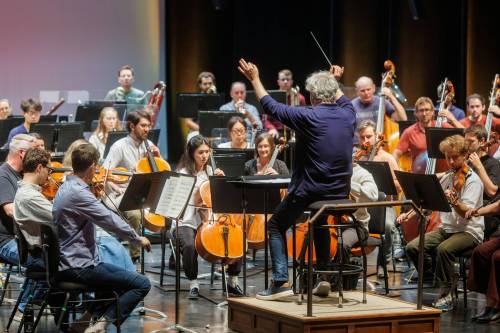
Nature poetry ponders atomic age

Advertisement

Advertise with us

Read this article for free:

or

Already have an account? Log in here »

To continue reading, please subscribe:

Subscribe and receive a limited-edition Free Press branded hat or tote.

Digital Subscription

One year of digital access for only $205*

  • Enjoy unlimited reading on winnipegfreepress.com
  • Read the E-Edition, our digital replica newspaper
  • Access News Break, our award-winning app
  • Play interactive puzzles

*First annual payment billed as $205.00 + GST for one year. This annual subscription will automatically renew at $233.00 + GST every 52 weeks (10% off the regular annual price of $259.35). Offer available to new and qualified returning subscribers only. Cancel any time.

To continue reading, please subscribe:

Add Free Press access to your Brandon Sun subscription for only an additional

$1 for the first 4 weeks*

  • Enjoy unlimited reading on winnipegfreepress.com
  • Read the E-Edition, our digital replica newspaper
  • Access News Break, our award-winning app
  • Play interactive puzzles
Start now

*Your next Brandon Sun subscription payment will increase by $1.00 and you will be charged $17.95 plus GST for four weeks. After four weeks, your payment will increase to $24.95 plus GST every four weeks.

Hey there, time traveller!
This article was published 27/06/2020 (2227 days ago), so information in it may no longer be current.

This year marks the 75th anniversary of atomic bombs being dropped on Japan, and Ken Hunt’s The Manhattan Project (University of Calgary Press, 122 pages, $19) explores what critic Joyelle McSweeney calls the “necropastoral.” Hunt connects to a tradition of nature poetry while envisioning the end of all life in the nuclear age.

“Beyond the fields, and beyond / the meadows and the tree line, in the heart // of the Red Forest, a troupe of hairless faeries / guard a hidden glade. They […] protect the tree of death, whose / twisting branches sag with tumorous fruits, their // skins encrusted with heavy metals, their seeds / aglow and showing through.”

Hunt has quietly offered three of Canada’s best poetry books in the past three years, and The Manhattan Project combines a rigorous style with a dark, serpentine subject.

● ● ●

Angeline Schellenberg’s Fields of Light and Stone (University of Alberta Press, 94 pages, $20) sifts through love letters, sermon notes, material and memories inherited from the poet’s Mennonite grandparents.

“Grandpa’s spirit came to me at night / and took me to Burger King. // He said, I have to go into the ground / but I’ve found // God’s house has many rooms / warm as a husk.” The final word, husk, is a brilliant choice here and offers a strange and hard-to-read set of possibilities.

Is its warmth fading, having been left over from whatever this husk housed? Or is the husk itself something that has life left in it, contrary to how we usually use the word? Schellenberg’s best poems don’t offer easy answers, and do a good job of letting the question lie.

● ● ●

Hustling Verse: An Anthology of Sex Workers’ Poetry (Arsenal Pulp, 204 pages, $20), edited by Amber Dawn and Justin Ducharme, collects poems that range from conventional confessions to experimental scripts.

Co-editor Ducharme writes, “sex fills me up & love reminds me / it’s okay to be empty.” This tension between connection and disconnection threads throughout the poems, sometimes when a poem’s speaker is considering their own dis/connection from the wider social world that stigmatizes sex work, sometimes when thinking through one’s own bodily dis/connection.

Whether raging against unjust oppression or simply trying to heal, the poems work best when they hold onto that sort of tension without resolving it. Melodie Nelson’s poem offers an example of how two extremes can sit oddly in the space of the same poem: “A man raped me because I was not his doll. […] Fireman are called when I make cookies and it’s fine.”

● ● ●

Claire Caldwell’s Gold Rush (Invisible Publishing, 72 pages, $18) “explores what it means to be a settler woman in the wilderness.” Caldwell attacks the thorny subject from odd angles with surreal imagery: “I contain a canyon / of roaring horses / and a small tent / for rest.”

Late in the book, Caldwell manages a feat many poets attempt and few achieve: making pop culture imagery actually work to emotional affect. “Except through infrared, / infants went unseen for eighteen months. / Geese flew in HTML formation, / … / The sky was a scarlet podcast.”

Caldwell’s always adept at fun but exact imagery: “Sometimes the day / is a dead trout / and night slams over it / like a cooler’s lid.” Who hasn’t had one of those days?

Jonathan Ball’s first book, Ex Machina, is celebrating its 10-year anniversary and to celebrate it is free at www.jonathanball.com/freebook.

Report Error Submit a Tip

More Stories

Long journey to home ownership for Eritrean couple

Zoe Pierce 4 minute read Preview

Long journey to home ownership for Eritrean couple

Zoe Pierce 4 minute read Yesterday at 2:01 AM CDT

Solomon Ghebru and his family have been building a life together in Winnipeg for the past three years after years of living apart in various countries. Now, they are working toward a new goal: owning a home.

Their story is the focus of this year’s Habitat for Humanity Manitoba Cycle of Hope fundraising ride, a seven-day cycling event through southern Manitoba that begins Monday. The ride aims to raise $150,000 to support Ghebru, his wife, Mehret Awate, and their two daughters as they work toward affordable homeownership.

The couple’s journey to Canada started in Eritrea, where they grew up and attended the same church together. They left Eritrea separately, hoping to build a better life together out of the country. Ghebru travelled through Sudan and Libya before reaching Malta, while Awate travelled to Sudan and then Uganda.

After he found work in Malta, he tried to have his family join him, but government policies prevented them from reuniting. The couple married in Uganda in 2016, and their first daughter, Peniel, was born there the following year.

Read
Yesterday at 2:01 AM CDT

Giant Tiger decision creates giant void for desperate population

Niigaan Sinclair 5 minute read Preview

Giant Tiger decision creates giant void for desperate population

Niigaan Sinclair 5 minute read Friday, Jul. 31, 2026

A lot of Winnipeggers may shrug, but the end of Giant Tiger’s downtown store is a giant problem for many of the people living in the centre of the city.

It would have been difficult for anyone going into or passing by the Canadian discount chain’s Donald Street and Ellice Avenue location Thursday to miss the red notices posted on the store’s windows advising it will close on Nov. 7.

According to a 2024 Downtown Winnipeg BIZ report, about 18,000 people live in Winnipeg’s downtown.

More than 60,000 people work there, and some days — when there’s a big concert or the Jets play at Canada Life Centre, for example — the number of people spending time in the area increases significantly.

Read
Friday, Jul. 31, 2026

Brighter days ahead after Camp Arnes

Joshua Frey-Sam 4 minute read Preview

Brighter days ahead after Camp Arnes

Joshua Frey-Sam 4 minute read Yesterday at 6:00 AM CDT

Keishna Abenstein remembers what it was like to be a teenager who was stuck in her shell.

She also recalls how much going to summer camp at Camp Arnes helped her spread her wings.

Abenstein has watched her middle child, Teagen, go through a similar roller-coaster as a teenager. Teagen, described as a social butterfly in his childhood, has become a bit more reserved in his adolescence after many of his closest elementary school friends went to a different middle school, forcing him to make new friends as he began the next chapter of his education.

Abenstein saw an opportunity for a similar experience at Camp Arnes that could impact her son the same way it did for her.

Read
Yesterday at 6:00 AM CDT

Domestic-duty distribution must suit you both

Maureen Scurfield 5 minute read Yesterday at 2:00 AM CDT

DEAR MISS LONELYHEARTS: I fear I’m going to end up with prolonged indigestion! My husband — a pretty boring cook — has decided it’s his turn to be the house parent again, and that I should go back to my profession, as he has come to hate his job.

I couldn’t be happier! He knows I love my work and I know he’s bored stiff by his accounting career. (He sometimes even has nightmares about numbers!)

The trouble is he’s a lousy housekeeper and cook. He’s patient and fun with our three kids, but I know that once he gets them off to school this fall, he’ll be on the couch watching TV until they get home.

I’m not looking forward to this. The place is always a wreck when he’s on home duty. Also, as soon as the kids come through the door, he makes them adult-sized sandwiches and store-bought snacks. So when I get home from work, they’re not hungry for a healthy dinner and my man certainly won’t be busy cooking up something nice for the two of us.

Excited Goldeyes fans buzz over Manitoba Mosquitoes’ name change

Grace Penner 4 minute read Preview

Excited Goldeyes fans buzz over Manitoba Mosquitoes’ name change

Grace Penner 4 minute read Friday, Jul. 31, 2026

BITE club has entered the ball park for a single game, filling the stands with mosquitoes — just not in the way you may think.

The Fish are participating an alternate identity takeover, one that many other teams in the minor baseball leagues have been having some fun with. The Winnipeg Goldeyes re-branded to pay homage to the province’s beloved summer creatures, the Manitoba Mosquitoes.

The Fargo-Moorhead RedHawks had some fun with its alternative identity, doing a five-game name change to the Woodchippers, a fun reference to the 1996 film Fargo.

Other honourable mentions are the Chicago Dogs, who switched over to the Chicago Wieners, the Sioux Fall Canaries transformed into the Minnehaha Martians, Milwaukee Milkmen became the Franklin Benjamins, and the Lake Country Dockhounds swapped to the Wisconsin Dive Bars.

Read
Friday, Jul. 31, 2026

Nemat’s novel chronicles grandmother’s harrowing life in Russia and Iran

Reviewed by Gordon Arnold 4 minute read Preview

Nemat’s novel chronicles grandmother’s harrowing life in Russia and Iran

Reviewed by Gordon Arnold 4 minute read Yesterday at 2:05 AM CDT

Mistress of the Persian Boarding House is the most enjoyable book I have read in the more than 15 years since I began reviewing books for the Free Press.

Author Marina Nemat’s prose, inspired by her paternal grandmother’s life, flows smoothly, like a babbling brook down a mountain.

Nemat is an Iranian-born Canadian writer and human rights activist known for her bestselling memoirs Prisoner of Tehran and After Tehran: A Life Reclaimed. Arrested at 16 for opposing Iran’s post-revolution regime, she endured torture and forced marriage in Evin Prison before emigrating to Canada in 1991.

Nemat’s grandmothers were both Russian, and she was brought up in a Russian Orthodox Christian family in Tehran. With their Iranian husbands, whom they had married before the Russian Revolution of 1917, both grandmothers fled from Russia to Iran as part of a massive wave of migration.

Read
Yesterday at 2:05 AM CDT