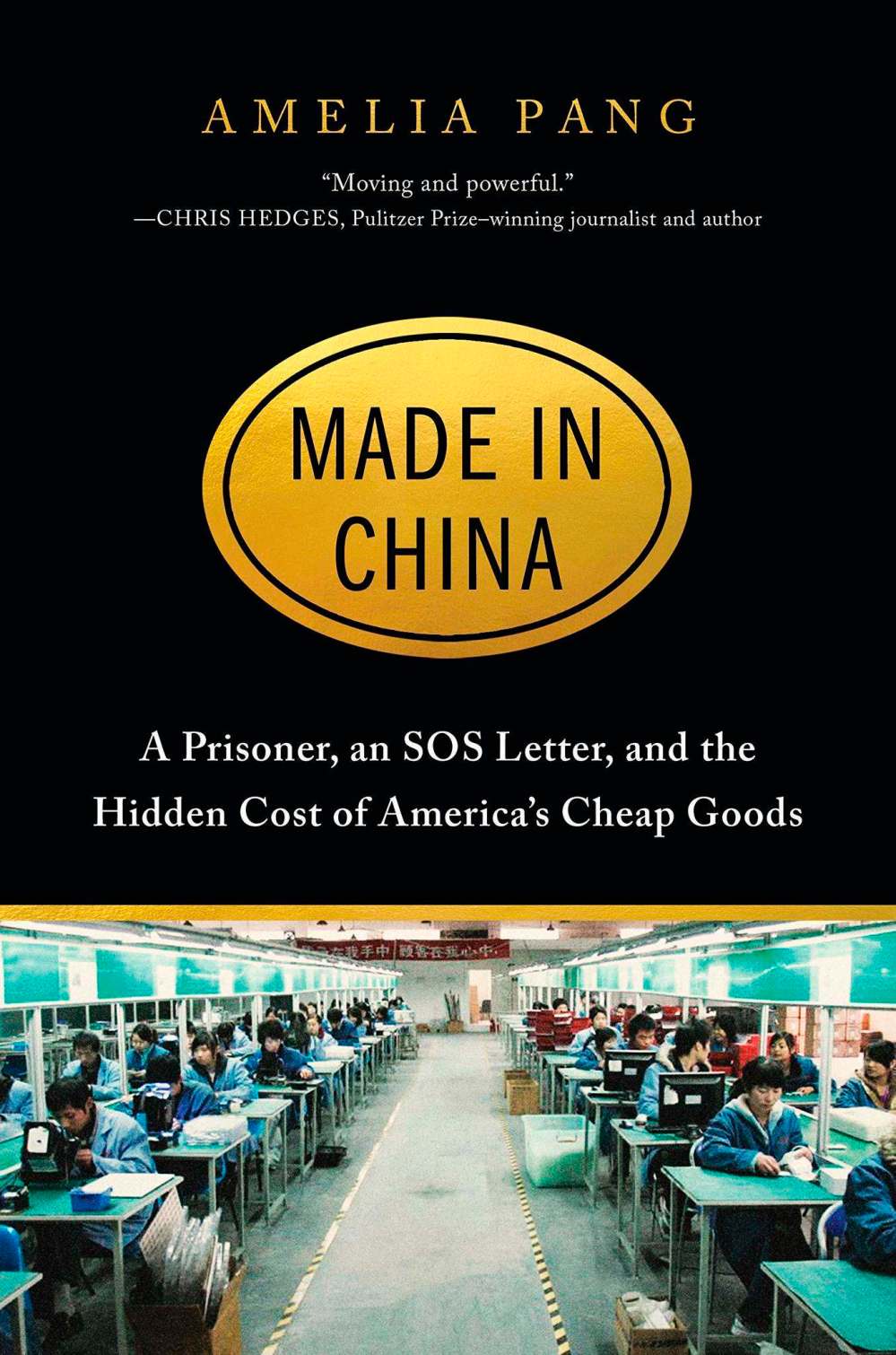
Paying the price
Demand for cheaply made goods drives forced labour camps in China
Advertisement
Read this article for free:
or
Already have an account? Log in here »
To continue reading, please subscribe:
Monthly Digital Subscription
$1 per week for 24 weeks*
- Enjoy unlimited reading on winnipegfreepress.com
- Read the E-Edition, our digital replica newspaper
- Access News Break, our award-winning app
- Play interactive puzzles
*Billed as $4.00 plus GST every four weeks. After 24 weeks, price increases to the regular rate of $19.95 plus GST every four weeks. Offer available to new and qualified returning subscribers only. Cancel any time.
Monthly Digital Subscription
$4.99/week*
- Enjoy unlimited reading on winnipegfreepress.com
- Read the E-Edition, our digital replica newspaper
- Access News Break, our award-winning app
- Play interactive puzzles
*Billed as $19.95 plus GST every four weeks. Cancel any time.
To continue reading, please subscribe:
Add Free Press access to your Brandon Sun subscription for only an additional
$1 for the first 4 weeks*
*Your next subscription payment will increase by $1.00 and you will be charged $16.99 plus GST for four weeks. After four weeks, your payment will increase to $23.99 plus GST every four weeks.
Read unlimited articles for free today:
or
Already have an account? Log in here »
Hey there, time traveller!
This article was published 06/02/2021 (1893 days ago), so information in it may no longer be current.
Amelia Pang is an investigative journalist who, in 2017, won the Los Angeles Press Club award for her reporting on the exploitation of smuggled immigrants by Chinese restaurants.
In this, her first book, Pang illuminates one of the darker sides of unfettered globalization and overconsumption by exposing the shocking use of forced labour as a component of China’s manufacturing economy.
Our endless demand for the latest passing fads in fashion or technology at the lowest prices often overwhelms the capacity of Chinese manufacturers, who then make up for it by subcontracting work to prisons, which are essentially labour camps. In these camps, often called re-education centres, millions of prisoners work over 15 hours a day, seven days a week, many also being subjected to political indoctrination and torture.
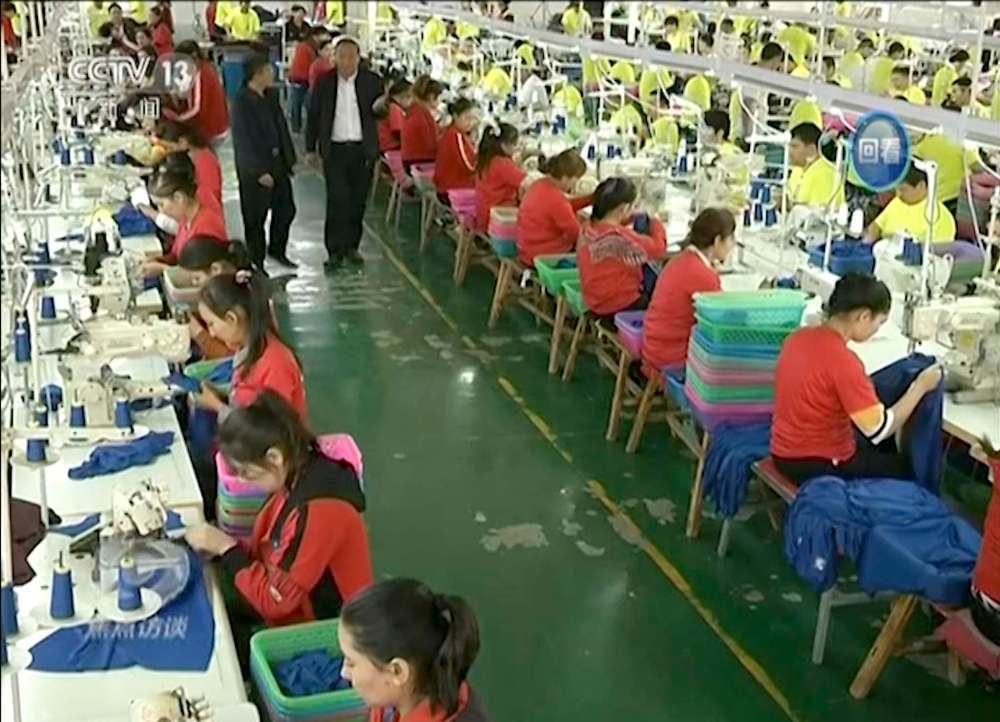
This system exists because, regardless of their regular pious denials of complicity, it profits some of our best-known brands and retailers.
Pang tells the story of one of these prisoners, an indomitable man named Sun Yi, a middle manager with the China National Petroleum Corporation in Beijing. Seeking spiritual meaning, he joined Falun Gong, a religious movement based on meditation and reincarnation.
By 1999, Falun Gong had about 70 million followers, and its attempts to stay independent of the Chinese government drew retaliation, including mass arrests. Sun was arrested and imprisoned in a labour camp whose principal business was operating a limestone quarry.
For 17 years, Sun’s life alternated between brief periods of freedom, during which he lived on the run working for the Falun Gong resistance, and periods of imprisonment with forced labour. In 2008, he was sent to Masanjia, a remote and particularly vicious labour camp. There he was assigned to a unit manufacturing plastic gravestones to be sold in America for Halloween celebrations.
Risking his life, he secretly wrote notes in his rudimentary English and smuggled them out in the product packages, telling whomever might find them that the gravestones were produced by forced labour. In 2012, in a suburb of Portland, Ore., Julie Keith opened a package and found one of the notes.

Keith went to the press. In no time, the story of the S.O.S. note went international. By this time, Sun was again free, and CNN and the New York Times succeeded in interviewing him secretly and anonymously. The Chinese government announced that it was abolishing its re-education through labour program.
Except it didn’t. It simply continued the camps under different names. In 2016, Sun fled to Indonesia. (Surprisingly, the Chinese government apparently neglected to confiscate his passport.)
Pang also covers the practice of harvesting organs from prisoners and the growth of Uyghur re-education camps in the province of Xinjiang. As a descendant of Uyghurs, and whose mother is a practitioner of Falun Gong, she risks being accused of bias. However, there are myriad reports that corroborate the accounts in her book. Organizations such as Amnesty International and the Australian Strategic Policy Institute have reported on forced labour in China.
In 2010, Winnipeg human rights lawyer David Matas (who recently became the first recipient of the Global Humanitarian of the Year Award) and MP David Kilgour were nominated for the Nobel Peace Prize for their investigation into Falun Gong members being killed for their organs. In 2019, the China Tribunal concluded that there is ample evidence that forced organ transplants have been carried out in China over the past two decades.
Pang leaves us with a moral challenge: Even if we cannot change the policies of the Chinese government, can we, at least, say “no” to the fruits of slavery?

Winnipegger John K. Collins is nostalgic for the bygone days when we were “citizens” rather than “consumers.”