Poet’s contemplative prose nearly sublime
Advertisement
Read this article for free:
or
Already have an account? Log in here »
To continue reading, please subscribe:
Digital Subscription
One year of digital access for only $1.44 a week*
- Enjoy unlimited reading on winnipegfreepress.com
- Read the E-Edition, our digital replica newspaper
- Access News Break, our award-winning app
- Play interactive puzzles
*Billed as $5.77 plus GST every four weeks. After 52 weeks, price increases to the regular rate of $19.95 plus GST every four weeks. Offer available to new and qualified returning subscribers only. Cancel any time.
To continue reading, please subscribe:
Add Free Press access to your Brandon Sun subscription for only an additional
$1 for the first 4 weeks*
- Enjoy unlimited reading on winnipegfreepress.com
- Read the E-Edition, our digital replica newspaper
- Access News Break, our award-winning app
- Play interactive puzzles
*Your next Brandon Sun subscription payment will increase by $1.00 and you will be charged $17.95 plus GST for four weeks. After four weeks, your payment will increase to $24.95 plus GST every four weeks.
Read unlimited articles for free today:
or
Already have an account? Log in here »
Hey there, time traveller!
This article was published 27/06/2020 (2310 days ago), so information in it may no longer be current.
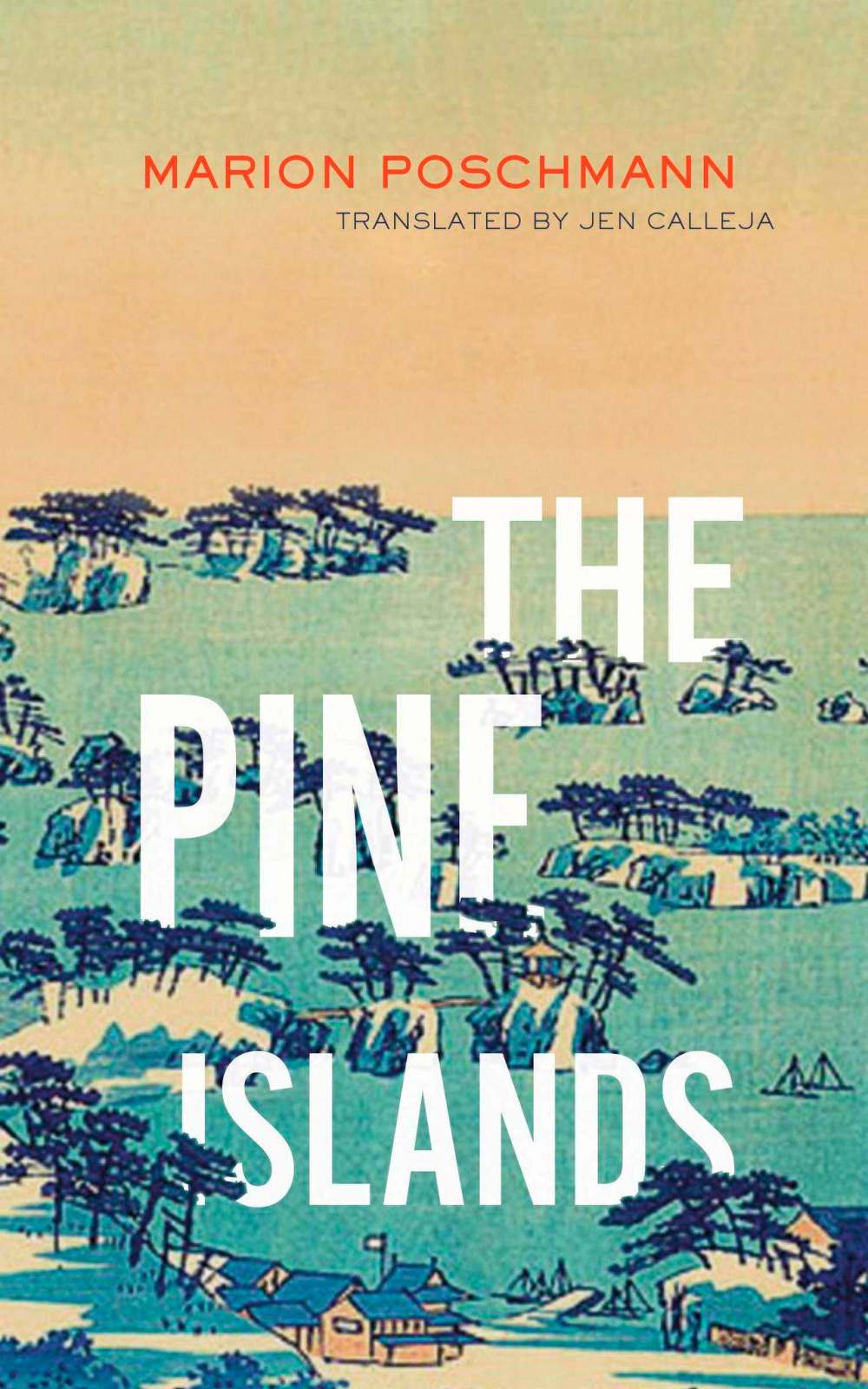
Jen Calleja deserves much praise for her translation of The Pine Islands, Marion Poschmann’s first novel to appear on these shores. Poschmann is known as a poet first and novelist second, and she brings a sense of economy and a tendency toward the interpretative to this short work. Much of the prose is about what is not said; it must have been difficult to ensure this came through as strongly in English as the original German.
The protagonist of this tale is a young academic who wakes from a dream that his wife is having an affair and can only respond by rushing out of the house without breakfast and boarding the first plane to Tokyo. From here, he undertakes a journey of performed asceticism that ranges from the bizarre to the banal, but both of these things have everything to do with the pilgrim rather than the pilgrimage.
The young scholar, Gilbert, seems convinced that every action he takes is entirely rational and obvious, and seems truly befuddled when his wife, confused and distraught, does not respond as he had rehearsed in his head. On the basis of an impulse book purchase in the Tokyo airport, Gilbert determines to trace the northward steps of a 17th-century poet’s journey to the pine islands of Matsushima.
Along the way he picks up Yosa, a Japanese university student about to hurl himself in front of a train. Using his professorial manner and limited knowledge of Japanese etiquette to boss the younger man around, Gilbert makes a companion of the young man by insisting on final approval of any proposed suicide site.
The tone and style are hard to place. There are moments of unreality, but these are more easily attributed to the perceptions of Gilbert rather than the world he inhabits. The perspective is a very tight third-person view; the reader is inside Gilbert’s head throughout, making him an almost-narrator, but there is also a significant distance.
Poschmann tells her entire story in narrative, summarizing conversations rather than directly sharing the dialogue, and summarizing Gilbert’s internal monologue as well. With the exception of one very brief phone call with his wife, the only chance to hear the protagonist use his own words is in the letters he writes.
These missives — if such they are, since it is not clear whether he actually sends these at any point — occupy an odd emotional space. “Dear Mathilda,” the heartbroken (?) Gilbert writes, before launching into a few didactic paragraphs on Japanese black pines in classical literature, or the cultural significance of facial hair to the samurai.
Poschmann has removed herself from the narrative voice, leaving it up to the reader alone to make sense of a disconnected Gilbert’s actions and words. He is a quixotic figure in the most literal sense, tilting at windmills in a quest that aims for the sublime but lands in absurdity.
Gilbert’s area of research — the significance of beards in film with respect to religious iconography, the Western canon, and the face of God — is elaborated upon enough that the reader believes real scholarship has been done here, but it also seems to have been carefully chosen to allow the author to flirt with the line between post-modernism and self-satire. As Gilbert riffs on new areas of inquiry within his specialty, the difference between insight and BS likewise seems micrometres thick.
And this is much the point. The Pine Islands is a contemplative story that questions the possibility of scheduled contemplation or a pre-determined epiphany. The novel resists any kind of definite plot or character conclusion, any correct interpretation of the ultimate theme.
Like a good Zen koan, this slim book with more questions than answers may be unsatisfying for some but yet pay, in the quieter moments, meditative dividends for others days or weeks later.
Or not. It’s hard to say what side of that insight/BS line one might end up on.
Joel Boyce is a Winnipeg writer, educator and sometimes a BS academic.