Polar bears godsend for both sides of global warming debate
Advertisement
Read this article for free:
or
Already have an account? Log in here »
To continue reading, please subscribe:

Digital Subscription
One year of digital access for only $205*
- Enjoy unlimited reading on winnipegfreepress.com
- Read the E-Edition, our digital replica newspaper
- Access News Break, our award-winning app
- Play interactive puzzles
*First annual payment billed as $205.00 + GST for one year. This annual subscription will automatically renew at $233.00 + GST every 52 weeks (10% off the regular annual price of $259.35). Offer available to new and qualified returning subscribers only. Cancel any time.
To continue reading, please subscribe:
Add Free Press access to your Brandon Sun subscription for only an additional
$1 for the first 4 weeks*
- Enjoy unlimited reading on winnipegfreepress.com
- Read the E-Edition, our digital replica newspaper
- Access News Break, our award-winning app
- Play interactive puzzles
*Your next Brandon Sun subscription payment will increase by $1.00 and you will be charged $17.95 plus GST for four weeks. After four weeks, your payment will increase to $24.95 plus GST every four weeks.
Read unlimited articles for free today:
or
Already have an account? Log in here »
Hey there, time traveller!
This article was published 02/02/2013 (4936 days ago), so information in it may no longer be current.
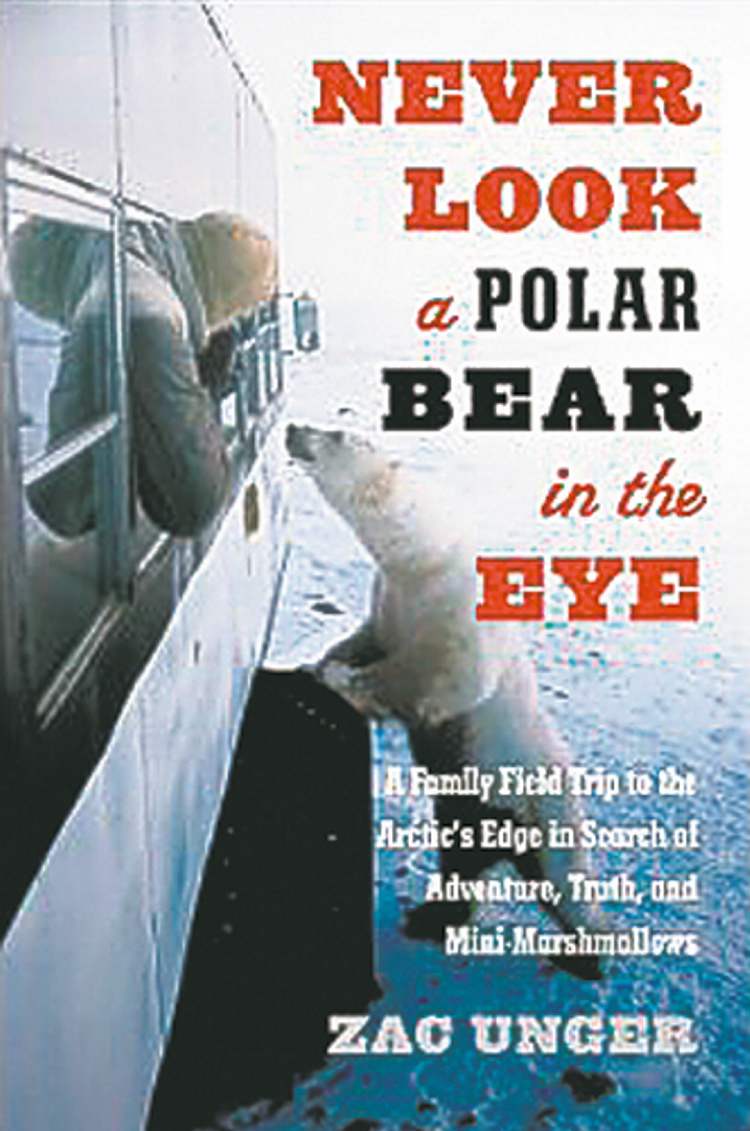
Anyone who has spent three days in Churchill already knows 50 per cent of the content of this horridly titled exposé of polar bear exploitation — not by hunters but by scientists, environmentalists, tourists, entrepreneurs and, it can’t be denied, U.S. author Zac Unger himself.
While three days might seem inadequate to the task of compiling 50 per cent of a 293-page book, let’s be serious — how long can it take to see all that a village at the mouth of the Churchill River has to offer? Or as Unger wryly summarizes: “Kelsey Boulevard boasts one grocery store, five restaurants, a hardware store and 63 fake polar bears. I know because I counted.”
To be sure, Manitoba’s tiny northern port has a lot of history, which is why in a short visit you would have seen, as Unger does, Fort Prince of Wales and Cape Merry, which is hard-by the Port of Churchill and its grain elevators.
The best road in town — the aforementioned Kelsey Boulevard — begins eight kilometres south at the airport, which, as Unger explains, is uniquely appointed and pretty much security averse. The Eskimo Museum is a block off Kelsey and a stone’s throw from the sprawling Town Centre with its movie theatre and array of amenities that few towns the size of Churchill enjoy.
The longest drive is the coastal road out to the research centre at the site of a mothballed rocket range. From the coastal road you can see a wrecked cargo plane — Miss Piggy — still trying to lift off the rock ridge that she belly-flopped onto 36 years ago, and not far away is the rusted hulk of MV Ithica, a freighter grounded in high seas that spectacularly pound the hard-rock shore of Hudson Bay.
So that’s a precis of the 50 per cent, all so seemingly familiar to Manitobans that it likely explains why none of us had the wit to see what Unger saw — a great story if you just add the other 50 per cent of this often hilarious but deeply informed page-turner.
And just to underline how miserably we neglected to see what we have in our own backyard, Unger tells us that he is a full-time firefighter in Oakland, Calif., who got to know his subject up close during a two-month leave spent in a rented Churchill townhouse with his wife (an environmental lawyer from the Yukon) and their two sons.
He might be a firefighter but Unger knows his eco-science. He has a master’s degree in environmental studies, a field he turned his back on when he realized it had little to do with actual wildlife, the outdoors or saving the planet. Instead, he found it mostly focused on theory, the minutia of collated data, attending conferences and supporting movements to ban pesticides, plastic bags and water bottles.
He also couldn’t help but notice that, for all the histrionics of the global warmers, there wasn’t much evidence that the world and all its creatures were on the brink of extinction, at least no evidence outside of hugely complicated computer models or the say-so of “big-hitter” scientists who appear on television with just-trust-me messages.
“If I wasn’t smart or patient enough to save the planet,” he explains, “at least I was smart enough and reckless enough to save some of the people on it.”
But the eco-skeptic that Unger became continued to war with the eco-warrior he had dreamed he would become. He couldn’t help but notice that as the save-the-planet-industry ballooned, its focus narrowed, finally fixing on polar bears as the rallying symbol for global-warming warriors and deniers alike.
He resolved to try to “reconvince myself of the truth of global warming” by getting to the bottom of the debate that raged in media and was led by “such experts as Rush Limbaugh.”
The quest, of course, led him to the Polar Bear Capital of the World, 1,700 kilometres north of Winnipeg and in a province so water-wealthy that he dubs it the “ooziest place I’ve ever seen.”
First, of course, he had to hunt down the world’s foremost polar bear experts, read their works and get them to agree to interviews. He had to read scientific studies conducted by the U.S. government and transcripts of American government debate.
Yes, it’s the Americans, Unger tells us, who take our polar bears most seriously, who have done most of the research and who set the agenda for Canada by raising the prospect of declaring our bears their endangered species. “Until American interest shifted north, the polar bear was the proverbial tree falling in the forest,” he writes.
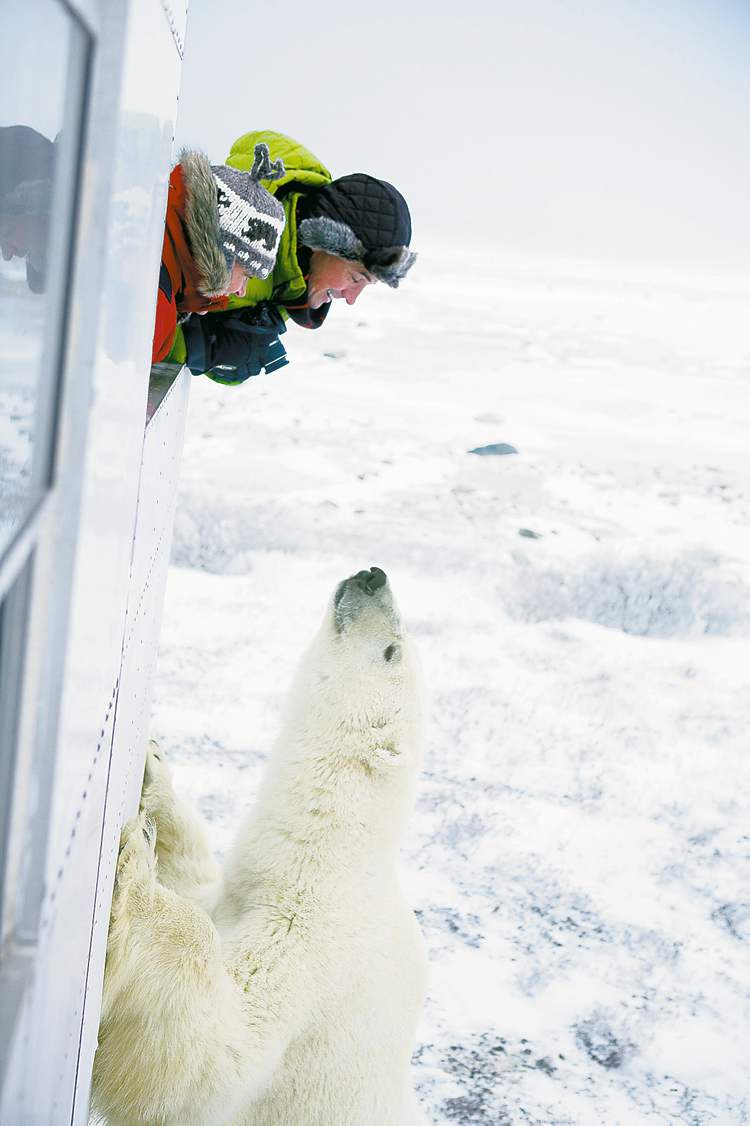
And it is Americans who, for the most part, make up the thousands of people who trek to Churchill each fall to see polar bears in the wilderness from the comfort of their hotel rooms and the safety of tundra buggies.

What Unger ultimately found on the scientific side is that even if the worst doom-and-gloom predictions come true, polar bears will not become extinct, although their population might shrink from 25,000 animals to 5,000, or about what it was 40 years ago.
What he also found is that polar bears have been a godsend to global warmers and deniers who have made careers out of lecturing, studying and writing about them.
They have been a godsend, too, to Churchill entrepreneurs who cater to the 10,000 “eco-tourists” who every year part with about $5,000 each to fly to Churchill, creating just the kind of carbon footprint that they cite as the source of polar ice-melt that threatens the bears.
Yes, hypocrites all, including Unger, who certainly must be hoping this book will reach the big audience it deserves to reach, inform and entertain, despite its terrible title.
Free Press Comment Editor Gerald Flood spent two weeks in Nunavut and Churchill in September 2012.
History
Updated on Saturday, February 2, 2013 3:38 PM CST: adds fact box