

Europe’s history of conflict ‘far from over,’ intelligence expert warns
Advertisement
Read this article for free:
or
Already have an account? Log in here »
To continue reading, please subscribe:
Monthly Digital Subscription
$1 per week for 24 weeks*
- Enjoy unlimited reading on winnipegfreepress.com
- Read the E-Edition, our digital replica newspaper
- Access News Break, our award-winning app
- Play interactive puzzles
*Billed as $4.00 plus GST every four weeks. After 24 weeks, price increases to the regular rate of $19.95 plus GST every four weeks. Offer available to new and qualified returning subscribers only. Cancel any time.
Monthly Digital Subscription
$4.99/week*
- Enjoy unlimited reading on winnipegfreepress.com
- Read the E-Edition, our digital replica newspaper
- Access News Break, our award-winning app
- Play interactive puzzles
*Billed as $19.95 plus GST every four weeks. Cancel any time.
To continue reading, please subscribe:
Add Free Press access to your Brandon Sun subscription for only an additional
$1 for the first 4 weeks*
*Your next subscription payment will increase by $1.00 and you will be charged $16.99 plus GST for four weeks. After four weeks, your payment will increase to $23.99 plus GST every four weeks.
Read unlimited articles for free today:
or
Already have an account? Log in here »
Hey there, time traveller!
This article was published 07/02/2015 (4088 days ago), so information in it may no longer be current.
He’s a prolific author, geopolitical prognosticator and much sought-after intelligence expert who uses geography and history instead of crystal balls to make mind-bending prophecies.
George Friedman is chairman and founder of Texas-based Stratfor, the world’s leading private-intelligence company, and even peered into the 22nd century in his 2009 book The Next Hundred Years, declaring Poland would become Europe’s dominant power.
This wasn’t a lame Polish joke, likely frustrating high-browed doubters who, like Friedman, won’t be alive to witness the veracity of his assertions.
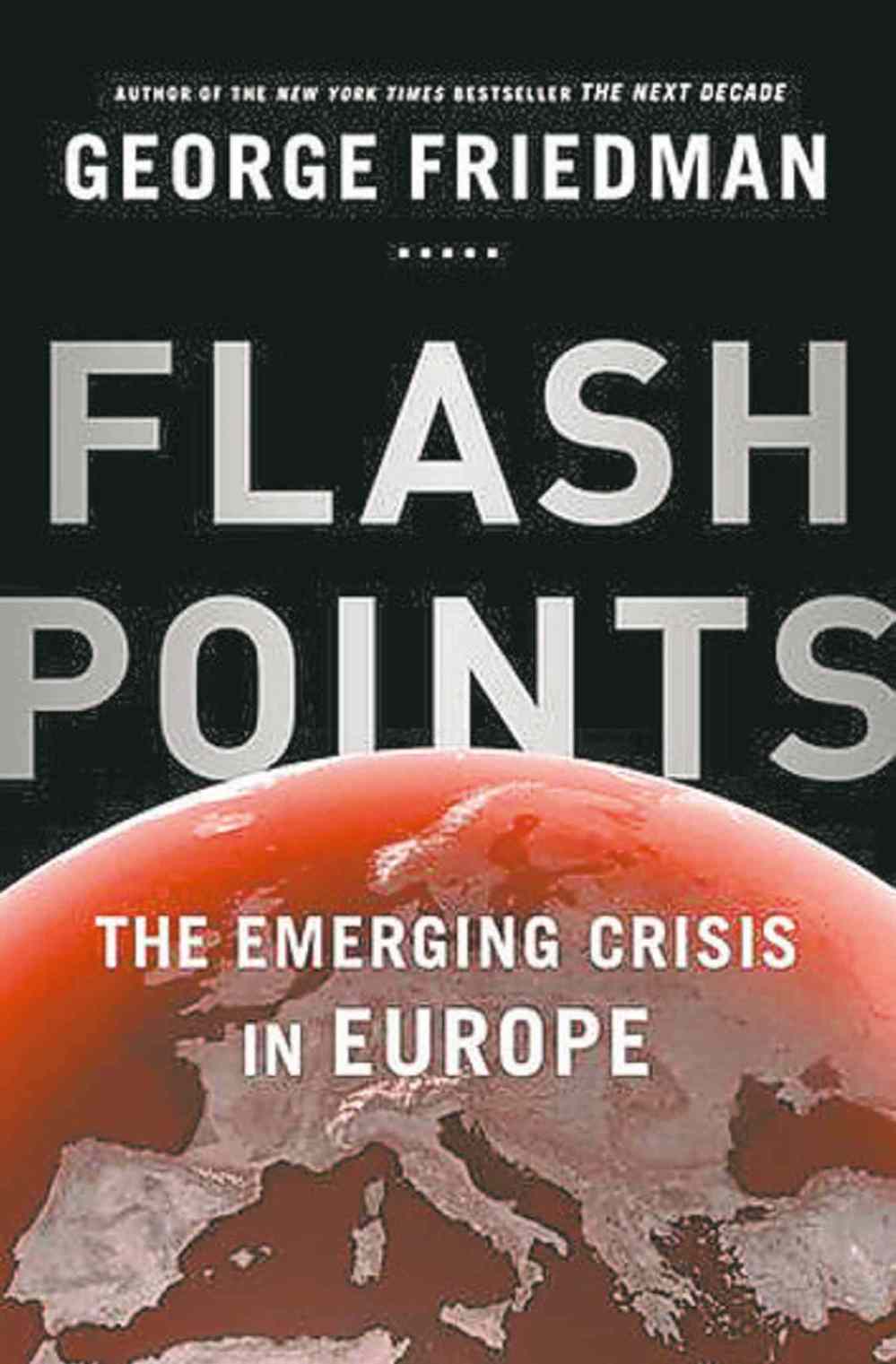
More recently, in 2011’s The Next Decade he proclaimed that pressures from maintaining U.S. world dominance posed a threat to the republic’s political process, this time igniting serious debate about the strength of American democratic institutions while renewing his reputation as one of the country’s foremost intellectuals.
In Flashpoints, Friedman combines analysis with prophecy, and wisely imposes no strict timelines for his predictions, instead emphasizing the importance of remediating concerns that continue to make headlines such as the economic problems caused by the 2008 banking crises and the conflict between Russia and Ukraine over Crimean lands.
Some personal biography woven into poignant narratives helps reveal how geography and history have always shaped Europe’s future, suggesting Friedman is intimately familiar with the lasting effects of past wars.
Friedman was born in Hungary after the Second World War, to Jewish parents fortunate to have survived the Holocaust and eventually find their way to the U.S., and he fears modern Europe — even with its 19-country eurozone, a common currency and liberal cross-border movements — is still capable of using armed conflict to settle issues.
He fears that Europeans’ desire to never again experience what occurred during the period of 1914-1945 — a time he simply calls “Thirty-One Years” — ignores flashpoints on the continents’ borderlands throughout the Caucasus, the Balkans and along the Black and Mediterranean seas.
He reminds readers that the unprecedented slaughter, which led to “55 million dead from World War II and over 16 million from World War I” and which “signalled the twilight of Europe,” was caused by similar borderland flashpoints that set off wider conflagrations fuelled by a system of alliances.
According to Friedman, the future is dictated by the fact that no continent “is as small and fragmented as Europe,” where immigrants and refugees, mainly Muslims from war-torn regions in Iraq, Syria and Libya, today mix with unemployed people throughout southern and eastern regions, seeking work in more viable economies in northern Europe.
The European Union was designed to emulate the success of America’s union of diverse states; in his view, however, it hasn’t resulted in a corresponding melting pot of one culture, and huge economic differences between countries remain, in spite of co-operative endeavours between former imperialist powers such as Portugal, Spain, France and Britain.
The troubling increase of extremist right-wing nationalist movements throughout Christian Europe, and most recently the electoral successes of a radical left-wing political party in Greece, makes Friedman’s claim that “Europe’s history of conflict is far from over” appear especially prescient.
The book’s title alludes to historical precedence in the most volatile borderland regions: Crimea and Eastern European countries such as Romania and Hungary that act as a buffer between Russia and Germany.
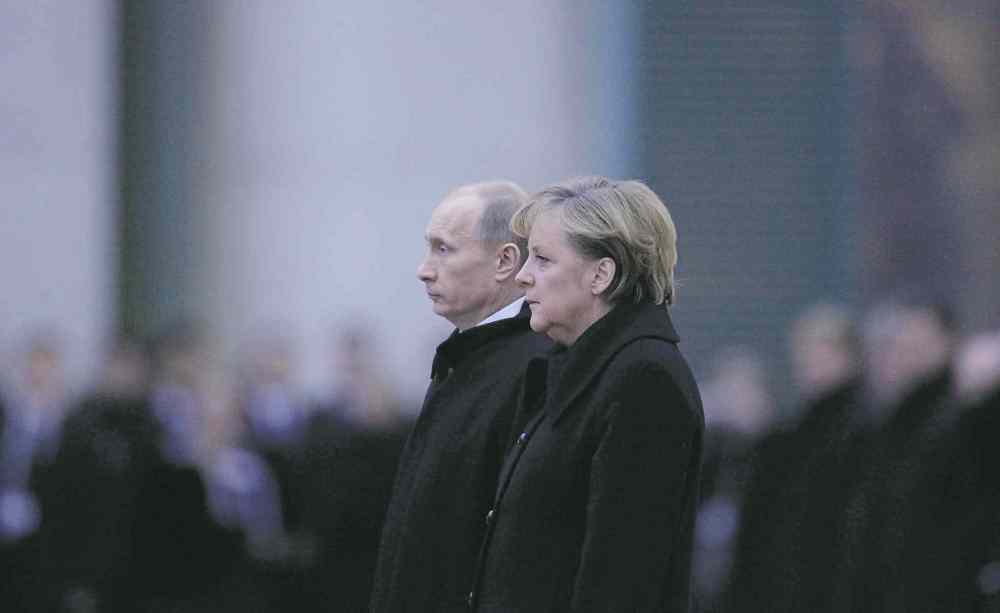
Along with Ukraine, they are again caught between a resurging Russia, led by ºber-nationalist Vladimir Putin, and Germany, the economic powerhouse of Europe.
Friedman suggests that Russia doesn’t want to dominate the region, but “it does want to limit the power of NATO in the east” and is forcing eastern Europe to “recalculate its strategic position” while challenging Germany, which again is “greatly admired but also deeply resented” by other Europeans.
Friedman’s heady views agree with those from more practical observers like the legendary financier George Soros, who isn’t mentioned but is also a critic of Germany’s stance in pursuing austerity programs for its European partners in exchange for bailout cash from the European Central Bank.
He, like Friedman, views the ongoing financial instability as a precursor to political turmoil and potential violence, all this being a reminder to Europeans that it’s best to keep an eye on the rear-view mirror lest history overtake them.
Joseph Hnatiuk is a retired teacher in Winnipeg.
History
Updated on Saturday, February 7, 2015 8:18 AM CST: Formatting.