Present tense
Doctorow's dark, dystopian stories feel all too rooted in real life
Advertisement
Read this article for free:
or
Already have an account? Log in here »
To continue reading, please subscribe:

Digital Subscription
One year of digital access for only $205*
- Enjoy unlimited reading on winnipegfreepress.com
- Read the E-Edition, our digital replica newspaper
- Access News Break, our award-winning app
- Play interactive puzzles
*First annual payment billed as $205.00 + GST for one year. This annual subscription will automatically renew at $233.00 + GST every 52 weeks (10% off the regular annual price of $259.35). Offer available to new and qualified returning subscribers only. Cancel any time.
To continue reading, please subscribe:
Add Free Press access to your Brandon Sun subscription for only an additional
$1 for the first 4 weeks*
- Enjoy unlimited reading on winnipegfreepress.com
- Read the E-Edition, our digital replica newspaper
- Access News Break, our award-winning app
- Play interactive puzzles
*Your next Brandon Sun subscription payment will increase by $1.00 and you will be charged $17.95 plus GST for four weeks. After four weeks, your payment will increase to $24.95 plus GST every four weeks.
Read unlimited articles for free today:
or
Already have an account? Log in here »
Hey there, time traveller!
This article was published 04/05/2019 (2698 days ago), so information in it may no longer be current.
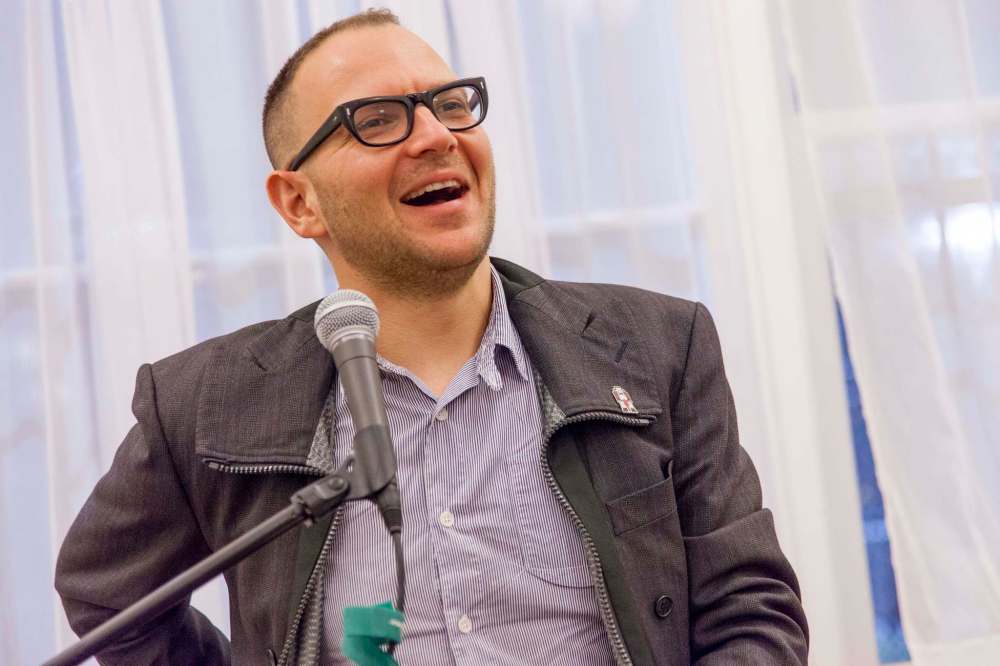
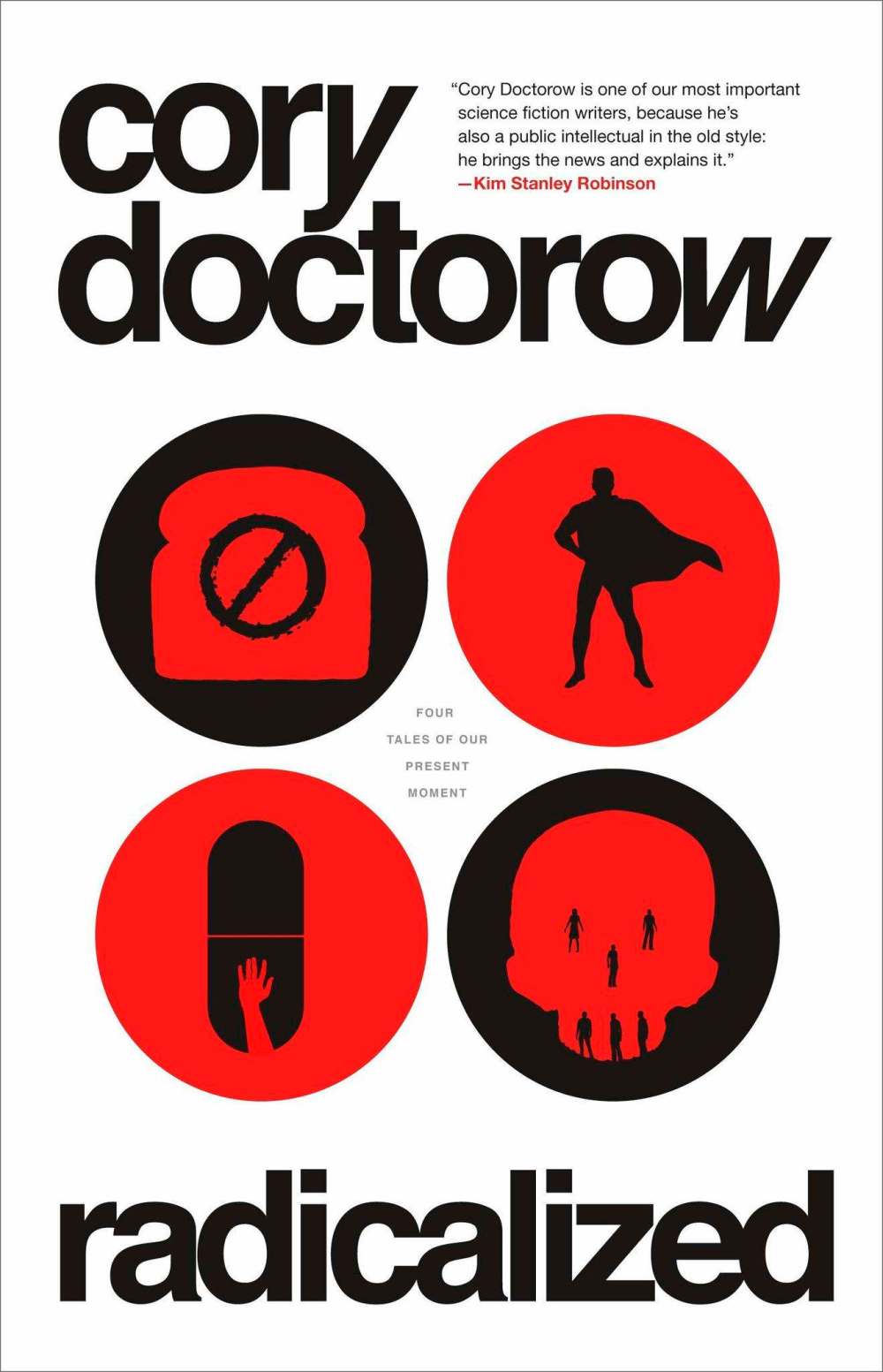
The tagline of Cory Doctorow’s latest release is “dystopia is now.” In four novellas, the Canadian ex-pat ably covers a broad swath of pressing social concerns ranging from police racism to affordable American health care through an only slightly science-fictional lens.
No prior volume has so perfectly encapsulated who Doctorow is or what he thinks we should be worrying about as this one does. In the past, a new reader might have had to read lots of long essays about Makerspaces and net neutrality and the Digital Millennium Copyright Act on his website to get the whole picture.
But now, the answer to the question of where to start with Doctorow can be answered with “right here.”
Previous novels Little Brother and Homeland were like instruction manuals for millennial and generation Z activists, written in the shadow of George W. Bush’s war on terror and the 2008 financial crisis, respectively. They represented moments in time when government curtailment of civil liberties and economic oppression by corporate interests seemed to demand a response.
But that response — a particular brand of socialist and technogeek activism that blends community organizing with internet crowd-sourcing — is even better encapsulated in Unauthorized Bread, in which a young newcomer to the United States risks everything to bust open the operating system of her smart toaster so that she, and an entire building full of refugees, can actually afford to eat.
What starts as a quirky and very readable tale of technology run amok turns out to be much more, as it turns out the landlords of her building, whose tenant agreements leverage copyright law to lock renters into using the provided appliances, are getting kickbacks on the purchase and use of proprietary foodstuffs in their building.
It’s only one step beyond printer software that refuses to recognize cheaper, off-brand ink, but what seems at first to be just an obnoxious business model turns more sinister as the story reveals the collusion of landlords, government officials and appliance corporations to squeeze more money out of low-income housing denizens than they are legally allowed to through rent.
If you put it that way, what choice do we have but to hack our toasters?
Not all the stories are quite as hopeful as this one. In fact, the stories in Radicalized show Doctorow at his darkest.
The title story describes a new domestic terrorism threat, from the point of view of the terrorists, distraught fathers and husbands losing their families to treatable diseases thanks to shady insurance practices and bought-and-paid-for legislators.
When young children die because of denied claims, it sets off in the reader a righteous and fiery anger. But when that anger leads to suicide bombs and mass shootings, that flame leaves a black, oily pit inside, and all most readers will want to do is put the book down, hug their kids and thank their stars that they live in Canada.
The real trick of this story is its ability to use a reader’s most liberal sensibilities to begin to identify with the perpetrators of extremist violence. The story of man’s trip down the rabbit hole provides a window into the process by which right-wing extremists motivated by either the Islamic State group or the Ku Klux Klan themselves become radicalized. The takeaway?

It often starts with a legitimate grievance.
In Doctorow’s last novel, Walkaway, the one per cent own everything and a significant number of economically bottom-tier people simply exit capitalist society to start communes built from anarchist social-organization principles and 3D printers and ad-hoc network infrastructures. At one point, a character describes two approaches to life when it all falls apart: go for the guns, or go knock on your neighbour’s door with a covered dish and say “how can we help?”
With his final novella, Doctorow flips the script on Atlas Shrugged, Ayn Rand’s libertarian power fantasy, and makes his best argument that we should all strive to be covered-dish people.
Throughout this collection, certainly the author’s most urgent, there are two running arguments: if we keep organizing the structural reasons for terrorism, income inequality and racism, things are not going to get better. And if they are going to get better, it will be because we made it so, together.
Joel Boyce is a Winnipeg writer and educator.