Questions of character arise in historic New Brunswick murder
Advertisement
Read this article for free:
or
Already have an account? Log in here »
To continue reading, please subscribe:

Digital Subscription
One year of digital access for only $205*
- Enjoy unlimited reading on winnipegfreepress.com
- Read the E-Edition, our digital replica newspaper
- Access News Break, our award-winning app
- Play interactive puzzles
*First annual payment billed as $205.00 + GST for one year. This annual subscription will automatically renew at $233.00 + GST every 52 weeks (10% off the regular annual price of $259.35). Offer available to new and qualified returning subscribers only. Cancel any time.
To continue reading, please subscribe:
Add Free Press access to your Brandon Sun subscription for only an additional
$1 for the first 4 weeks*
- Enjoy unlimited reading on winnipegfreepress.com
- Read the E-Edition, our digital replica newspaper
- Access News Break, our award-winning app
- Play interactive puzzles
*Your next Brandon Sun subscription payment will increase by $1.00 and you will be charged $17.95 plus GST for four weeks. After four weeks, your payment will increase to $24.95 plus GST every four weeks.
Read unlimited articles for free today:
or
Already have an account? Log in here »
Hey there, time traveller!
This article was published 10/09/2016 (3673 days ago), so information in it may no longer be current.
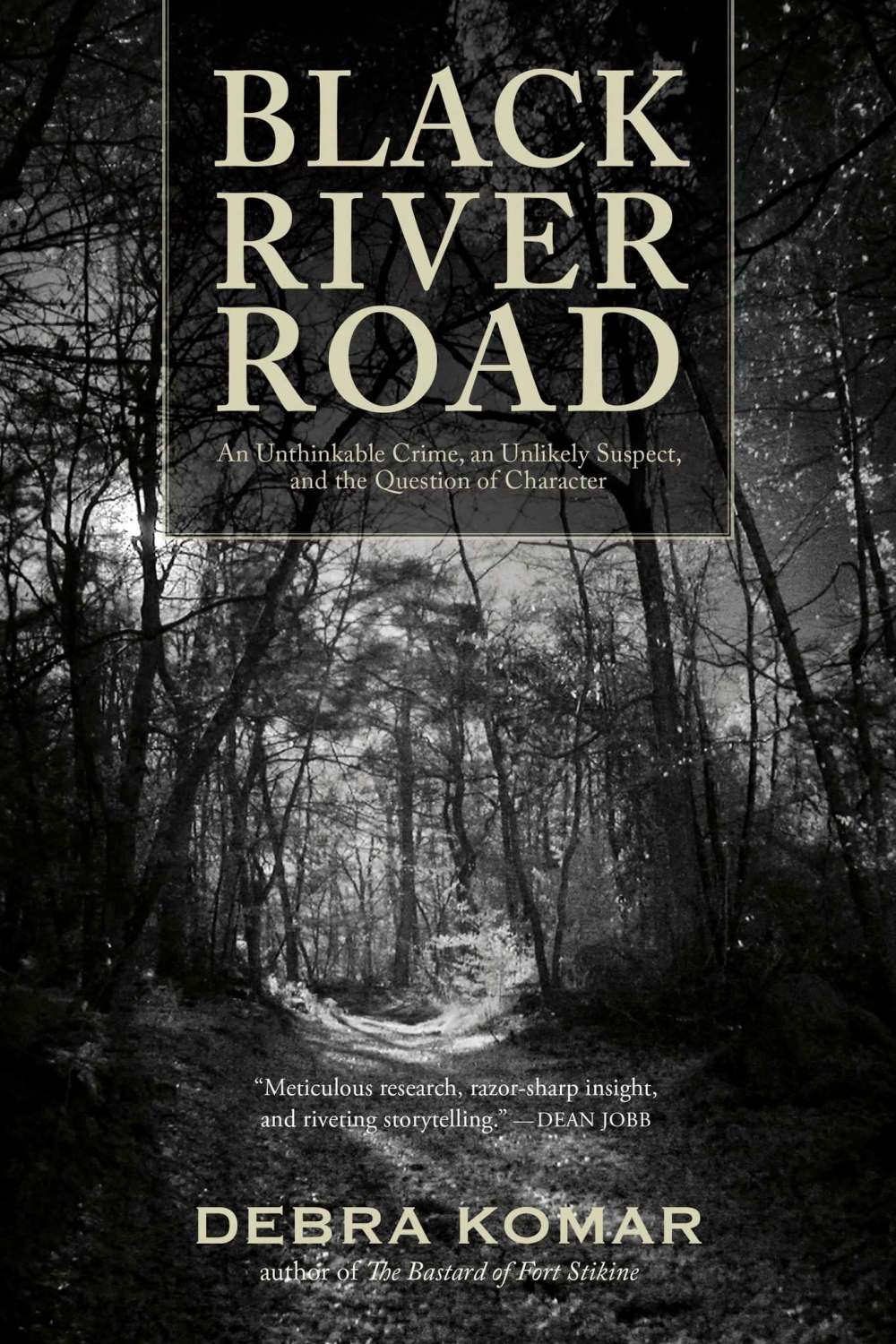
Black River Road is an intriguing piece of social history that has a few surprising things to tell us about life, love and crime in 19th-century New Brunswick. Unfortunately, the book’s Ontario-born author, Debra Komar, an accomplished forensic anthropologist and former UN human rights investigator, has burdened it with an argument about the case’s contemporary significance that is, at best, underdeveloped.
The book focuses on the tale of an upper-class seducer and murderer, John Munroe, and the young, impoverished woman he victimized and murdered, Maggie Vail. The son of the assistant fire chief of Saint John, N.B., Munroe was, while still in his 20s, a successful architect, married with two children, residing in a fashionable neighbourhood.
In 1865, he began to court the 20-year-old Vail. While her older sister Phileanor disapproved of the relationship, she allowed the two to meet at her home over the next two years. The romance began to sour in early 1868 when Maggie gave birth to a daughter, Ella, and registered Munroe as the child’s father. Surprisingly, no scandal appears to have arisen, although Munroe declined to provide ongoing child support.
To survive, Maggie sold her recently deceased father’s house and set out in pursuit of Munroe, living in a string of often unfriendly boarding houses and hotels.
In the fall of 1868, Munroe hired a coach and driver to take him, Maggie and Ella down Black River Road in the New Brunswick countryside. In mid-journey, Munroe ordered the driver to drop him and the two passengers off near a spot known as Willow Grove. The driver was to return to a local tavern and wait for them. A short while later Munroe showed up at the tavern, announced the other passengers were staying with friends and had the driver take him back to Saint John.
A year later, the remains of a woman and infant child were found at Willow Grove. There was a bullet hole in the woman’s skull and an effort had been made to hide the bodies.
Maggie and her daughter had not been seen during the previous year. Much to the apparent surprise of the Saint John establishment, Munroe was charged with Maggie’s murder. He acknowledged the relationship, but said that when he took her into the woods he had been delivering her to her fiancé, with whom she planned to travel to the United States.
Komar writes that the Munroe trial was “arguably” the first case in Canada where the accused’s lawyer undertook an active defence of his client, and the first to make use of character witnesses to do so. To this end, more than 30 witnesses were brought forward to testify that Munroe could not have committed murder. More fool they — after Munroe was convicted and prior to his execution, he wrote a full confession.
Komar is in full control of the story — and candid about those mysteries that remain unknown — and tells it with assurance and clarity. It is a small tragedy aptly told.

But her efforts to draw out contemporary lessons in relation to questions of legal theory (“Is every person capable of murder?”) and legal practice (“Does character evidence have a place in court?”) feel strained. In arguing the first point, she suggests Victorian social and religious thinking held that men such as Munroe were “congenitally good.” While there is evidence many found it difficult to believe a man of his social standing could commit murder, the jurors appear to have had little difficulty overcoming any social biases and reaching a guilty verdict.
Nor did religious thinking of the day hold that man was good. Munroe was raised in the Methodist church, whose members regularly confessed their sins with a prayer that ended “there is no health in me.”
On the book’s final page, Komar writes that it is time to remove character evidence from criminal trials, where she says it serves as a “source of bias, misdirection and emotional bearbaiting.”
This may well be the case, but the book under consideration is a poor platform for launching such an argument.
Doug Smith is a Winnipeg writer and author of two Manitoba true crime books: As Many Liars: The Story of the 1995 Manitoba Vote-Splitting Scandal; and How to Tax a Billionaire: Project Loophole Case and the Campaign for Tax Fairness.