Real-life Stieg Larsson tale like a Norse saga

Advertisement
Read this article for free:
or
Already have an account? Log in here »
To continue reading, please subscribe:

Digital Subscription
One year of digital access for only $205*
- Enjoy unlimited reading on winnipegfreepress.com
- Read the E-Edition, our digital replica newspaper
- Access News Break, our award-winning app
- Play interactive puzzles
*First annual payment billed as $205.00 + GST for one year. This annual subscription will automatically renew at $233.00 + GST every 52 weeks (10% off the regular annual price of $259.35). Offer available to new and qualified returning subscribers only. Cancel any time.
To continue reading, please subscribe:
Add Free Press access to your Brandon Sun subscription for only an additional
$1 for the first 4 weeks*
- Enjoy unlimited reading on winnipegfreepress.com
- Read the E-Edition, our digital replica newspaper
- Access News Break, our award-winning app
- Play interactive puzzles
*Your next Brandon Sun subscription payment will increase by $1.00 and you will be charged $17.95 plus GST for four weeks. After four weeks, your payment will increase to $24.95 plus GST every four weeks.
Read unlimited articles for free today:
or
Already have an account? Log in here »
Hey there, time traveller!
This article was published 25/06/2011 (5553 days ago), so information in it may no longer be current.
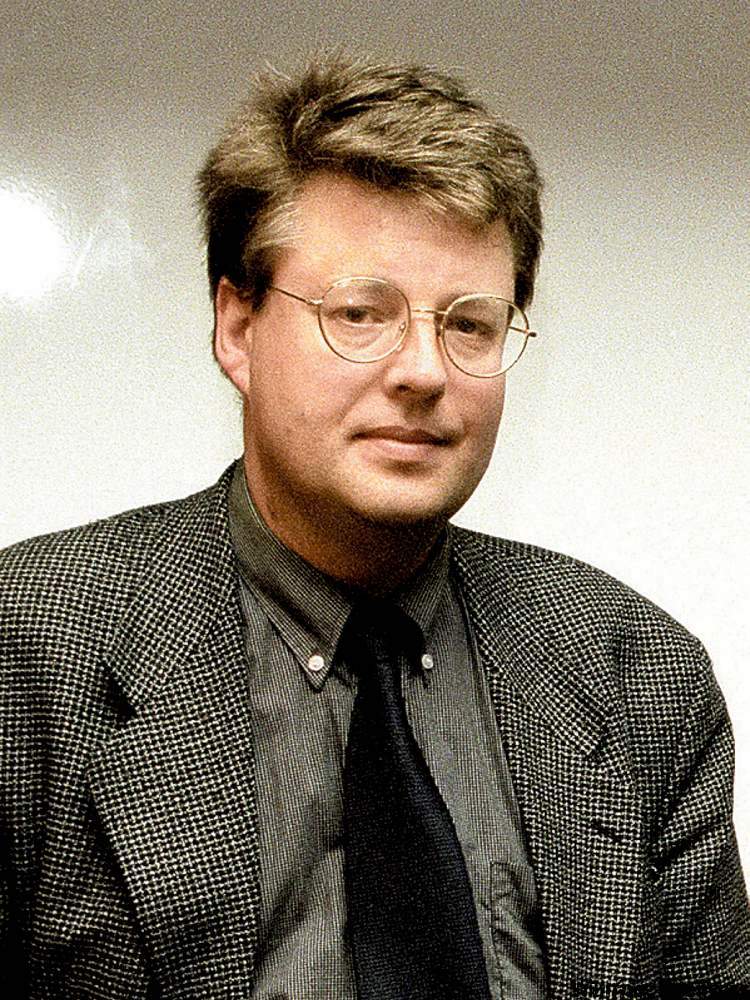
Any good Norse saga features an intractable family feud, death and usually a legal dispute. The tale of Stieg Larsson has it all.
Given the huge posthumous success of his Millennium trilogy (The Girl with the Dragon Tattoo, The Girl Who Played with Fire, and The Girl Who Kicked the Hornet’s Nest), it’s not surprising a bitter postscript to Larsson’s life has become as gripping as his fiction.
The novels have sold more than 27 million copies worldwide, and have been adapted into successful films in Sweden. The Hollywood version of the first book, starring Daniel Craig and Rooney Mara, hits theatres this December.
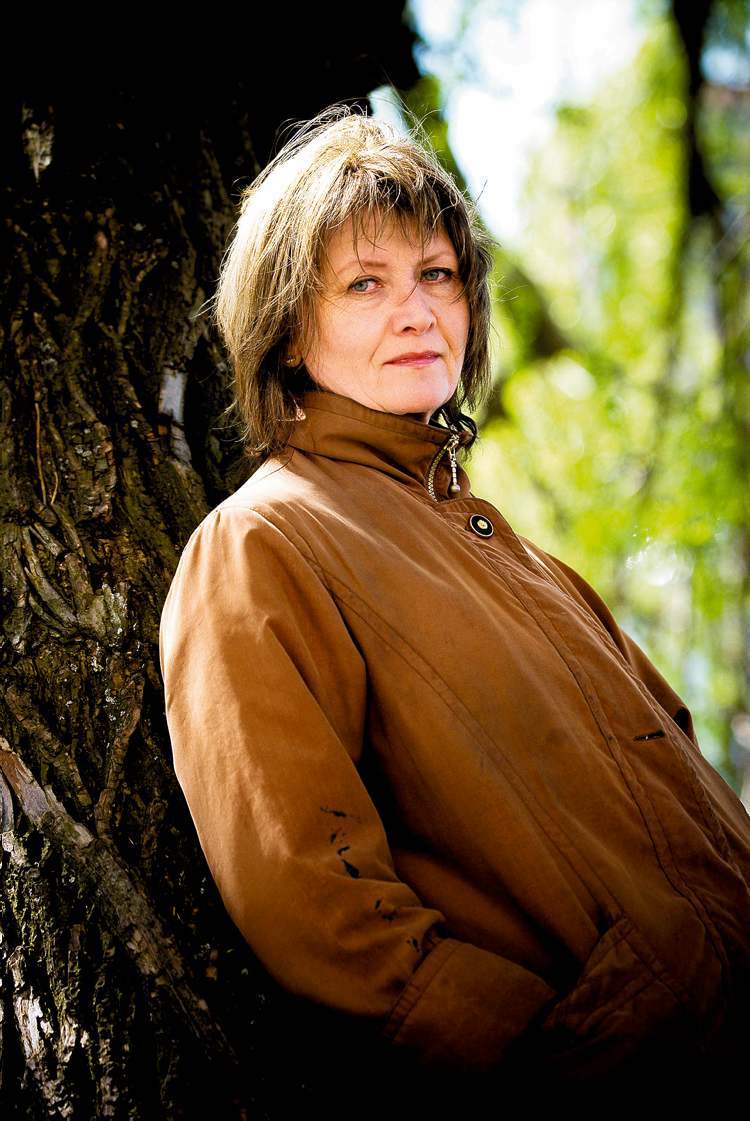
Sadly, Larsson’s partner of 32 years, Eva Gabrielsson, won’t see a dime or have a hand in managing his literary legacy. Her new memoir is a long-anticipated broadside at her main foes in her protracted legal battle, Larsson’s father Erland and brother Joakim.
Larsson died of a heart attack in November 2004. But Swedish law grants no marital status to what in Canada would be common-law couples.
Now, Larsson’s father and brother — whom he barely knew as a child, having been raised by his maternal grandparents in northern Sweden until he was eight years old — have claimed all rights to his novels. And to Gabrielsson’s chagrin, Larsson’s publisher Norstedts has gone along with it.
Gabrielsson’s memoir is full of vignettes of Larsson’s life, from his childhood to their time together in social and political struggles. Fans of his novel will delight in the reasons why he chose details for his fiction. A crucial Ford in one novel is based on his grandfather’s car; he set a pivotal scene aboard a sailboat because he and Gabrielsson spent many hours sailing around Sweden’s islands; and many characters were based on real people they both knew.
The early separation between Larsson and his parents engendered a lasting emotional distance. According to Gabrielsson, the second and final time Larsson’s brother Joakim set foot in his apartment was the day of his funeral.
Unfortunately, Gabrielsson and Larsson never married, despite living together for 30 years, in order to escape detection by his political enemies in far right and neo-Nazi groups.
Thus, watching the legal train wreck over Larsson’s legacy unfold in Gabrielsson’s account is as gripping as anything Larsson himself wrote.
Larsson’s father Erland and brother Joakim barely come into the story until Larsson dies, which may be the most damning aspect of the book. And then, despite protests they “didn’t want any part of Stieg’s estate,” it dawns on Gabrielsson, reeling from shock at her partner’s death, they aren’t just slow to respond to her attempts to straighten out Larsson’s affairs. They’re secretly freezing her out.
The ironies are cruel. Larsson had actually composed a will in 1977, before leaving for a dangerous sojourn in Africa. In it he left everything to Gabrielsson, but did not have it witnessed. She only discovered the document when looking for an old letter of his to read at his memorial service.
Larsson had also eagerly agreed, on the advice of Norstedt, to set up a company owned by himself and Gabrielsson, to control his rights and royalties. But she learned after his death he never got around to doing it.
It would be easy to forgive her a little bitterness, yet the memoir is largely free of it. She prefers to skewer Erland and Joakim with frank accounts of their deception and arrogance. Outrageously, Erland suggests (and later repeats publicly) their legal problems could be solved if Gabrielsson would agree to marry him.
She also disparages false friends who emerged after Larsson’s death who “trot out apocryphal memories and bizarre stories about Stieg for the media or in books.” It’s hard not to wonder if Kurdo Baksi’s memoir, Stieg Larsson, My Friend, published by Norstedts (Gabrielsson’s, significantly, is not), is a target here.

Gabrielsson also asserts she has the manuscript for Larsson’s unfinished fourth novel, The Vengeance of the Gods, and that she’s quite capable of finishing it. That manuscript is the only card she holds in negotiations with Erland and Joakim.
Sadly, despite his death, the tale of Stieg Larsson is not over. Though there are other stories of his life out there — Baksi’s, as well as Barry Forshaw’s biography The Man Who Left Too Soon — Gabrielsson’s is likely the most personal we’ll see. But there will be no complete picture of his life and legacy until the dispute over his work is settled.
And like any Norse saga, it may take a generation or two. Gabrielsson isn’t likely to give up. “I know how [Stieg] would react in every situation I’m facing today,” she writes. “He would fight.”
David Jón Fuller is a Winnipeg writer and editor.
Our newsroom depends on a growing audience of readers to power our journalism. If you are not a paid reader, please consider becoming a subscriber.
Our newsroom depends on its audience of readers to power our journalism. Thank you for your support.
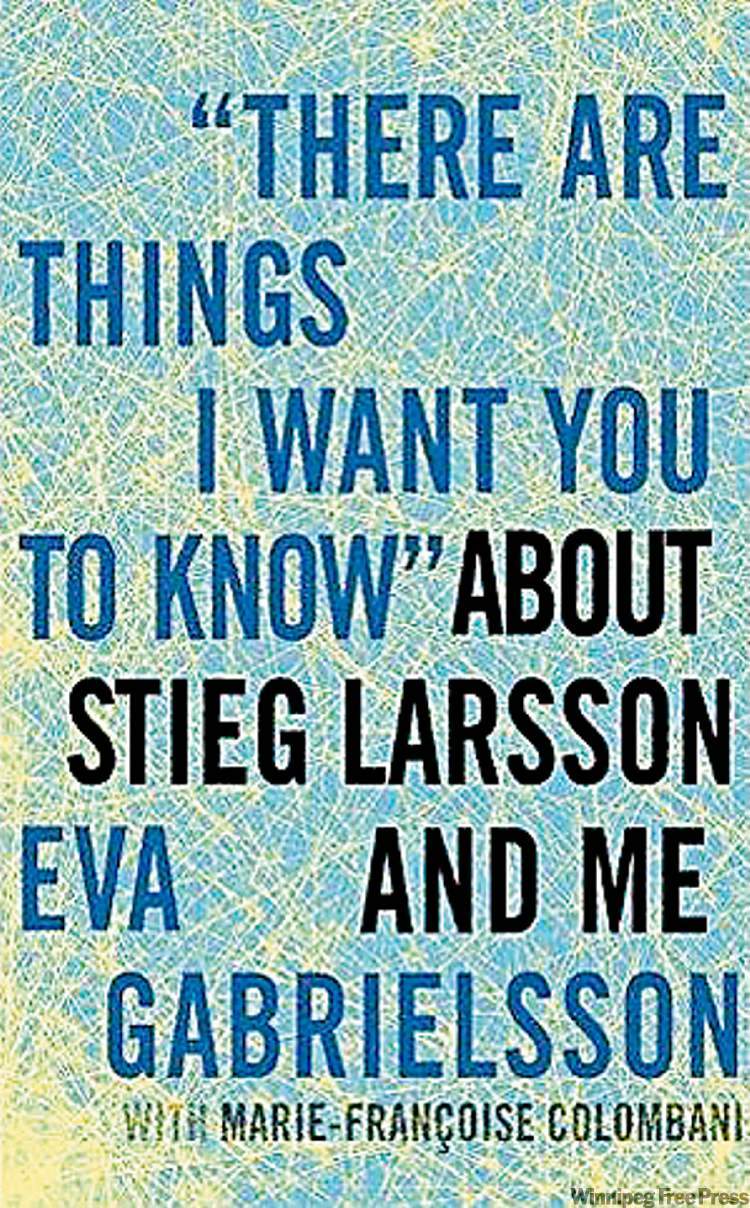
“There Are Things I Want You to Know” about Stieg Larsson and Me
By Eva Gabrielsson
Seven Stories Press, 211 pages, $27
Our newsroom depends on a growing audience of readers to power our journalism. If you are not a paid reader, please consider becoming a subscriber.
Our newsroom depends on its audience of readers to power our journalism. Thank you for your support.
Related Articles
Stieg Larsson merits more complete biography

Advertisement Advertise With Us
Advertisement Advertise With Us