Relationship of doctors, Big Pharma explored
Advertisement
Read this article for free:
or
Already have an account? Log in here »
To continue reading, please subscribe:

Digital Subscription
One year of digital access for only $205*
- Enjoy unlimited reading on winnipegfreepress.com
- Read the E-Edition, our digital replica newspaper
- Access News Break, our award-winning app
- Play interactive puzzles
*First annual payment billed as $205.00 + GST for one year. This annual subscription will automatically renew at $233.00 + GST every 52 weeks (10% off the regular annual price of $259.35). Offer available to new and qualified returning subscribers only. Cancel any time.
To continue reading, please subscribe:
Add Free Press access to your Brandon Sun subscription for only an additional
$1 for the first 4 weeks*
- Enjoy unlimited reading on winnipegfreepress.com
- Read the E-Edition, our digital replica newspaper
- Access News Break, our award-winning app
- Play interactive puzzles
*Your next Brandon Sun subscription payment will increase by $1.00 and you will be charged $17.95 plus GST for four weeks. After four weeks, your payment will increase to $24.95 plus GST every four weeks.
Read unlimited articles for free today:
or
Already have an account? Log in here »
Hey there, time traveller!
This article was published 12/08/2017 (3265 days ago), so information in it may no longer be current.
Joel Lexchin has been practising medicine in Canada for years, mostly in emergency rooms in southern Ontario. He also taught health policy at York University and, in this book, there’s not the slightest doubt as to where he stands in whatever might remain in the way of a public debate about the relationship between Canada’s doctors and major drug companies.
There’s not much of a “spoiler” in going directly to his conclusion late in the book: “By allying itself with the pharmaceutical industry the medical profession has forsaken its responsibilities to patients in favour of the private values of industry that are concerned with the need to earn a profit, not to protect public health.”
It will be of interest to Manitoba readers that this book appears just as Premier Brian Pallister’s PC government is in the midst of a major overhaul of health-care delivery. The role of “Big Pharma,” as Lexchin calls it, has so far received relatively scant attention in this province, and there’s virtually no specific reference by Lexchin to Manitoba examples in the building of his familiar case about the cosy relationship between major drug companies and health-care professionals.
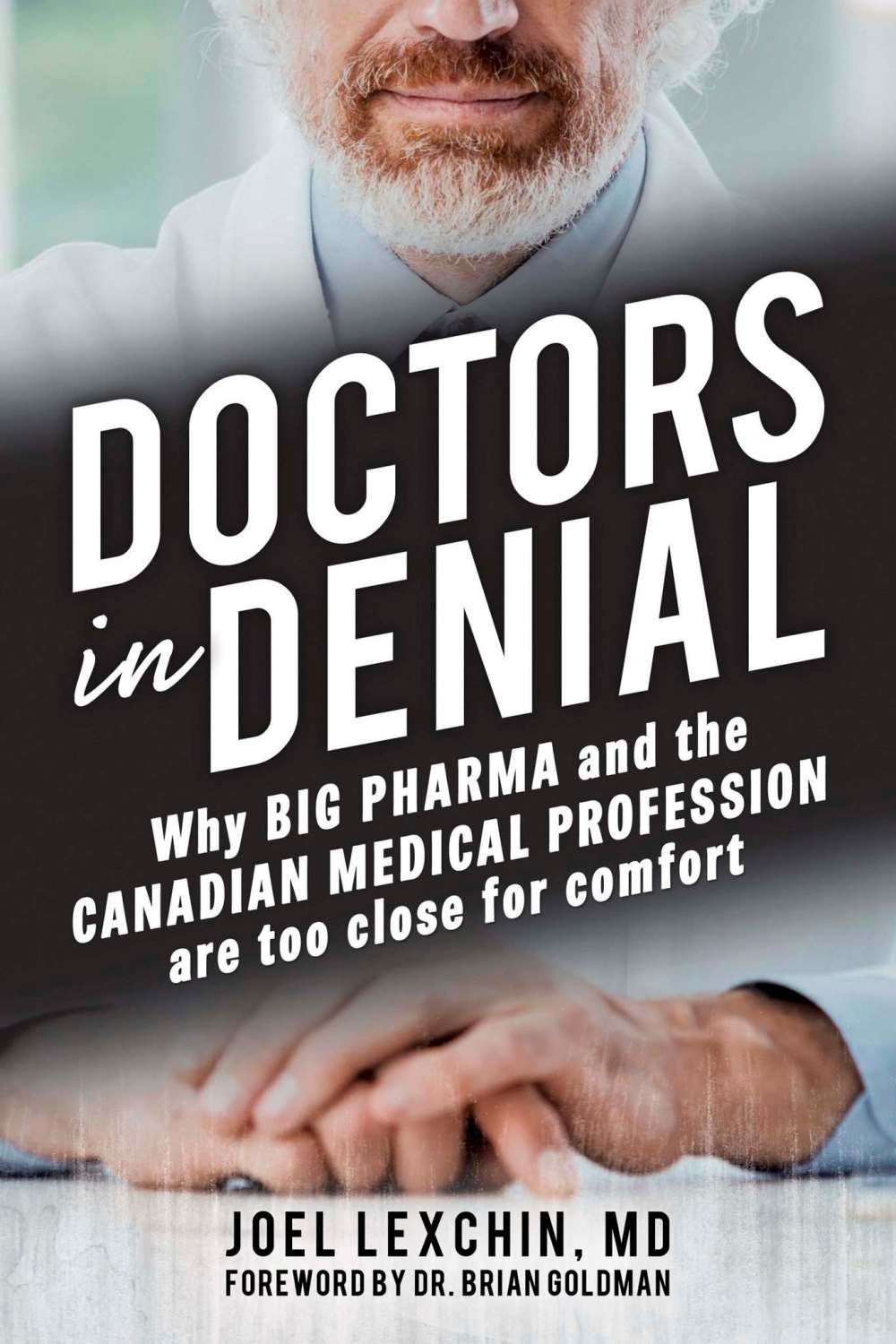
Just as Doctors in Denial was hitting bookshelves, 10 drug companies based in Ontario were releasing limited information about how much money and other favours they gave to physicians. The total? The 10 companies gave more than $48 million in 2016, with almost no information provided about specific amounts that were given to individuals.
Part of the problem in getting Big Pharma to disclose more information of this kind is the divided jurisdiction for health in Canada. Lexchin argues that Ottawa should take charge of the issue and force drug companies to disclose more specific and detailed information.
But the current federal minister, Jane Philpott, so far has followed the example of her predecessors in declaring that it’s basically a provincial issue.
To a great extent, the book follows the “usual suspects,” such as the money drug companies put up for scholarships to medical schools in the hope that newly minted doctors will do the right thing for their benefactors when they’re prescribing to their patients. There are also those infamous “samples,” happily supplied by the visiting pharmaceutical reps, that many physicians continue to hand out during office visits, so that patients don’t even need to be bothered going to the pharmacy and opening their wallets.
Referring to the opioid crisis, Lexchin points a very specific finger at Purdue, the company that manufactures OxyContin. In the United States, the company has been fined hundreds of millions of dollars for failing to supply adequate warnings about the dangers of addiction to their product. No such penalities has ever been imposed here in Canada.
Roger Currie is a Winnipeg writer and broadcaster.