Rich, restless survival novel a stellar sanctuary

Advertisement

Advertise with us

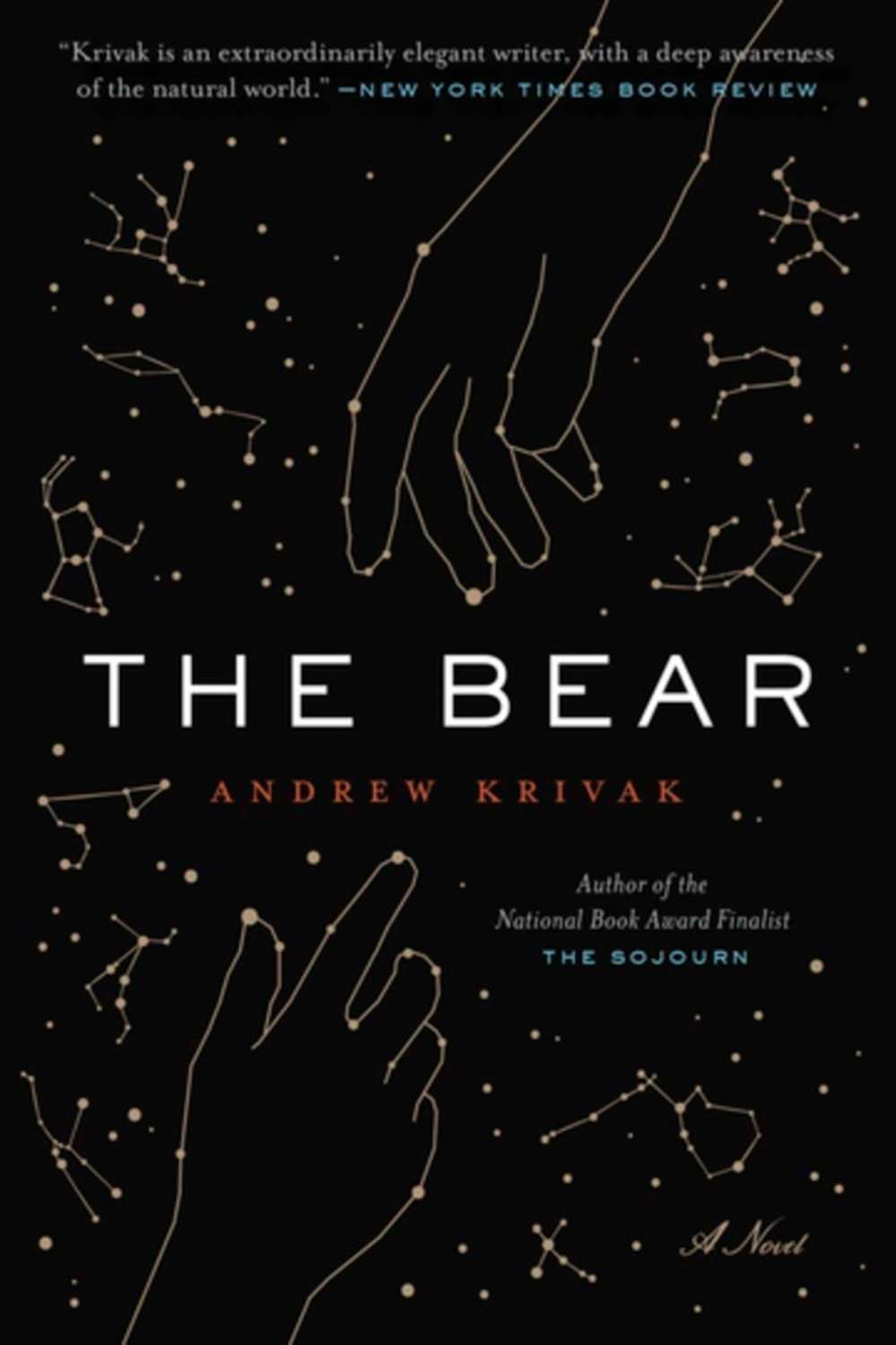
Set in a landscape inspired by southern New Hampshire’s Mount Monadnock and its surroundings, Andrew Krivak’s third novel The Bear relates the tale of “[t]he last two… a girl and her father.” At first glance this scenario seems particularly apt for these restless days of pandemic and climate crisis, yet the story itself feels, in many ways, like sanctuary.

Read this article for free:


or

Already have an account? Log in here »

To continue reading, please subscribe:

Subscribe and receive a limited-edition Free Press branded hat or tote.

Digital Subscription

One year of digital access for only $205*

  • Enjoy unlimited reading on winnipegfreepress.com
  • Read the E-Edition, our digital replica newspaper
  • Access News Break, our award-winning app
  • Play interactive puzzles

*First annual payment billed as $205.00 + GST for one year. This annual subscription will automatically renew at $233.00 + GST every 52 weeks (10% off the regular annual price of $259.35). Offer available to new and qualified returning subscribers only. Cancel any time.

To continue reading, please subscribe:

Add Free Press access to your Brandon Sun subscription for only an additional

$1 for the first 4 weeks*

  • Enjoy unlimited reading on winnipegfreepress.com
  • Read the E-Edition, our digital replica newspaper
  • Access News Break, our award-winning app
  • Play interactive puzzles
Start now

*Your next Brandon Sun subscription payment will increase by $1.00 and you will be charged $17.95 plus GST for four weeks. After four weeks, your payment will increase to $24.95 plus GST every four weeks.

Hey there, time traveller!
This article was published 21/03/2020 (2377 days ago), so information in it may no longer be current.

Set in a landscape inspired by southern New Hampshire’s Mount Monadnock and its surroundings, Andrew Krivak’s third novel The Bear relates the tale of “[t]he last two… a girl and her father.” At first glance this scenario seems particularly apt for these restless days of pandemic and climate crisis, yet the story itself feels, in many ways, like sanctuary.

Combining graceful prose, woodscraft know-how and appreciation of flora and fauna, Krivak immerses readers in a world known and not known where the days are full: depending on the season, the two fish, bow hunt, dry apples and sew skins into clothing, the father always carefully teaching his daughter to master these survival skills and many more.

He also teaches her to read from “tales recounted in old words of an old time on old pieces of paper.” While she becomes an adept reader, the girl prefers her father’s stories, which often involve “a long journey taken, a triumph of great strength, or a treasure lost and found… Always they ended back in the small house, safe and warm around the hearth fire.”
When the girl begins asking about the mother she can’t recall, her father confides, “even after all these years, years in which I’ve had you to think about every minute of every day, I still… miss her and wish she were here.” Though her father knows loneliness, the girl is largely unacquainted with it.

Innocence, however, does not last, and her journey to experience begins when she is 12 and her father decides they should trek to the ocean to harvest salt. After an unexpected encounter, the girl’s sole companion is grief so heavy it threatens to crush her.

Enter the bear. The girl’s father once remarked of ursids that “they will travel a long way to do good, for their own or another,” and so it proves. After feeding the girl, the bear informs her that he will escort her home and, despite her misgivings, they set out together.

While the girl and her father lived close to the land, she begins to live like the bear, “[t]heir language the steadiness of gait and the gathering of food.” Under the bear’s tutelage the already abundant environment seems bursting with edibles, and Krivak’s knowledge of wild foods will have readers re-evaluating common plants.

The bear also teaches the girl about the inner lives of trees, the value of speech to all plants and animals, grief’s longevity, memory’s significance and the fact that the constellations they each use to orient themselves are entwined.

When the girl finally finishes her long journey, a triumph of great strength, she has only to build a fire on the hearth and reflect on treasures lost and found to fully realize one of her father’s stories. Instead, her notion of home has expanded and she lives accordingly.

At points reminiscent of Randall Jarrell’s The Animal Family, Laura Ingalls Wilder’s Little House in the Big Woods, Eliot Wigginton’s Foxfire Series, Scott O’Dell’s Island of the Blue Dolphins and Cormac McCarthy’s The Road, The Bear is a beautiful, gripping, thought-provoking exploration of human rewilding and nature’s dominion.

As a child, Jess Woolford passed many happy summer days near Mount Monadnock.

Report Error Submit a Tip

More Stories

Manitoba students able to opt out of classes with sensitive lessons on sex, drug use

Maggie Macintosh 6 minute read Preview

Manitoba students able to opt out of classes with sensitive lessons on sex, drug use

Maggie Macintosh 6 minute read Yesterday at 7:08 PM CDT

Manitoba’s premier pledges to continue allowing parents to pull their kids from health class if content — be it related to human sexuality, substance use or otherwise — clashes with personal beliefs.

Wab Kinew said Tuesday the government’s overhaul of phys-ed and health curriculum in Manitoba schools won’t impact the ability for parents to opt-out of a lesson and deliver material as they see fit.

“As a parent, you are your child’s first and most important teacher and that will always be the case,” Kinew said, surrounded by hundreds of teenagers on the football field outside Kelvin High School during an announcement Tuesday.

More than 100 schools are taking part in a voluntary pilot project this fall. It’s the first systematic review of this curriculum in decades. The changes to kindergarten-to-Grade 12 courses will be mandated to all schools in September 2028.

Read
Yesterday at 7:08 PM CDT

Far-right gaining foothold in Germany

Kyle Volpi Hiebert 5 minute read 2:00 AM CDT

By capturing 39 of 83 parliamentary seats in Saxony-Anhalt, a poorer area of east Germany with two million people, it’s closer to power than any German far-right party since the Nazi era.

North and east to Hudson Bay: Port Nelson

Wally Daudrich 7 minute read Preview

North and east to Hudson Bay: Port Nelson

Wally Daudrich 7 minute read Yesterday at 2:00 AM CDT

Who in Canada doesn’t like the beaver? It’s a Canadian symbol that represents hard work and ingenuity and using the resources around you to build up what you need.

Read
Yesterday at 2:00 AM CDT

Revealing statements by Trump about courts

Editorial 4 minute read Preview

Revealing statements by Trump about courts

Editorial 4 minute read 2:00 AM CDT

Analyzing the utterances of U.S. President Donald Trump may seem like the ultimate sort of mug’s game — they are varied, contradictory, rambling, pugilistic, sometimes wheedling and the list goes on.

Read
2:00 AM CDT

Oilers stymie Jets again

Ken Wiebe 6 minute read Preview

Oilers stymie Jets again

Ken Wiebe 6 minute read Yesterday at 10:46 PM CDT

Were this a game that actually counted in the standings, the reaction from Winnipeg Jets head coach Scott Arniel probably wouldn’t have been nearly as composed.

The video evidence suggests the Edmonton Oilers had at least four players on the ice during a line change that turned into a two-on-one rush that finished with Zack Hyman setting up Viljami Marjala for a goal at 1:26 of overtime.

That left the Jets on the receiving end of a 2-1 overtime loss to sit with a pre-season record of 1-1-1.

“It was a pretty good jump,” said Arniel, who was more concerned about the shot from defenceman Dylan Samberg that helped spring the Oilers on the odd-man rush. “I’m not real keen on the slapper missing the net and going all the way down. I’m more concerned about that. It is what it is. Tough one for (Jets goaltender) Dom (DiVincentiis), because he was fantastic.”

Read
Yesterday at 10:46 PM CDT

Rich, restless survival novel a stellar sanctuary

Reviewed by Jess Woolford 4 minute read Preview

Rich, restless survival novel a stellar sanctuary

Reviewed by Jess Woolford 4 minute read Saturday, Mar. 21, 2020

Set in a landscape inspired by southern New Hampshire’s Mount Monadnock and its surroundings, Andrew Krivak’s third novel The Bear relates the tale of “[t]he last two… a girl and her father.” At first glance this scenario seems particularly apt for these restless days of pandemic and climate crisis, yet the story itself feels, in many ways, like sanctuary.

Combining graceful prose, woodscraft know-how and appreciation of flora and fauna, Krivak immerses readers in a world known and not known where the days are full: depending on the season, the two fish, bow hunt, dry apples and sew skins into clothing, the father always carefully teaching his daughter to master these survival skills and many more.

He also teaches her to read from “tales recounted in old words of an old time on old pieces of paper.” While she becomes an adept reader, the girl prefers her father’s stories, which often involve “a long journey taken, a triumph of great strength, or a treasure lost and found… Always they ended back in the small house, safe and warm around the hearth fire.”

When the girl begins asking about the mother she can’t recall, her father confides, “even after all these years, years in which I’ve had you to think about every minute of every day, I still… miss her and wish she were here.” Though her father knows loneliness, the girl is largely unacquainted with it.

Read
Saturday, Mar. 21, 2020