Rounding the bases

Pioneering Japanese-American ballplayers struggled through American Midwest

Advertisement

Advertise with us

Before the likes of outfielder Ichiro Suzuki and pitcher/designated hitter Shohei Ohtani took Major League Baseball by storm, an earlier generation of Japanese players emigrated to the United States hoping to become professional baseball players.

Read this article for free:


or

Already have an account? Log in here »

To continue reading, please subscribe:

Subscribe and receive a limited-edition Free Press branded hat or tote.

Digital Subscription

One year of digital access for only $205*

  • Enjoy unlimited reading on winnipegfreepress.com
  • Read the E-Edition, our digital replica newspaper
  • Access News Break, our award-winning app
  • Play interactive puzzles

*First annual payment billed as $205.00 + GST for one year. This annual subscription will automatically renew at $233.00 + GST every 52 weeks (10% off the regular annual price of $259.35). Offer available to new and qualified returning subscribers only. Cancel any time.

To continue reading, please subscribe:

Add Free Press access to your Brandon Sun subscription for only an additional

$1 for the first 4 weeks*

  • Enjoy unlimited reading on winnipegfreepress.com
  • Read the E-Edition, our digital replica newspaper
  • Access News Break, our award-winning app
  • Play interactive puzzles
Start now

*Your next Brandon Sun subscription payment will increase by $1.00 and you will be charged $17.95 plus GST for four weeks. After four weeks, your payment will increase to $24.95 plus GST every four weeks.

Hey there, time traveller!
This article was published 08/08/2020 (2234 days ago), so information in it may no longer be current.

Before the likes of outfielder Ichiro Suzuki and pitcher/designated hitter Shohei Ohtani took Major League Baseball by storm, an earlier generation of Japanese players emigrated to the United States hoping to become professional baseball players.

Those wannabes lived a vastly different life, arriving in California as students or seeking employment, but always with the dream of making a living in baseball.

Instead they found themselves in a place that didn’t really want them, with the accompanying social and economic hardships.

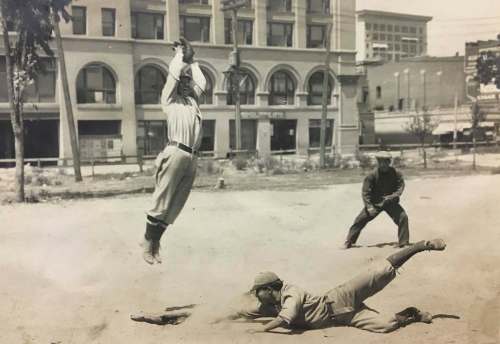
Courtesy of the author
In this undated photo, the Nanka Team practises in Los Angeles, Calif. Players saw the game as a chance for a better life and a means to bridge the gap between their home and adopted lands.
Courtesy of the author In this undated photo, the Nanka Team practises in Los Angeles, Calif. Players saw the game as a chance for a better life and a means to bridge the gap between their home and adopted lands.

Robert K. Fitts is a historian of Japanese-American baseball and the game’s link to Japan. Earlier books include Mashi: The Unfulfilled Baseball Dreams of Masanori Murakami and the award-winning Banzai Babe Ruth, about the Ruth-led major league baseball tour of Japan in 1934.

The key players in Issei Baseball, his fifth book, are five immigrants who shaped Japanese American baseball: Harry Saisho, Ken Kitsuse, Tom Uyeda, Tozan Masko and Kiichi Suzuki. It is a story of five passionate young men who were born in Japan and received a Western education as their fathers wanted them to be prepared for leadership roles in the new Japan, and who saw the game as a chance for a better, rewarding life, and as a means to bridge the cultural gap between their home and adopted lands.

They, and the many other Japanese immigrants on the U.S. West Coast in the early 1900s, were basically looking for the American dream. That quest was hampered by racism, some language difficulties and the complications of trying to put together a baseball team and barnstorm throughout the Midwest, chasing an income and baseball notoriety.

And their bats too often let them down on the field, even as their fielding and base running showed promise.

Rather than just playing Issei teams in California and Washington State, tours (mainly through the Midwest) were a key component in the development of Japanese-American baseball; they gave the newcomers competition outside their home communities.

Fitts also details tours made by Japanese university teams to the United States, American university tours to Japan as well as Japanese-American teams touring Japan — a period of activity taking place between 1905 and 1911.

Courtesy of the author
The 1905 Waseda University baseball team photograph.
Courtesy of the author The 1905 Waseda University baseball team photograph.

The major focus of Issei Baseball, however, is on the Issei tours of the American heartland, where the teams faced prejudice, racism, skepticism about their baseball skills as well as economic problems, because they lived on a share of the gate.

Some communities welcomed the teams as a novelty as they were billed being all-Japanese (although they did throw in ringers when facing a tough semi-pro opponent). In many other locales the players were referred to as “little brown boys,” and illustrations in newspapers depicted them with animalistic characteristics and big teeth.

The Issei teams were put in the same category as African-American and Native-American teams — all of them seen as outsiders with no hope of assimilation.

Fitts places the Issei in larger national and international context of the times, including the Russo-Japanese War of 1905, the move to segregate Japanese-American children by the San Francisco Board of Education in 1906 and the fears of the Yellow Peril in American mainstream culture.

After the Japanese attack on Pearl Harbor in 1941, Japanese Americans — Issei, the immigrants, and Nisei, their American-born offspring — were stripped of their possessions and placed in euphemistically named “relocation centres.” Fitts’ main protagonists spent the war incarcerated, having lost land, good jobs and any hope of being assimilated in their adopted home.

Issei Baseball is a detailed look at the Japanese immigrants’ attempts to realize their baseball dreams and start a new life in the U.S.

For some readers, there will be too much detail in game-by-game accounts (also appendices listing individual tour game scores and team lineups), but Fitts delivers an appealing account of a group of young men hoping to build a new western life for themselves with a bat, ball and glove.

Chris Smith is a Winnipeg writer.

Report Error Submit a Tip

More Stories

Desperate Poilievre wants Canadians to believe the sky is falling when it’s just cloudy outside

Tom Brodbeck 5 minute read Preview

Desperate Poilievre wants Canadians to believe the sky is falling when it’s just cloudy outside

Tom Brodbeck 5 minute read Friday, Sep. 18, 2026

Pierre Poilievre has a problem.

Canadians just don’t seem to be paying much attention to him anymore.

So, naturally, the Conservative Opposition leader has decided to turn up the volume.

At a recent party caucus retreat in Penticton, B.C., Poilievre delivered the familiar message: Canada is in trouble, Canadians are hurting and the Liberal government is making everything worse.

Read
Friday, Sep. 18, 2026

Pioneering Japanese-American ballplayers struggled through American Midwest

Reviewed by Chris Smith 4 minute read Preview

Pioneering Japanese-American ballplayers struggled through American Midwest

Reviewed by Chris Smith 4 minute read Saturday, Aug. 8, 2020

Before the likes of outfielder Ichiro Suzuki and pitcher/designated hitter Shohei Ohtani took Major League Baseball by storm, an earlier generation of Japanese players emigrated to the United States hoping to become professional baseball players.

Those wannabes lived a vastly different life, arriving in California as students or seeking employment, but always with the dream of making a living in baseball.

Instead they found themselves in a place that didn’t really want them, with the accompanying social and economic hardships.

Robert K. Fitts is a historian of Japanese-American baseball and the game’s link to Japan. Earlier books include Mashi: The Unfulfilled Baseball Dreams of Masanori Murakami and the award-winning Banzai Babe Ruth, about the Ruth-led major league baseball tour of Japan in 1934.

Read
Saturday, Aug. 8, 2020

Not falling back means time loop remains unclosed

Jen Zoratti 4 minute read Yesterday at 2:01 AM CDT

I demand restitution. Where’s my hour?

In the traditional fall-back, spring-forward time change set up — you know, ol’ trusty that’s been effect for lo these 63 years — we lost an hour in the spring that we got back in the fall.

That was the social contract: you commit to feeling like you’re on cold medication for a week in March because you know a glorious extra hour of sleep will be returned to you in November. (Unless, of course, you have little kids, but look: we all make our choices.)

Well, that transaction, flawed as it was, isn’t happening this year. That hour you sacrificed to the sun gods in the spring? Gone. Not coming back. We’ve sprung forward and we shan’t be falling back — not in November, and (possibly) not ever. The scale shall remain unbalanced and the loop shall remain unclosed as Manitoba has adopted permanent daylight time.

Winnipeg Jets at Edmonton Oilers

1 minute read Yesterday at 3:22 PM CDT

Family account spiced with magic realism, geopolitical intrigue and a ghost story

Reviewed by Zilla Jones 4 minute read Preview

Family account spiced with magic realism, geopolitical intrigue and a ghost story

Reviewed by Zilla Jones 4 minute read Yesterday at 2:01 AM CDT

Tom Lin’s second novel Babylon, South Dakota moves beyond a historical account of an immigrant family’s struggle, delightfully blending and bending genres.

Lin is a Chinese-born novelist whose family emigrated to the U.S. when he was four years old. His debut novel, The Thousand Crimes of Ming Tsu, won the 2022 Andrew Carnegie Medal for Excellence in Fiction, making him the youngest ever recipient of that award. He earned a PhD in English from the University of California Davis and is currently an assistant professor of English and creative writing at the University of Iowa.

Babylon, South Dakota takes place in an unspecified time period that can be understood to be during the Mao era — likely the 1950s or ’60s. A young Chinese couple, the Hsuis, immigrate to the rural community that gives the book its title. They take the names Saul and Mei and settle on a 160-acre homestead left to them by a distant relative.

Saul’s dream is to breed and sell chrysanthemums from seeds he brought from China, while Mei wants to raise livestock. They speak no English, know nothing of life in the United States, are unprepared for the harshness of winter and the isolation of the farm and bring nothing with them except some gold, which Mei hides around the house for emergencies. Their only link to the outside world is a discarded and marginally functioning TV set, which Saul rescues and rigs up.

Read
Yesterday at 2:01 AM CDT

Hellebuyck standoff caused by… Nathan MacKinnon?

Mike McIntyre 7 minute read Preview

Hellebuyck standoff caused by… Nathan MacKinnon?

Mike McIntyre 7 minute read Friday, Sep. 18, 2026

Looking for someone to blame in the Connor Hellebuyck fiasco and cast as public enemy No. 1? How about long-time Winnipeg Jets nemesis Nathan MacKinnon?

Allow us to explain as we fire up the time machine and head back to February in Italy.

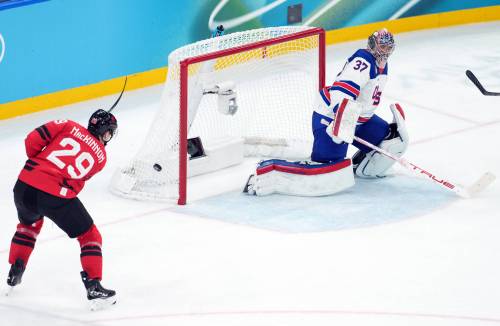
Oh, what could have been if MacKinnon had been able to score on what appeared to be an open net late in the third period of the men’s gold medal game with Hellebuyck down and seemingly out of position.

Instead, the star forward fired wide, keeping the score deadlocked at 1-1 as the clock ticked down on regulation.

Read
Friday, Sep. 18, 2026