Scalzi’s latest sci-fi stellar
Advertisement
Read this article for free:
or
Already have an account? Log in here »
To continue reading, please subscribe:

Digital Subscription
One year of digital access for only $205*
- Enjoy unlimited reading on winnipegfreepress.com
- Read the E-Edition, our digital replica newspaper
- Access News Break, our award-winning app
- Play interactive puzzles
*First annual payment billed as $205.00 + GST for one year. This annual subscription will automatically renew at $233.00 + GST every 52 weeks (10% off the regular annual price of $259.35). Offer available to new and qualified returning subscribers only. Cancel any time.
To continue reading, please subscribe:
Add Free Press access to your Brandon Sun subscription for only an additional
$1 for the first 4 weeks*
- Enjoy unlimited reading on winnipegfreepress.com
- Read the E-Edition, our digital replica newspaper
- Access News Break, our award-winning app
- Play interactive puzzles
*Your next Brandon Sun subscription payment will increase by $1.00 and you will be charged $17.95 plus GST for four weeks. After four weeks, your payment will increase to $24.95 plus GST every four weeks.
Read unlimited articles for free today:
or
Already have an account? Log in here »
Hey there, time traveller!
This article was published 12/05/2018 (3079 days ago), so information in it may no longer be current.
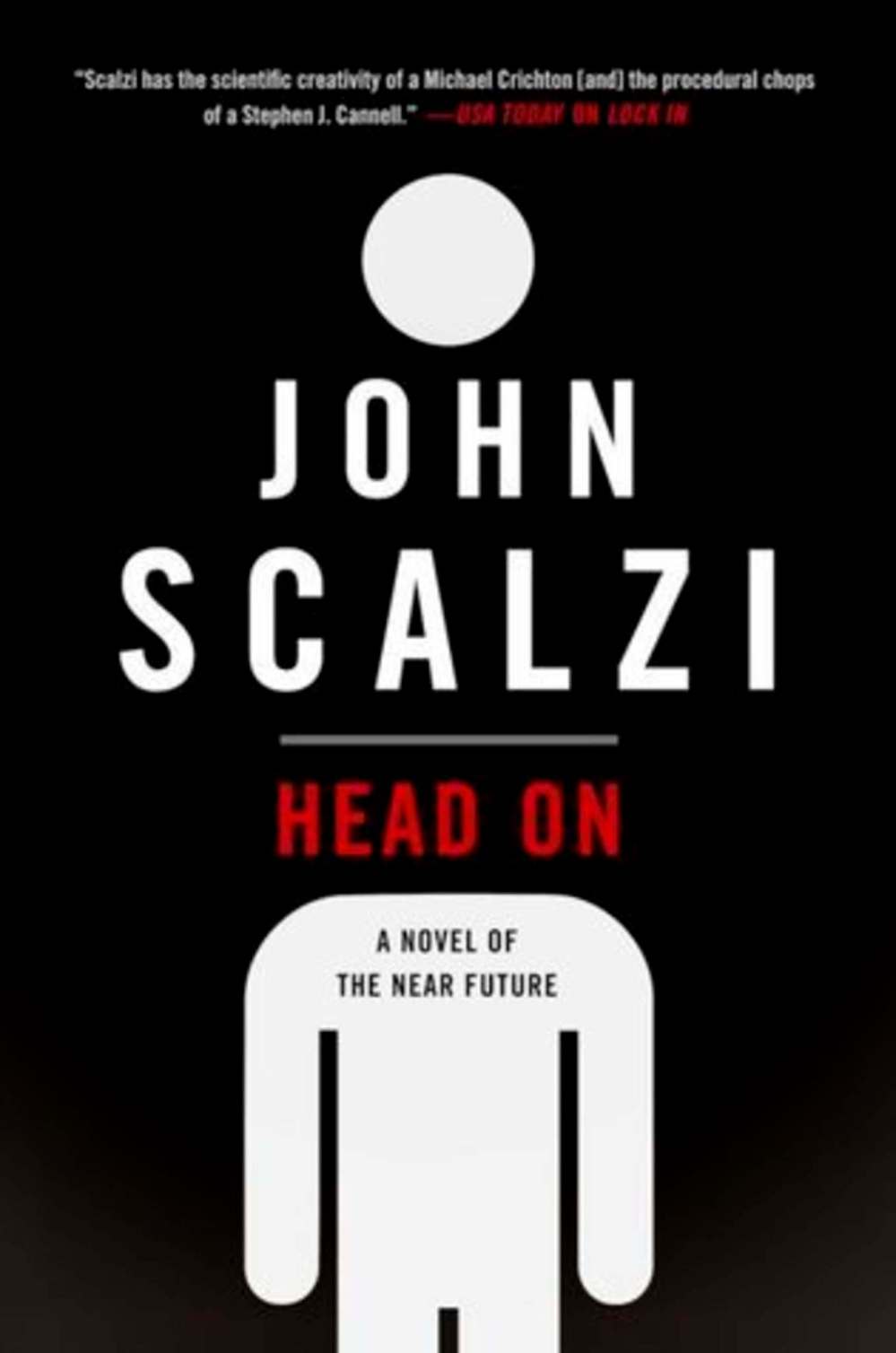
American writer John Scalzi has moved on from Old Man’s War, his breakout-novel-turned-decade-long-series, but he’s keeping busy. This year alone, he is publishing the second book in a new space opera trilogy (or tetralogy?), and this — a strong followup to 2014’s unusual and excellent near-future novel, Lock In, and its companion novella, Unlocked.
That novel introduced protagonist Chris Shane, a rookie FBI agent who is also disabled by Haden’s syndrome. Caused by microbial infection, Hadens experience a kind of paralysis that leaves them conscious and aware of sensations, but unable to move their bodies.
Since tens of millions were affected, a government moon-shot project was implemented to develop assistive technology, resulting in the invention of neural nets and remote-controlled robot bodies called threeps with which to navigate the world, though some Hadens choose to live and work entirely in an online virtual space. Neither option is without its challenges — being different rarely is.
Even with the badge, in fact, Chris has to deal with no small amount of discrimination in his day-to-day life. But the threeps put an unusual twist on this, because in many ways, the robot-navigating Hadens could be argued to be more physically capable than typical humans. For example, they don’t get tired when they stand, so why are they taking up a seat in a crowded coffee shop? That should go to a “real person.”
All of this background is interesting, but not necessary to enjoying Scalzi’s new book. Like most mystery series, the story here stands alone and new readers should easily be able to jump in, discovering the world as they go. This time around, the mystery in question involves the sudden death of a Haden athlete during a game of Hilketa.
In this fictional game, remotely piloted robot bodies run across something like a football or soccer field, but there is no ball. Instead, members of one team try to wrench the head off an opposing team member and then carry it through the goal post to score. Having one’s head torn off does hurt a little (players are allowed to “turn down the pain,” but not off entirely). But it’s not supposed to be dangerous.
Whether this very public death was merely an accident or something more sinister is what Chris and his partner need to figure out.
Scalzi’s novels have always had a wry humour about them, with more characters leaning toward the quippy than not. Occasionally, it can be a bit much. With this cast of characters, however, there is a balance. Chris is a perfect straight man (or woman — Scalzi has avoided pronouns for his robotic protagonist and readers tend to project their own gender on the character) to his veteran FBI partner, a cursing, chain-smoking and sarcastic functional alcoholic.
The world-building is also excellent. It’s a nice touch making the investigation federal on the grounds that the dead athlete’s human and robot bodies were in different states at the time of his death. It’s a great example in Scalzi’s brave new world of how new legislation (a recently passed bill cutting off government supports for Haden technology) and new interpretations of old legislation (the Americans with Disabilities Act) are required to deal with society-shifting technologies.
The cultural phenomenon of Hilketa allows Scalzi to further flesh out the day-to-day lived experience of his imagined world. Ultimately, this entire future setting allows readers to explore how the world is experienced differently by people with disabilities in any era. It can be a real struggle, even with the availability of super-cool robot bodies.
Head On is a fast, fun read, but still leaves a lot to think about.
Joel Boyce is a Winnipeg writer and educator.