

Security, privacy issues spur surveillance debate
Advertisement
Read this article for free:
or
Already have an account? Log in here »
To continue reading, please subscribe:
Monthly Digital Subscription
$1 per week for 24 weeks*
- Enjoy unlimited reading on winnipegfreepress.com
- Read the E-Edition, our digital replica newspaper
- Access News Break, our award-winning app
- Play interactive puzzles
*Billed as $4.00 plus GST every four weeks. After 24 weeks, price increases to the regular rate of $19.95 plus GST every four weeks. Offer available to new and qualified returning subscribers only. Cancel any time.
Monthly Digital Subscription
$4.99/week*
- Enjoy unlimited reading on winnipegfreepress.com
- Read the E-Edition, our digital replica newspaper
- Access News Break, our award-winning app
- Play interactive puzzles
*Billed as $19.95 plus GST every four weeks. Cancel any time.
To continue reading, please subscribe:
Add Free Press access to your Brandon Sun subscription for only an additional
$1 for the first 4 weeks*
*Your next subscription payment will increase by $1.00 and you will be charged $16.99 plus GST for four weeks. After four weeks, your payment will increase to $23.99 plus GST every four weeks.
Read unlimited articles for free today:
or
Already have an account? Log in here »
Hey there, time traveller!
This article was published 27/03/2021 (1821 days ago), so information in it may no longer be current.
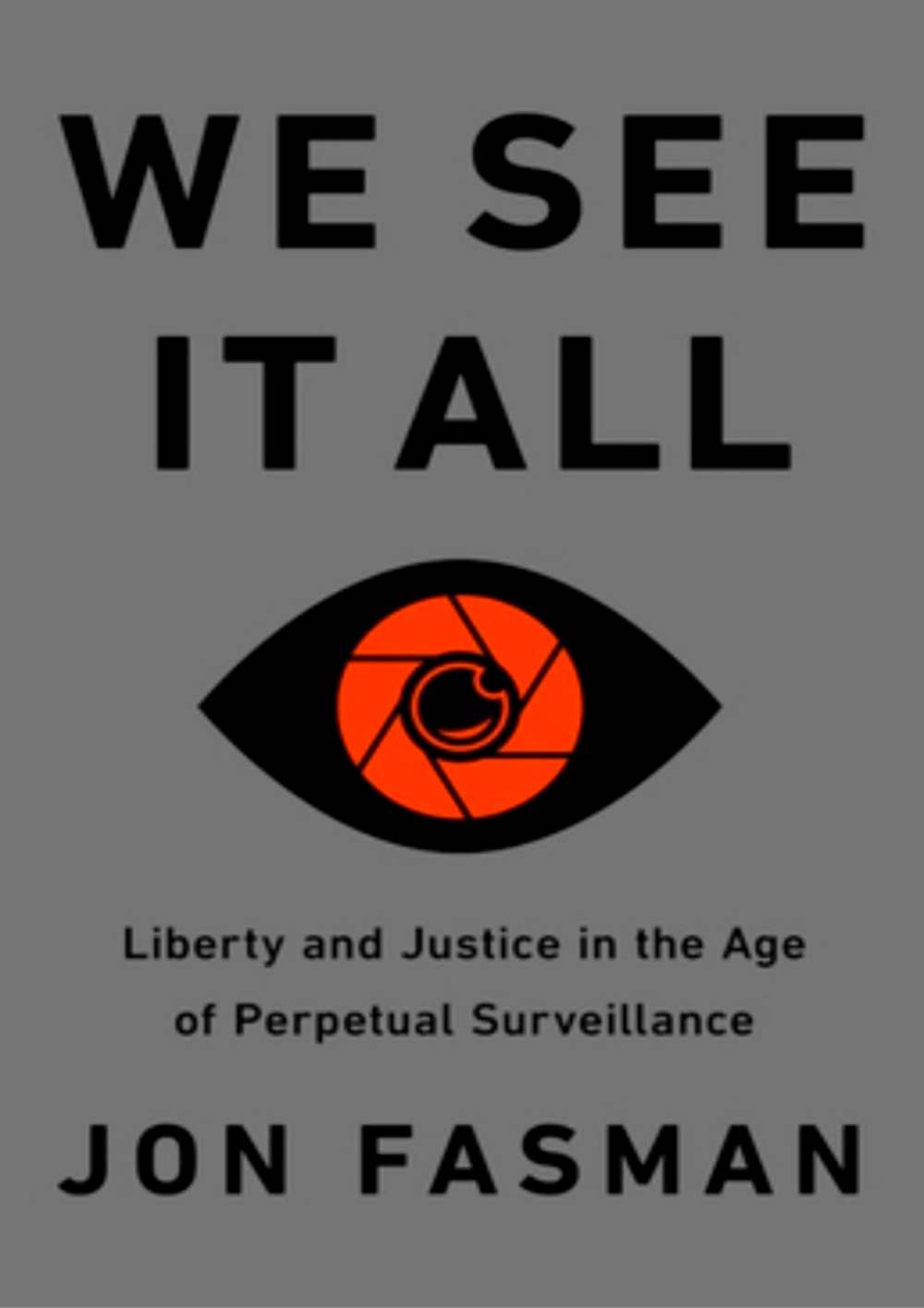
Jon Fasman is the United States digital editor of the Economist. He is concerned with the implications for democracy of the increasing reliance by police forces on surveillance technology.
Mercifully eschewing technological jargon, Fasman provides an easy-to-understand guide to such programs as Clearview, a facial recognition app with a database of more than three billion images that enables the user to upload a picture of any person and access all the information that is online about that person; Stingray, a cellphone tower simulator that tricks all the cellphones in a certain area into connecting to it rather than to a legitimate tower and scoops up all the data transmitted to and from those cellphones; automatic licence plate readers (ALPRs) that capture images of every licence plate in their range, letting police amass a record of detailed personal profiles of citizens not suspected of any crime; and PredPol, which uses algorithms purported to predict neighbourhoods where crimes are likely to be committed.
These apps are the property of private companies, which often store the captured information for indefinite periods of time. Because the algorithms are proprietary, keeping them secret is considered a matter of commercial advantage supported by the law. This can tempt some companies to profiteer by convincing police departments to buy technology they don’t always fully understand.
Fasman takes pains to point out that he is not a member of the “liberal media” making knee-jerk attacks on the police. He describes himself as an employee of a centre-right publication. He denies wanting to show police in a bad light, and focuses on them only because police are the most tangible representatives of state power. He admits that, properly used, the technology he describes can improve public safety.
“Properly used” is the key. Police forces should not be using these technologies without full disclosure to the public they serve. Their use should be governed by strictly enforceable rules, including regular audits to ensure those rules are being followed and penalties for violating them. For Fasman, these are the democratic practices America needs if it is not to become China.
Fasman sees China as an example of what can happen unless citizens speak up forcefully against the unregulated use of surveillance technology. China has more than 200 million CCTV cameras. Police sometimes wear facial-recognition-enabled glasses. The state is developing a social credit system whereby each citizen’s trustworthiness will be scored and ranked. Unlike America — so far — China’s technologies are aimed less at monitoring, responding and deterring than at repressing and controlling.
The only time Fasman mentions Canada is when he describes an Ottawa police officer as “everything you would expect a senior Canadian police officer to be: mild, bearded, reasonable and wry.”
We can only hope that this is an accurate description, because many of the technologies that concern Fasman have been experimented with or are regularly deployed by Canadian police departments.
In 2020, The Citizen Lab at the University of Toronto issued a report on the use of surveillance technology by some Canadian police forces and identified “a number of issues related to… systemic bias, lack of transparency and due process concerns.”
More specifically, in February 2021, the Office of the Privacy Commissioner of Canada published the report of an investigation into Clearview’s operations in Canada. A number of law enforcement agencies, including the RCMP, had been using the app to help identify perpetrators and victims of crimes. The privacy commissioner found that, in doing so, Clearview had illegally, and for inappropriate purposes, conducted mass surveillance of individuals.
It seems America is not the only place where citizens need to speak up forcefully.
Even when the pandemic is over, John K. Collins will continue to wear a face mask.