WEATHER ALERT

Slick fiction: Stenson’s oilsands novel anything but crude

Advertisement

Advertise with us

Whether you view Alberta's oilsands developments as a carbon bomb set to render our planet uninhabitable or as a technological marvel propping up our nation's economy, their invisibility in Canadian fiction seems to support the criticism that our literature is too internal, too domestic and too historically focused.

Read this article for free:

or

Already have an account? Log in here »

To continue reading, please subscribe:

Subscribe and receive a limited-edition Free Press branded hat or tote.

Digital Subscription

One year of digital access for only $205*

  • Enjoy unlimited reading on winnipegfreepress.com
  • Read the E-Edition, our digital replica newspaper
  • Access News Break, our award-winning app
  • Play interactive puzzles

*First annual payment billed as $205.00 + GST for one year. This annual subscription will automatically renew at $233.00 + GST every 52 weeks (10% off the regular annual price of $259.35). Offer available to new and qualified returning subscribers only. Cancel any time.

To continue reading, please subscribe:

Add Free Press access to your Brandon Sun subscription for only an additional

$1 for the first 4 weeks*

  • Enjoy unlimited reading on winnipegfreepress.com
  • Read the E-Edition, our digital replica newspaper
  • Access News Break, our award-winning app
  • Play interactive puzzles
Start now

*Your next Brandon Sun subscription payment will increase by $1.00 and you will be charged $17.95 plus GST for four weeks. After four weeks, your payment will increase to $24.95 plus GST every four weeks.

Hey there, time traveller!
This article was published 27/09/2014 (4307 days ago), so information in it may no longer be current.

Whether you view Alberta’s oilsands developments as a carbon bomb set to render our planet uninhabitable or as a technological marvel propping up our nation’s economy, their invisibility in Canadian fiction seems to support the criticism that our literature is too internal, too domestic and too historically focused.

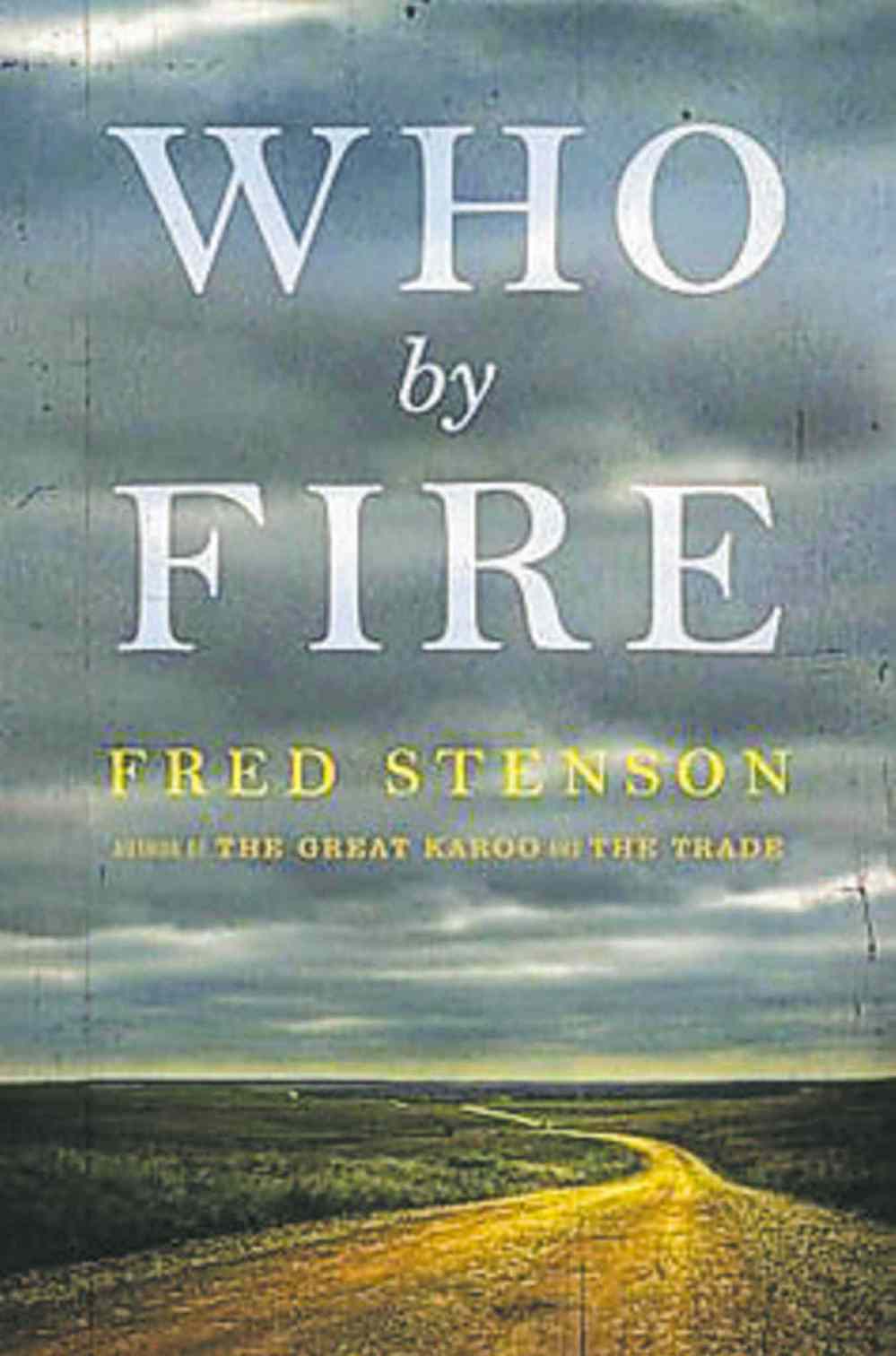
And so Alberta’s Fred Stenson — a writer uniquely qualified to meet this challenge — has done Canadian literature a service by producing the long-awaited oilsands novel.

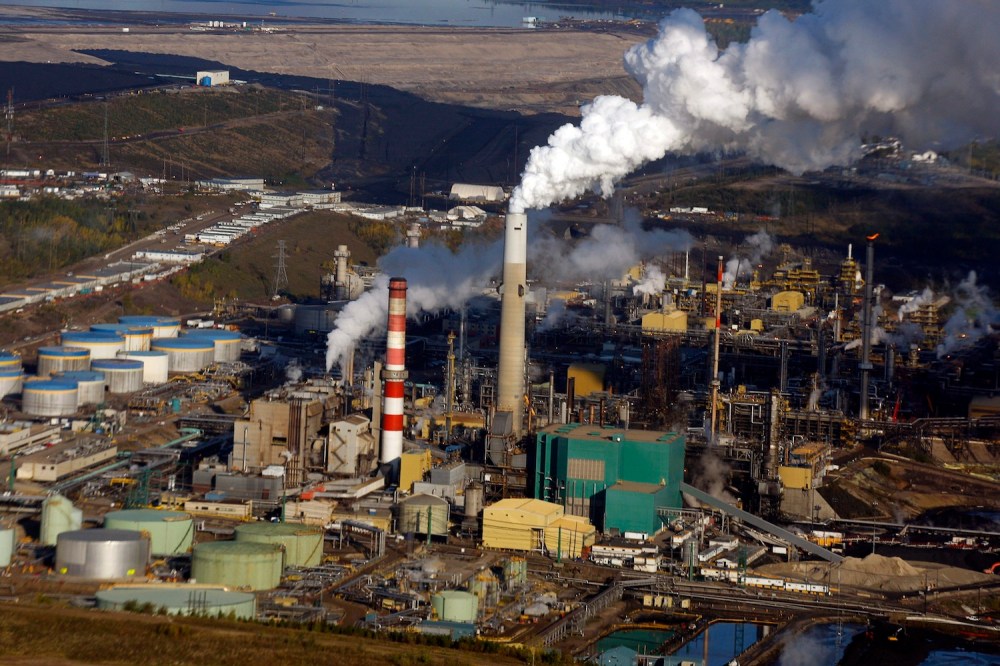
Who By Fire, Stenson’s ninth book of fiction, tells two stories drenched in hydrocarbons: that of the Ryder family of southwestern Alberta, whose lives are turned upside-down by the arrival of a plant processing sour gas (rich in poisonous hydrogen sulfide) in 1960, and that of late-middle-aged Bill Ryder, the senior engineer in charge of sulphur processing at a present-day Fort McMurray-area oilsands plant.
CP
CP

It’s a story of corporations getting their way, regardless of environmental consequences, and of the physical, financial, and emotional hardship they cause.

Stenson, whose own farm family was one of the first to win in court against the oil and gas industry, is best known for his literary westerns, The Trade, Lightning and The Great Karoo, which explored the transformation of prairie life. Not coincidentally, the villain in The Trade was a corporation: the Hudson Bay Company.

In Who By Fire, we first see the sour gas plant from pre-school-aged Billy Ryder’s perspective as a thing of mythic power: “like the fire in the Bible that burns without wood, or the fire that comes out of the rubbed lantern in Illustrated Folk Tales of the World. A genie set free after a thousand years.”

That opening promises a story about forces on a grand scale, but for the most part this is a quiet, fine-grained novel. In both narrative threads the suffering is relatively low-key: psychological and emotional, rather than catastrophic. Childhood emotional harm makes adult Bill a VLT addict; the casino seems to be symbolic of the way our oil-based economy doubles down on its bets.

There’s a ripped-from-the-headlines aspect to the contemporary plotline, as when we hear references to a controversial report on cancer in the downstream community of Fort Chipewyan. The popular media image of Fort McMurray as a modern Dodge City emerges when Bill’s overworked therapist rants: “I treat meth addicts, crackheads, alcoholics who beat their wives and children so badly ambulances have to be called.”

(To be fair, a Winnipeg mayor who could get our homicide and violent crime rates down to Fort McMurray’s level would be re-elected for life.)

Stenson captures some of the absurdities of resource development in Canada, including the pandering and posturing about environmental and cultural sensitivity. When Bill first meets his love interest, Marie, a woman from the neighbouring First Nations community, she tells him she’s tired of meeting the oil company’s community relations representative because he “always brings tobacco, in a cloth bag or sometimes in a brand-new leather pouch. If it’s a bag he puts a pretty-coloured ribbon on it. Like it was 1875 and I had never seen a store.”
He portrays a corporate world in which oil companies have become better at speaking in soothing tones and issuing mild mea culpas, all the while speeding up their efforts to pump every last drop. And though he holds out some hope for personal healing from psychological wounds, he’s clear that neither the oil companies nor the Alberta government are likely to change course.

As Bill puts it: “Hope’s not my department.”


Bob Armstrong is a Winnipeg writer whose first full-time job was covering the oilsands for the Fort McMurray newspaper.

History

Updated on Saturday, September 27, 2014 8:32 AM CDT: Formatting.
Report Error Submit a Tip

More Stories

Ottawa mum on joining legal case against Trump’s sanctioning of Canadian ICC judge

Dylan Robertson, The Canadian Press 4 minute read Preview

Ottawa mum on joining legal case against Trump’s sanctioning of Canadian ICC judge

Dylan Robertson, The Canadian Press 4 minute read Saturday, Jul. 11, 2026

OTTAWA - Ottawa won't say whether it will intervene in support of a Winnipeg-born global judge who is asking a U.S. court to reverse sanctions ordered by U.S. President Donald Trump, which have left her unable to use a credit card or most major online vendors.

Washington sanctioned International Criminal Court judge Kimberly Prost nearly a year ago, over her work on a case involving American troops in Afghanistan. Unlike France, Canada has never criticized that decision.

"We haven't said anything about that," said Sabine Nolke, a former senior Canadian diplomat whose career focused on international law.

"We do have fairly solid human rights credentials, but we can certainly stand (to be) speaking out more about them."

Read
Saturday, Jul. 11, 2026

Mom spearheads fight for rehab services

Zoe Pierce 4 minute read Preview

Mom spearheads fight for rehab services

Zoe Pierce 4 minute read 2:01 AM CDT

Four years ago, a car crash permanently changed Will Castor’s life.

The 28-year-old suffered a traumatic brain injury that required a long recovery as he worked to relearn skills many people take for granted, such as eating, speaking and getting out of bed.

A key part of that journey was First Steps Wellness Centre, a Winnipeg rehabilitation facility, where Will worked with therapists to regain independence and connect with others facing similar challenges.

But on June 5, financial constraints forced First Steps to close, leaving families without the specialized therapy they had come to rely on.

Read
2:01 AM CDT

Havin’ a heat wave — forever

Judy Waytiuk 5 minute read 2:00 AM CDT

When I acquired my seaside home years ago on Mexico’s Yucatan Gulf Coast, I learned instantly that the Yucatan routinely broils for most of the year with temperatures in the mid-40s; by mid-afternoon, the house interior soared to 35 C or so, in 90 per cent humidity, and stepping outside was like entering a blast furnace. The heat is punctuated periodically by wild thunderstorms that flood sand streets and turn roads into lakes for days.

Similar, in fact, to the summer we’ve had here so far this year.

I needed my air conditioning. But electricity in Mexico is devilishly costly, generated by burning diesel fuel, so I installed solar panels. My energy bills plummeted from around 6,000 pesos to 50 pesos — the Comisión Federal de Electricidad’s minuscule administration fee. I was no longer contributing to the world’s soaring carbon emissions and because I generated more energy than I used, and returned that power to the grid, CFE was burning a few less gallons of diesel. While lowering electricity bills, I was also doing the ‘right thing’, planet-wise.

Too little. Too late.

Three charged in drug trafficking probe

1 minute read Yesterday at 10:56 AM CDT

Two men and a woman have been charged after police seized drugs, weapons, a gun and cash after executing a warrant at a Centennial neighbourhood residence Saturday.

Police obtained a search warrant for a residence on the 600 block of Elgin Avenue while officers were conducting a drug trafficking investigation in the city’s central downtown area, the Winnipeg Police Service said in a Sunday news release. 

A handgun with an “obliterated serial number” was seized, as was ammunition, a machete, bear spray, 40 individually packed bags of crack cocaine (with a street value of about $800), 2.8 grams of powder cocaine (worth $300) and $565 in cash.

A 69-year-old man, 30-year-old man and 26-year-old woman were charged with multiple drug trafficking and weapon offences. 

Count Binface vs. Nigel Farage

Gwynne Byer 5 minute read 2:00 AM CDT

At the time of writing there is still hope Count Binface can pull off a surprise byelection win and dethrone Nigel Farage, the leader of Reform UK, who has led the opinion polls in Britain for the past two years. The danger is that the Monster Raving Loony Party may also run, splitting the vote and letting Farage win.

The story so far:

Nigel Farage is what was known in wartime British slang as a ‘spiv’: a flashy, fast-talking petty criminal who always has something shoddy and borderline illegal to sell. Farage is not actually a criminal, my lawyers have instructed me to say, but he has led three political parties — UK Independence Party, Brexit Party, Reform UK — and they all smelled a bit off.

They were all anti-immigrant, ultra-nationalist and shyly racist, and they all used ‘populist’ tactics well before that style went global. Think of him as a Donald Trump who didn’t inherit great wealth but is a lot more coherent. In due course the rest of the world has caught up and, in Great Britain, Farage’s current political vehicle, Reform UK, has led opinion polls for two years straight.

A Winnipeg police cruiser was involved in an incident with a passenger car early Sunday morning on the northeast side of Cumberland St. and Balmoral Ave.

A video circulating on Facebook shows the damaged cruiser adjacent to a white passenger vehicle, both of which appear to have their airbags deployed. The Winnipeg police car appears to have crashed into a fence.

Winnipeg Police Service Const. Claude Chancy confirmed the incident on Sunday morning and said it occurred around 6:15 a.m. He said the Winnipeg Fire Paramedic Service arrived and checked out the passengers, adding that it did not appear anyone was transported to hospital. The officers were not injured. Cumberland St. was closed for roughly two hours afterward.

The service did not share information on the cause of the accident.