Step by step

MacDonald’s mindful musings mull precarious, precious nature of walking

Advertisement

Advertise with us

This small volume of poetry and prose by Winnipeg-raised, Waterloo-based writer/professor Tanis MacDonald bursts with ideas about moving through space on one’s own terms.

Read this article for free:


or

Already have an account? Log in here »

To continue reading, please subscribe:

Subscribe and receive a limited-edition Free Press branded hat or tote.

Digital Subscription

One year of digital access for only $205*

  • Enjoy unlimited reading on winnipegfreepress.com
  • Read the E-Edition, our digital replica newspaper
  • Access News Break, our award-winning app
  • Play interactive puzzles

*First annual payment billed as $205.00 + GST for one year. This annual subscription will automatically renew at $233.00 + GST every 52 weeks (10% off the regular annual price of $259.35). Offer available to new and qualified returning subscribers only. Cancel any time.

To continue reading, please subscribe:

Add Free Press access to your Brandon Sun subscription for only an additional

$1 for the first 4 weeks*

  • Enjoy unlimited reading on winnipegfreepress.com
  • Read the E-Edition, our digital replica newspaper
  • Access News Break, our award-winning app
  • Play interactive puzzles
Start now

*Your next Brandon Sun subscription payment will increase by $1.00 and you will be charged $17.95 plus GST for four weeks. After four weeks, your payment will increase to $24.95 plus GST every four weeks.

Hey there, time traveller!
This article was published 25/06/2022 (1537 days ago), so information in it may no longer be current.

This small volume of poetry and prose by Winnipeg-raised, Waterloo-based writer/professor Tanis MacDonald bursts with ideas about moving through space on one’s own terms.

In 33 short pieces, 10 re-published here and originally appearing elsewhere, MacDonald wanders through wilderness (parks and managed forests, she confesses), cityscapes and time. She ponders the risks and dangers from nature and humankind, the pain and physical limitations that challenge her body, and the trauma she experiences as an assault survivor, soothed by walking. Alongside the discomfort, the collection offers beauty, awe, defiance and even humour.

But MacDonald’s central observation, what unites many of these compositions, is that for women, people of colour, disabled people, First Nations peoples and wildlife (what she terms our “non-human neighbours”), movement through space is precarious. There are stares, catcalls and stalking. She reminds us there can be worse, as for members of the Muslim Pakistani-Canadian Afzaal family, mowed down by a racist driver while on a stroll last June in London, Ont.

John Roscoe photo
Author Tanis MacDonald acknowledges that for many groups, moving through space can be precarious.
John Roscoe photo Author Tanis MacDonald acknowledges that for many groups, moving through space can be precarious.

The similarity of the title’s “straggle” to “struggle” is likely no coincidence.

The word, as an idea, appears just once in the text as “straggler,” juxtaposed against the “speed-obsessed 21st century.” Implying more than just tardiness, it speaks of separation from the group. MacDonald’s experiences in these pieces are largely from the perspective of solitude and anonymity. While they are personal, they are frequently supported by references from a broad range of insightful, contemporary writers and artists, many from Canada. This is a feminist account. And a humane one.

It is also elegant. MacDonald tells us that prose and poetry are cousins, and that one informs the other. This refers to craft, but it is also delightful when her ideas are expressed in parallel through these related forms.

In the essay We, Megafauna, MacDonald notes that deer learn to manipulate a vanishing point when encountering humans in the woods. “[D]eer would coalesce to solidity from a mix of branches and leaves and a patch of sunlight, and then just as quickly melt out of view as though their molecules had seeped into the undergrowth,” she writes. This creaturely skill is evident in the short lyrical item The Deer in the Painting (in reference to a canvas by Winnipeg artist Clarence Tillenius), where a doe “slips like smoke between the trees, an appearing act… slight of hoof, sleight of hand.”

Similarly, MacDonald articulates the pain of sciatica in two essays and a poem: “the lit match of sciatica flaring down my thigh” (We, Megafauna); “the bark of my sciatica” (Ricochet: An Arcade); and “…The glass in/my right hip is sciatica/shattered like Attica” (This Limp Goes to Eleven). She muses, “…I know Long John Silver takes/no wasted steps.”

Winnipeggers will respond to local references. Who cannot smile at the vision of Jubilee Ave., “where the Bridge Drive-Inn still stands” or of a white snowy owl above Corydon and Waverley, “an optical illusion emerging from the light snow being driven by the wind across the wide street”?

Not all scenes are positive. There is a “serial masturbator” in the Assiniboine Forest. In the same woods, a woman successfully fights back and foils a male attacker. Readers may recall these incidents (still, the forest remains a joy). As another somber observation, MacDonald notes that the Assiniboine Park Zoo’s bison enclosure displays “animals who would be numerous on the very land that the zoo occupies if colonialism hadn’t destroyed most of the animals and the environment.”
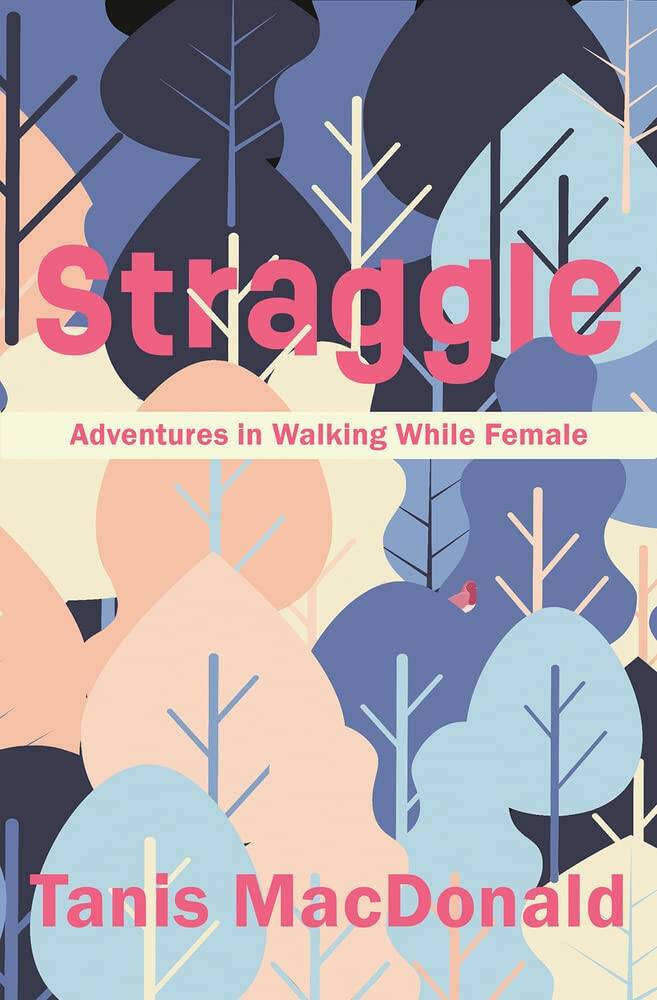
Straggle
Straggle

MacDonald is mindful of being from a settler background and the effects of colonialism on First Nations peoples. She lives near Ose’kowáhne, “a grateful guest on traditional Haudenosaunee territory.” She says in her introduction, “Wherever I walk, I know it’s my responsibility to consider the history of colonization and not just be blinded by the beauty of the land.” Colonization arises in several of the pieces, where MacDonald considers blood and theft and alternative, more respectful, ways of negotiating the world.

This contemplative rendition on walking stands apart from what has come before it — books on fitness, pilgrimage, adventure. It is about walking the best one can in the circumstances. It is relatable and triumphant.

Gail Perry is a long-distance walker who strives to be present.

Report Error Submit a Tip

More Stories

DNA on beer can helps solve killing

Dean Pritchard 4 minute read Preview

DNA on beer can helps solve killing

Dean Pritchard 4 minute read 2:00 AM CDT

Two years after 74-year-old James Monaghan was stabbed in his Sherburn Street home, DNA found on a beer can led police to his killer.

Shara Harper, 29, pleaded guilty to manslaughter and on Tuesday was sentenced to six years in prison.

A neighbour found Monaghan dead in his home on July 29, 2022. He had been stabbed twice in the chest and back.

The investigation into Monaghan’s killing had stalled until June 2024, when DNA found on an empty beer can in Monaghan’s home was confirmed to be a match for Harper.

Read
2:00 AM CDT

Battling agencies would have far greater impact on homeless crisis by working together

Dan Lett 5 minute read Preview

Battling agencies would have far greater impact on homeless crisis by working together

Dan Lett 5 minute read Updated: 5:28 PM CDT

In the midst of one of the most concerted efforts to reduce, if not eliminate, homelessness, why are two of Winnipeg’s more prominent social service agencies fighting each other?

Read
Updated: 5:28 PM CDT

Winkler-based internet provider delivering high-speed service to 30 rural and First Nations Manitoba communities

Nicole Buffie 3 minute read Preview

Winkler-based internet provider delivering high-speed service to 30 rural and First Nations Manitoba communities

Nicole Buffie 3 minute read Yesterday at 7:12 PM CDT

Valley Fiber says it is undertaking one of its largest fibre optic projects and is building infrastructure that will deliver internet to 10,000 homes and businesses in rural and First Nations communities across Manitoba.

“These communities will now have access to the fastest internet network in Manitoba, and it will power their lives and their business,” Ryan Klassen, chief executive officer of the Winkler-based internet provider, said Tuesday from Fisher River Cree Nation.

The province has granted Valley Fiber use of two of its underused cables on the existing Manitoba Hydro fibre optic network for up to 20 years as part of the project, which will connect nearly 30 communities — including Buffalo Point, Hollow Water, Black River and Peguis First Nations, along with Fisher River and Fox Lake Cree Nations — to high-speed internet.

Construction should be finished by 2027.

Read
Yesterday at 7:12 PM CDT

‘Dynacare sucks:’ premier muses about bringing lab services back into public system after strike halted

Free Press staff 4 minute read Preview

‘Dynacare sucks:’ premier muses about bringing lab services back into public system after strike halted

Free Press staff 4 minute read Updated: 11:49 AM CDT

Manitoba’s premier said the province is looking at bringing diagnostic lab services back into the public system rather than continuing to contract Dynacare, declaring the for-profit company “sucks.”

“Maybe we’ll take over the whole system… we’re working on it, we’re looking at it, the situation is not great, this company’s making a mess — I think it’s pretty clear I’m not happy with them,” Premier Wab Kinew told CBC Radio Wednesday morning. “At the same time, nobody should be trying to use people’s health care as leverage.”

Kinew made the comments the day after the Manitoba Labour Board cut short a strike by 350 lab technicians and technologists employed by Dynacare, which administers blood, urine and other medical tests for patients in Winnipeg, Brandon and surrounding communities.

Dynacare, which is contracted by the provincial government, performs the majority of non-emergency blood and urine tests in the province.

Read
Updated: 11:49 AM CDT

Gym, health pilot program rolls out as Manitoba children go back to school

Maggie Macintosh 2 minute read Preview

Gym, health pilot program rolls out as Manitoba children go back to school

Maggie Macintosh 2 minute read 11:31 AM CDT

There were tears and cheers on an elementary school playground in Rossmere as students arrived for the first day of classes Wednesday.

Seven-year-old Ethan Minski is among tens of thousands of Manitoba students who have officially started a new school year.

Before entering King Edward School, Minski said he was most looking forward to phys-ed class.

“Everybody loves gym. It’s just fun!” the Grade 2 student said.

Read
11:31 AM CDT

Gillingham to push for new crisis response model at EPC

Malak Abas 3 minute read Preview

Gillingham to push for new crisis response model at EPC

Malak Abas 3 minute read 3:24 PM CDT

Mayor Scott Gillingham’s proposal to overhaul the city’s crisis-response system to try to divert thousands of calls away from police, firefighter and paramedic response, will be presented to council’s inner circle next week.

The model, described as a “fourth crisis response pathway,” would transfer 911 calls that are non-violent in nature to citywide crisis response teams. Potentially, 10,000 calls could be removed from police, fire and paramedic response, Gillingham said during the July 28 announcement.

Gillingham is set to present his idea to city council’s executive policy committee Tuesday. His motion asks that the city adopt the crisis response model, in part through a “partnership framework” with the provincial government.

The motion notes the partnership would “support a co-ordinated whole-of-government and whole-of-community approach to implementation, recognizing that sustainable crisis response reform cannot be achieved by any single organization, sector, or order of government acting alone.”

Read
3:24 PM CDT